
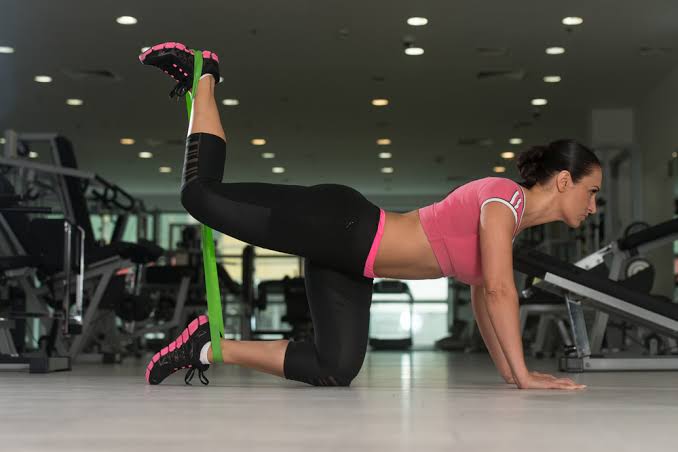
Building real muscle does not always require a fully equipped gym. With the right approach, resistance band exercises can provide enough tension to challenge your muscles, improve strength, and support noticeable muscle growth. Bands are affordable, portable, and versatile, making them an excellent option for home workouts.
The key is not simply doing more repetitions. To build muscle effectively, you need to create enough resistance, train consistently, use controlled movements, and gradually make your workouts harder. Understanding how resistance bands work and how to structure your training can turn a simple set of bands into a powerful muscle-building tool.
Can Resistance Band Exercises Build Real Muscle?
Yes, resistance band exercises can help build real muscle when they are performed with sufficient resistance and progressive overload. Muscle growth occurs when your muscles are challenged beyond what they are accustomed to, creating a stimulus that encourages adaptation. Resistance bands can provide this challenge across many exercises.
Unlike traditional weights, bands become more difficult to stretch as you move through the range of motion. This means the resistance can increase during the exercise, especially near the end of movements such as presses, rows, curls, and squats. Training close enough to muscular fatigue can make band workouts highly effective.
Another advantage is that bands allow you to train muscles from different angles. You can perform pressing, pulling, squatting, hinging, curling, and isolation movements with relatively little equipment. This makes them useful for both beginners and experienced trainees who want additional training options.
How Resistance Bands Stimulate Muscle Growth
Muscle growth depends largely on providing your muscles with a challenging training stimulus. When resistance band exercises become difficult during a set, your muscles have to recruit more fibers to continue producing force. Repeatedly exposing the muscles to this challenge can support hypertrophy over time.
The important factor is intensity rather than simply counting repetitions. If a band is so light that you can perform dozens of repetitions without becoming fatigued, it may not provide enough stimulus for optimal growth. Choosing an appropriate band and performing controlled repetitions can make each set much more productive.
Your muscles also need time to recover after training. Resistance training creates fatigue and stress, while recovery allows your body to repair and adapt. Adequate protein, calories, sleep, hydration, and rest should therefore accompany your resistance band exercises.
Best Resistance Band Exercises for Building Muscle
Resistance Band Squats
Resistance band squats are an excellent lower-body exercise that targets the quadriceps, glutes, and hamstrings. Stand on the band with your feet around shoulder-width apart and position the handles or band securely near your shoulders. Lower your body under control while keeping your chest lifted, then drive through your feet to return to the starting position.
To make the movement more challenging, use a stronger band or increase the number of controlled repetitions. Avoid rushing through the exercise. A slower lowering phase can increase muscular tension and make a moderate band feel significantly more challenging.
Resistance Band Chest Press
The resistance band chest press works the chest, shoulders, and triceps. Secure the band behind you at approximately chest height, hold the handles, and press forward until your arms are extended without aggressively locking your elbows.
Keep your shoulders controlled and avoid allowing the band to pull your arms backward too quickly. A steady return to the starting position keeps tension on the muscles and helps you get more from every repetition.
Resistance Band Rows
Resistance band rows are one of the best pulling exercises for developing the upper back. Secure the band at a stable point, grip the handles, and pull them toward your torso while bringing your shoulder blades together.
Keep your torso controlled instead of using momentum. Focus on moving through your back and arms rather than simply pulling as hard as possible. Increasing band resistance gradually can make rows an effective part of a muscle-building routine.
Resistance Band Shoulder Press
The shoulder press primarily targets the deltoids while also involving the triceps. Stand on the middle of the band and hold the handles around shoulder level. Press upward until your arms are extended, then slowly return to the starting position.
Keep your core engaged throughout the movement. If your lower back begins to arch excessively, the resistance may be too high or your technique may need adjustment.
Resistance Band Biceps Curl
Biceps curls are simple but effective for adding direct arm training. Stand on the center of the band, hold the handles with your palms facing forward, and curl your hands toward your shoulders.
Keep your elbows close to your sides and avoid swinging your body. The goal is to make the biceps perform the work rather than using momentum to move the band.
Resistance Band Triceps Extension
Triceps extensions can help strengthen and develop the back of your upper arms. Depending on your setup, you can perform overhead extensions or pressdowns using an anchored band.
Keep the movement controlled and concentrate on extending your elbows. Because the triceps can handle significant resistance, gradually increasing band tension can make this exercise progressively harder.
Resistance Band Romanian Deadlift
The resistance band Romanian deadlift targets the hamstrings, glutes, and lower back while training the hip-hinge pattern. Stand on the band, hold the handles, and push your hips backward while keeping your spine in a neutral position.
Lower only as far as you can maintain good technique. Drive your hips forward to return to standing and squeeze your glutes at the top without excessively leaning backward.
How to Use Progressive Overload with Resistance Bands
Progressive overload is one of the most important principles for building muscle. Your body adapts to repeated training, so a workout that was difficult several months ago may eventually become too easy. You need to gradually increase the challenge.
With resistance bands, progression can come from using a thicker band, combining bands, increasing repetitions, adding sets, slowing down the eccentric portion, improving your range of motion, or reducing rest periods when appropriate. Increasing resistance is generally one of the clearest ways to make the exercise more demanding.
You should not try to increase everything at once. A simple approach is to work within a repetition range and increase resistance when you can comfortably reach the higher end while maintaining good form. This creates a practical progression system without making your workouts unnecessarily complicated.
How Many Repetitions and Sets Should You Do?
There is no single repetition number that guarantees muscle growth. Resistance band exercises can be effective across a relatively broad repetition range as long as the resistance is challenging and your sets are performed with sufficient effort.
For many exercises, around 2 to 4 working sets can provide a useful starting point. Compound movements such as squats, rows, presses, and Romanian deadlifts can receive several sets, while smaller isolation exercises can be added afterward.
Your final repetitions should feel challenging while still allowing you to maintain proper technique. You do not necessarily need to take every set to complete muscular failure, but consistently stopping when the exercise is still extremely easy is unlikely to provide the strongest muscle-building stimulus.
How to Create a Resistance Band Muscle-Building Routine
A balanced routine should train all major muscle groups rather than focusing only on the areas that are easiest to exercise. Combining lower-body movements, horizontal and vertical presses, pulling exercises, and direct arm work creates a more complete program.
You could structure a full-body session around resistance band squats, chest presses, rows, Romanian deadlifts, shoulder presses, biceps curls, and triceps extensions. The exact number of sets and repetitions can be adjusted according to your experience, available bands, and recovery ability.
Consistency matters more than creating an overly complicated routine. Training several times per week with progressive resistance and adequate recovery can be more productive than performing exhausting workouts randomly.
Common Mistakes to Avoid
One common mistake is using bands that are too light. If every set feels effortless, your muscles may not receive enough stimulation. Select resistance that makes the final portion of the set challenging while allowing you to maintain control.
Another mistake is relying on momentum. Fast, uncontrolled repetitions can reduce the amount of useful tension placed on the target muscles. Slow down when necessary and focus on the movement rather than simply completing repetitions.
Poor band placement can also create problems. Always inspect your bands for cracks, tears, or excessive wear, and make sure anchors and attachment points are secure before training. A damaged band can fail unexpectedly.
Finally, avoid changing your routine every few days. Muscle development requires time. Tracking your exercises, resistance levels, repetitions, and sets can help you determine whether you are actually progressing.
Nutrition and Recovery for Muscle Growth
Training provides the stimulus for muscle development, but nutrition and recovery support the adaptation process. A balanced diet containing adequate protein, carbohydrates, healthy fats, vitamins, and minerals can help support your training goals.
Protein is particularly important because it supplies amino acids needed for muscle repair and growth. Foods such as eggs, fish, poultry, dairy products, beans, lentils, tofu, and other protein-rich foods can contribute to your daily intake.
Sleep is also essential. Consistently getting enough quality sleep can help your body recover from demanding workouts. Give trained muscles adequate recovery time and avoid turning every workout into an all-out session.
How to Make Resistance Band Workouts More Effective
The best resistance band workouts are built around consistent progression and good technique. Before starting your working sets, perform a short warm-up and practice the movements with lighter resistance. This can help prepare your joints and muscles for training.
Pay attention to the entire range of motion. Instead of rushing through repetitions, control the band as it stretches and returns. Maintaining tension throughout the movement can make the exercise more demanding without requiring extremely heavy resistance.
You can also use different band strengths for different muscle groups. Larger muscle groups may tolerate greater resistance, while smaller muscles may require lighter bands. Choosing resistance based on the individual exercise is often more effective than trying to use one band for everything.
Conclusion
Resistance band exercises can be a practical and effective way to build real muscle when they are used with proper resistance, consistent training, and progressive overload. Squats, rows, presses, curls, extensions, and hip-hinge movements can collectively train your entire body without requiring a traditional gym setup.
The most important factor is progression. Keep challenging your muscles over time, maintain good form, recover properly, and support your training with adequate nutrition and sleep. With patience and consistency, resistance bands can become much more than a convenient home workout tool—they can be a serious part of a muscle-building program.
FAQs
Can resistance bands really build muscle?
Yes. Resistance bands can provide enough tension to stimulate muscle growth when exercises are challenging and performed consistently with progressive overload.
Are resistance bands better than weights for muscle growth?
Neither is automatically better. Free weights make it easier to measure precise loads, while bands are portable and provide increasing tension as they stretch. Both can be effective for building muscle.
How often should I do resistance band exercises?
Many people can train their major muscle groups several times per week while allowing adequate recovery between demanding sessions. Your schedule should depend on training volume and recovery.
How do I make resistance band exercises harder?
You can use a stronger band, combine bands, increase repetitions or sets, improve your range of motion, or slow down the movement while maintaining good technique.
Can beginners build muscle with resistance bands?
Yes. Resistance bands are particularly useful for beginners because they are versatile and allow you to start with manageable resistance before progressing to more challenging levels.
Do I need heavy resistance bands to build muscle?
Not necessarily. The resistance needs to be challenging enough to make your working sets difficult. Different exercises may require different band strengths.
Can I build muscle with resistance bands at home?
Yes. A well-designed home program can train your chest, back, shoulders, arms, legs, and glutes using resistance bands and a suitable anchor or setup.
How long does it take to see muscle growth?
Results vary based on training experience, nutrition, genetics, recovery, and consistency. Following a progressive program over several weeks and months is more important than expecting immediate changes.
