
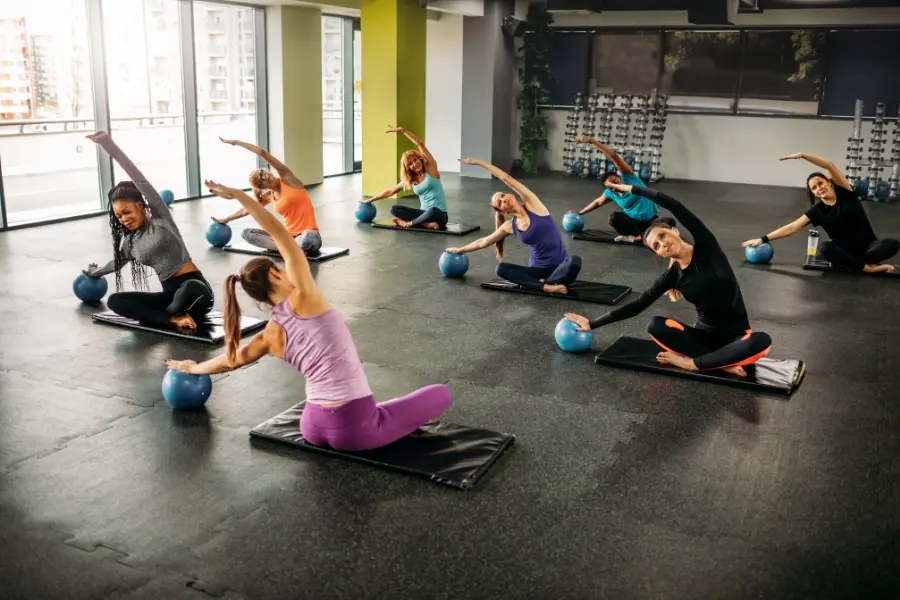
The Core Foundations: A Guide to Mat Pilates for Beginners introduces a gentle yet effective approach to improving strength, flexibility, balance, and body awareness. Mat Pilates uses controlled movements performed on a floor mat, making it an accessible form of exercise for people who are new to fitness. Instead of focusing on heavy resistance or fast movements, Pilates emphasizes precision, breathing, stability, and control.
For beginners, Mat Pilates can create a strong foundation for better movement and everyday fitness. The exercises often target the abdominal muscles, back, hips, legs, and shoulders while encouraging proper posture. With regular practice, beginners can develop better body awareness and gradually improve their strength without needing a large workout space or expensive equipment.
What Is Mat Pilates?
Mat Pilates is a form of Pilates performed primarily on a cushioned exercise mat. The method was developed around controlled movements that connect breathing with physical effort. Many exercises use body weight as resistance, although optional accessories can be introduced as a person becomes more experienced.
The practice focuses strongly on the body’s central muscles, often called the core. However, a complete session can involve nearly every major muscle group. Movements are usually performed slowly and deliberately, allowing you to concentrate on alignment and technique rather than simply completing as many repetitions as possible.
Why Mat Pilates Is Good for Beginners
One of the main advantages of Pilates is that exercises can be modified for different fitness levels. Beginners can start with simple movements and gradually increase their range of motion, repetitions, or exercise difficulty. This makes the practice suitable for people who want to establish a consistent fitness routine without immediately performing demanding exercises.
Mat Pilates also encourages mindful movement. Instead of rushing through repetitions, you learn to notice how your body moves and where you are holding tension. This awareness can improve exercise technique and make everyday movements such as walking, bending, lifting, and sitting feel more controlled.
Building a Strong Core
Core strength is one of the central principles of Pilates. The core includes more than the visible abdominal muscles; it also involves muscles around the back, pelvis, hips, and trunk that help stabilize the body. A strong core provides a stable base for movement and can contribute to better posture and balance.
Beginner exercises such as pelvic tilts, abdominal breathing, toe taps, and modified dead bugs can introduce core control without requiring advanced skills. The goal is not to perform movements as quickly as possible. Instead, beginners should focus on keeping the body stable and coordinating breathing with each controlled movement.
Essential Mat Pilates Exercises
The Pilates bridge is a useful beginner movement for strengthening the glutes and supporting the muscles around the hips and lower back. While lying on your back with your knees bent, you gradually lift your hips while maintaining control. The movement should be smooth rather than forceful, with attention placed on alignment throughout the exercise.
Another useful movement is the bird dog, which challenges core stability while involving the shoulders, hips, and back. Starting from a hands-and-knees position, you extend opposite limbs while keeping your torso steady. These foundational exercises can help beginners understand how stability and controlled movement work together.
Breathing and Body Control
Breathing is an important part of Pilates because it encourages concentration and helps coordinate movement. Beginners should avoid holding their breath during exercises. Instead, use comfortable, controlled breathing and allow the rhythm of the breath to support each movement.
Body control is equally important. Pilates is not simply about moving from one position to another. The quality of each repetition matters. Keeping movements controlled helps you focus on posture, alignment, muscle engagement, and stability, which are important foundations for progressing safely.
Improving Flexibility and Posture
Regular Mat Pilates practice can help improve mobility by taking joints and muscles through controlled ranges of motion. Exercises often involve the spine, hips, shoulders, and legs, encouraging smoother movement. Improved flexibility can make physical activities feel more comfortable while supporting overall movement quality.
Posture is another important part of Pilates. Many exercises encourage awareness of spinal alignment and shoulder positioning. Developing better postural habits can help you become more conscious of how you sit, stand, and move throughout the day.
Creating a Beginner Mat Pilates Routine
A beginner session can start with gentle breathing and mobility exercises before progressing into simple core, lower-body, and upper-body movements. A short routine of around twenty to thirty minutes can be enough to develop familiarity with the basic principles without becoming overwhelming.
Consistency matters more than making every workout extremely difficult. Practising two or three times each week gives beginners an opportunity to develop technique while allowing time for recovery. As movements become more comfortable, you can gradually introduce longer sessions or more challenging variations.
Common Mistakes Beginners Should Avoid
One common mistake is trying to perform advanced Pilates exercises too soon. Difficult movements may look impressive, but beginners benefit more from learning basic alignment and control first. Progressing gradually helps develop the strength and coordination needed for more demanding exercises.
Another mistake is focusing only on the number of repetitions. Pilates emphasizes quality rather than speed. Performing ten controlled repetitions with good technique can be more productive than completing many repetitions while losing proper alignment. If a movement causes sharp or unusual pain, stop and reassess your technique.
Equipment and Home Practice
One of the best features of Mat Pilates is that very little equipment is necessary. A supportive exercise mat is usually enough to begin. The mat provides cushioning for the spine, knees, and other areas that come into contact with the floor while creating a comfortable training surface.
As your experience grows, optional accessories such as Pilates balls, resistance bands, or Pilates rings can add variety. However, beginners should not feel pressured to purchase equipment immediately. Learning the fundamentals with bodyweight exercises can provide an excellent foundation.
Nutrition and Recovery
Exercise is only one part of maintaining a healthy lifestyle. A balanced diet containing adequate protein, fruits, vegetables, whole grains, and healthy fats can provide nutrients needed for energy and recovery. Drinking enough water throughout the day is also important for normal physical function.
Rest should not be overlooked. Muscles need time to recover after exercise, especially when you are introducing a new training routine. Quality sleep and appropriate rest days can help you remain consistent while reducing unnecessary fatigue.
Staying Consistent With Pilates
Building a regular habit is often more important than completing occasional long workouts. Choose realistic days and times that fit naturally into your schedule. Even a short session can be useful when it is performed consistently and with proper attention to technique.
Tracking how you feel during practice can also help you recognize progress. You may notice improved balance, easier movement, better posture, or greater control before seeing obvious physical changes. These small improvements can provide valuable motivation to continue.
Conclusion
The Core Foundations: A Guide to Mat Pilates for Beginners shows that Pilates can be a practical way to develop strength, flexibility, balance, and body awareness without complicated equipment. Its emphasis on controlled movement, breathing, alignment, and stability makes it approachable for beginners who want to build a strong fitness foundation.
The best results come from patience and regular practice rather than trying to master everything immediately. Begin with basic exercises, focus on technique, listen to your body, and gradually increase the challenge as your confidence improves. With consistency, Mat Pilates can become a valuable part of a balanced and active lifestyle.
FAQs
Is Mat Pilates suitable for complete beginners?
Yes. Mat Pilates can be adapted for beginners, and many foundational exercises require only a comfortable mat and enough space to move safely.
How often should beginners do Mat Pilates?
Two or three sessions each week can provide a good starting point. Beginners can increase frequency gradually as they become more comfortable with the movements.
Can Mat Pilates strengthen the core?
Yes. Many Pilates exercises emphasize abdominal and trunk stability while also training the muscles around the hips and back.
Can Pilates improve flexibility?
Regular practice can support flexibility and mobility by using controlled movements that take the body through comfortable ranges of motion.
Do I need expensive Pilates equipment?
No. A supportive exercise mat is generally enough for beginners. Additional accessories are optional and can be introduced later.
Can I practice Mat Pilates at home?
Yes. Mat Pilates is particularly convenient for home practice because it requires little space and minimal equipment.
Is Pilates good for posture?
Pilates emphasizes alignment, core stability, and body awareness, which can support better posture and movement habits.
How long should a beginner Pilates session be?
A beginner can start with approximately twenty to thirty minutes and gradually increase session length as strength, control, and confidence improve.
