
Stress can build quietly throughout the day, leaving your body tense and your mind constantly busy. A few minutes of gentle movement, focused breathing, and mindful stretching can create a much-needed pause from the demands of everyday life. You do not need advanced flexibility or previous yoga experience to begin.
A calming beginner yoga routine is designed to be simple, comfortable, and accessible. With slow movements and relaxed breathing, you can release tension from common areas such as the shoulders, neck, back, and hips while creating a peaceful moment for yourself. The goal is not to perform perfect poses but to reconnect with your body and breathe with awareness.
Why Yoga Can Help Melt Away Stress
Yoga combines physical movement, controlled breathing, and mindfulness. This combination can help you slow down and shift your attention away from stressful thoughts. Instead of rushing through each movement, you learn to notice how your body feels and allow your breathing to guide the practice.
For beginners, gentle yoga can be especially appealing because it does not require intense exercise. A quiet space, comfortable clothing, and a yoga mat or soft surface are usually enough. Practicing regularly can also help establish a relaxing routine that gives you time to step away from screens, work, and daily responsibilities.
Start With Deep, Relaxing Breaths
Before moving into yoga poses, take a few moments to settle your body. Sit comfortably or lie down and allow your shoulders to soften. Close your eyes if that feels comfortable, then slowly breathe in through your nose and gently breathe out.
Try making each exhale slightly longer than the inhale without forcing your breath. Pay attention to the movement of your stomach and ribs as you breathe. This simple breathing practice can help you become more present before beginning the physical part of your routine.
Gentle Cat-Cow Stretch
Cat-Cow is an excellent movement for beginners because it gently mobilizes the spine while encouraging coordinated breathing. Start on your hands and knees with your hands underneath your shoulders and your knees underneath your hips.
As you inhale, gently lift your chest and tailbone while allowing your spine to curve naturally. As you exhale, slowly round your back and allow your head to relax toward the floor. Move gradually between the two positions for several comfortable repetitions, focusing on smooth breathing rather than speed.
Child’s Pose for Deep Relaxation
Child’s Pose is one of the most relaxing beginner-friendly yoga positions. From your hands and knees, slowly move your hips toward your heels while extending your arms forward. If your hips do not comfortably reach your heels, place a cushion or folded blanket underneath your body for additional support.
Let your forehead rest on the mat or on a pillow and allow your arms to relax. Take several slow breaths while releasing tension from your shoulders and back. Stay in the position only as long as it feels comfortable, remembering that relaxation is more important than stretching deeply.
Seated Forward Fold
A gentle seated forward fold can provide a quiet transition between movement and relaxation. Sit on the floor with your legs extended or slightly bent. Keep your spine comfortable and slowly hinge forward from your hips rather than forcing your upper body toward your legs.
Rest your hands wherever they naturally reach. You do not need to touch your feet or straighten your legs completely. Take slow breaths and allow your muscles to relax gradually. If you feel strong pulling or discomfort, ease out of the stretch and adjust your position.
Gentle Neck and Shoulder Release
Stress often shows up as tightness around the neck and shoulders. A few slow movements can help bring awareness to these areas. Sit comfortably with your spine relaxed and slowly lower your right ear toward your right shoulder without lifting the shoulder.
Return to center and repeat on the other side. You can also slowly roll your shoulders backward and forward several times. Keep every movement controlled and gentle, avoiding any motion that causes pain or sharp discomfort.
Legs-Up-the-Wall Pose
Legs-Up-the-Wall is a simple restorative position that can make a calming addition to an evening practice. Sit sideways near a wall, gently turn onto your back, and extend your legs upward against the wall. Keep your arms relaxed by your sides or place your hands comfortably over your stomach.
Close your eyes and breathe slowly. Stay here for several minutes if the position feels comfortable. This pose can provide a peaceful opportunity to become still after the more active portions of your routine. If you experience discomfort, move away from the wall and choose a more comfortable resting position.
Finish With a Quiet Rest
After completing your poses, give yourself a few minutes to rest. Lie comfortably on your back with your arms relaxed and your legs resting naturally. Allow your breathing to return to its normal rhythm without trying to control every breath.
Use this time to notice how your body feels. Your shoulders may feel softer, your breathing may feel calmer, and your mind may feel less distracted. Even if you do not notice a dramatic change immediately, finishing with stillness helps make relaxation an intentional part of your practice.
How to Build a Consistent Yoga Habit
Consistency is more important than creating a long or complicated routine. Beginners can start with around 10 to 15 minutes and gradually increase the duration as they become more comfortable. Practicing at approximately the same time each day can make the routine easier to remember.
Choose a quiet location where you can move without interruption. Some people prefer practicing in the morning to begin the day calmly, while others enjoy gentle yoga before bed. Experiment with different times and find what fits naturally into your schedule.
Make Your Practice More Relaxing
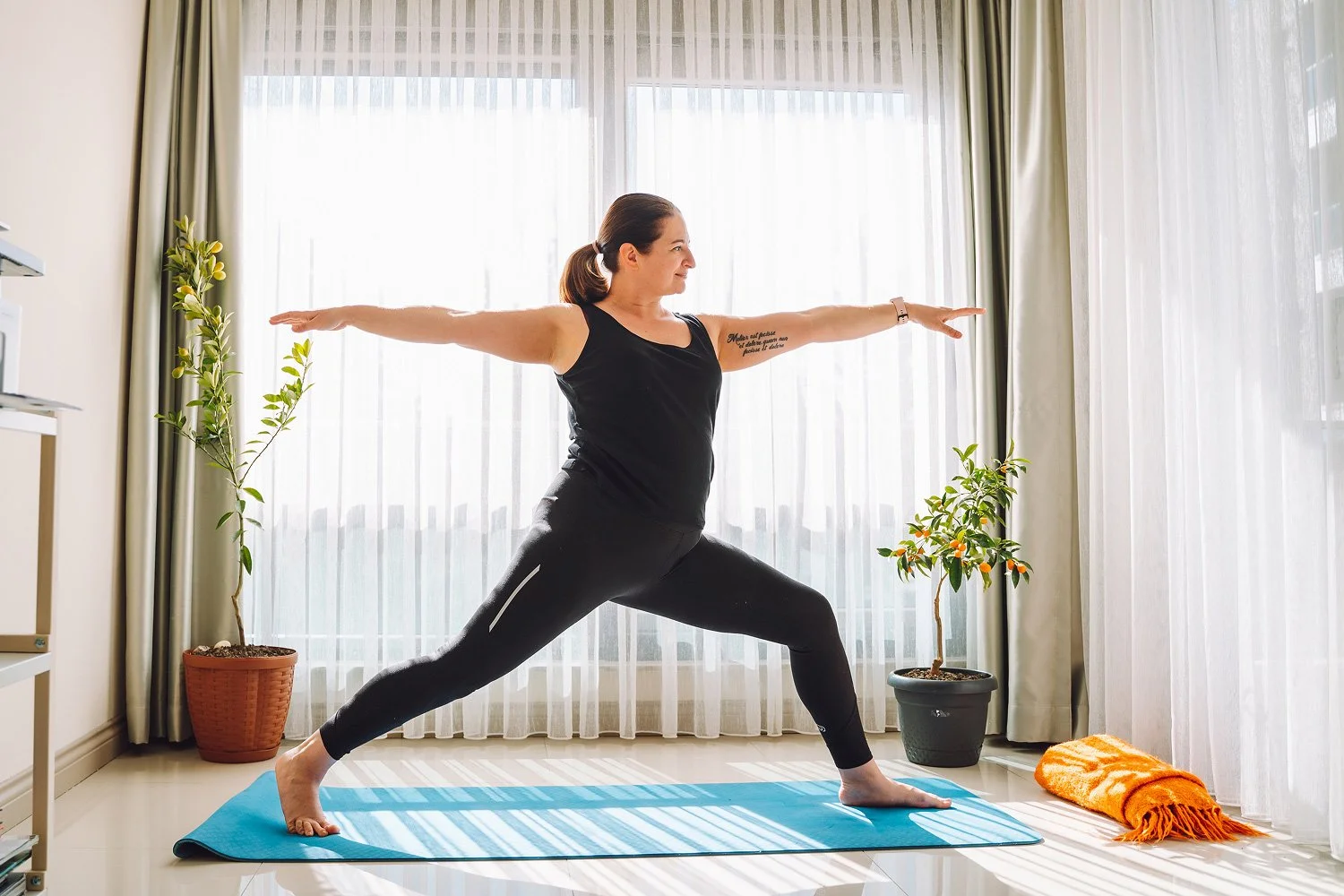
The environment can influence how peaceful your practice feels. Dim lighting, comfortable clothing, a clean space, and a few quiet minutes without phone notifications can help create a relaxing atmosphere. You can also practice near a window or in a peaceful room where you feel comfortable.
Most importantly, avoid comparing your flexibility or balance with other people. Yoga is not a competition. Your practice should allow you to listen to your body, breathe comfortably, and move within a range that feels appropriate for you.
A Simple Beginner Routine to Follow
Begin by sitting comfortably and taking five slow, relaxed breaths. Move into Cat-Cow for several gentle repetitions, matching your movement to your breathing. Follow with Child’s Pose and remain there for a few comfortable breaths while allowing your shoulders to relax.
Continue with a gentle seated forward fold, followed by slow neck and shoulder movements. Finish with Legs-Up-the-Wall or another comfortable resting position, then spend a few quiet minutes lying down. The entire sequence can be adjusted according to your comfort, energy level, and available time.
Conclusion
A calming beginner yoga routine does not need to be complicated, intense, or time-consuming. Gentle movements combined with slow breathing can give you an opportunity to pause, release physical tension, and become more aware of the present moment. Even a short practice can become a valuable part of your daily self-care routine.
Remember that progress in yoga is not measured by how far you can stretch. Focus on breathing comfortably, moving with awareness, and respecting your body’s limits. With regular practice, these peaceful moments can become an enjoyable way to create more calm and balance in your day.
FAQs
Is yoga good for beginners?
Yes, yoga can be adapted for beginners with simple poses and gentle movements. You can start slowly and gradually become more comfortable with the practice.
How long should a beginner yoga routine be?
A beginner can start with 10 to 15 minutes. As your comfort and consistency improve, you can gradually extend your sessions.
Can yoga help with everyday stress?
Gentle yoga combines movement, breathing, and mindfulness, which can create a relaxing break from daily activities and stressful thoughts.
Should I do yoga in the morning or at night?
Either can work. Morning yoga may help you begin the day calmly, while an evening routine can provide a peaceful transition toward rest.
Do I need a yoga mat?
A yoga mat can provide cushioning and stability, but beginners can also use a soft, non-slip surface when appropriate.
Can I do yoga if I am not flexible?
Absolutely. Flexibility is not a requirement for starting yoga. Use comfortable ranges of motion and avoid forcing your body into a position.
What should I do if a yoga pose hurts?
Stop or modify the pose if you experience pain. Gentle stretching may create mild tension, but sharp or significant pain is a reason to come out of the position.
How often should beginners practice yoga?
Starting with a few short sessions each week can be a practical approach. As the routine becomes familiar, you can practice more consistently if it feels good for your body.
