
You do not need a large home gym, complicated machines, or dozens of exercises to build strength and improve your fitness. A pair of dumbbells can provide enough resistance to train nearly every major muscle group while keeping your workout simple and efficient. With the right exercise selection, you can create a balanced routine that fits easily into a busy schedule.
A minimalist full-body dumbbell workout at home focuses on movements that deliver the most value with the least equipment. Squats, presses, rows, hinges, and carries can work your legs, chest, back, shoulders, arms, and core in one session. This approach is ideal for beginners, experienced lifters who want convenient training, or anyone who prefers a clutter-free workout space.
Why Choose a Minimalist Full-Body Dumbbell Workout at Home?
One of the biggest advantages of dumbbell training is versatility. Dumbbells allow you to perform pushing, pulling, squatting, hinging, and carrying movements without needing bulky equipment. You can also adjust your body position and range of motion to change the challenge of an exercise.
Training the whole body during a single session can also make your routine easier to maintain. Instead of dedicating separate days to individual muscle groups, you can train multiple areas together and build a consistent schedule. The key is choosing exercises that complement one another and using controlled technique.
What You Need for the Workout
The equipment requirements are intentionally simple. A pair of adjustable or fixed dumbbells and enough floor space to move safely are generally sufficient. A workout bench can be useful for certain exercises, but it is not essential because many movements can be performed from the floor or while standing.
Choose a weight that allows you to complete your repetitions with good form. The final few repetitions should feel challenging without causing you to lose control of the movement. If your dumbbells are adjustable, you can gradually increase resistance as your strength improves.
Dumbbell Goblet Squat
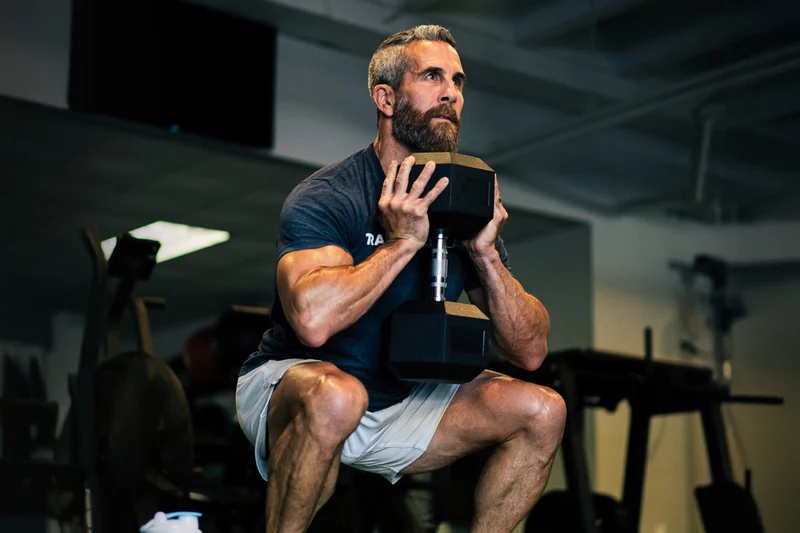
The goblet squat is an excellent lower-body movement for a home workout because it trains the quadriceps, glutes, and supporting muscles around the hips and core. Hold one dumbbell vertically against your chest with both hands and stand with your feet approximately shoulder-width apart.
Push your hips slightly back and bend your knees as you lower your body. Keep your chest lifted and your core engaged throughout the movement. Descend as comfortably as your mobility allows, then drive through your feet to return to standing. Perform 3 sets of 8–12 repetitions.
Dumbbell Romanian Deadlift
The Romanian deadlift targets the hamstrings and glutes while teaching an important hip-hinging pattern. Hold a dumbbell in each hand in front of your thighs, keep your knees slightly bent, and maintain a neutral spine.
Push your hips backward while lowering the dumbbells along the front of your legs. Stop when you feel a strong stretch through your hamstrings without rounding your back. Squeeze your glutes and drive your hips forward to return to the starting position. Aim for 3 sets of 8–12 repetitions.
Dumbbell Floor Press
The floor press provides an effective way to train the chest, triceps, and front shoulders without a traditional bench. Lie on your back with a dumbbell in each hand and your knees bent. Position the weights above your chest with your palms facing forward or slightly inward.
Lower the dumbbells slowly until your upper arms gently touch the floor. Pause briefly, then press the weights upward while keeping your wrists controlled. Avoid bouncing your arms from the floor. Complete 3 sets of 8–12 repetitions.
One-Arm Dumbbell Row
Rows are important because they balance pressing movements and strengthen the muscles of the upper back. Place one hand on a stable surface for support and hold a dumbbell in the opposite hand. Keep your back flat and allow the weight to hang beneath your shoulder.
Pull the dumbbell toward your hip while keeping your elbow close to your body. Focus on moving through your back rather than simply pulling with your arm. Lower the weight under control and repeat before switching sides. Perform 3 sets of 8–12 repetitions per side.
Dumbbell Shoulder Press
The dumbbell shoulder press develops the shoulders and triceps while also requiring your core to stabilize your body. You can perform it seated or standing depending on your available space and preference.
Start with the dumbbells near shoulder height. Brace your abdomen and press the weights overhead without excessively arching your lower back. Lower them slowly to shoulder level and repeat. Use a manageable weight because maintaining proper positioning is more important than lifting heavily. Try 2–3 sets of 8–12 repetitions.
Dumbbell Reverse Lunge
Reverse lunges are a practical unilateral exercise that trains the legs and glutes while challenging balance and coordination. Hold a dumbbell in each hand at your sides and stand tall with your feet hip-width apart.
Step one foot backward and lower your body until your front leg is comfortably bent. Keep your torso controlled and your front foot firmly planted. Push through the front foot to return to the starting position, then alternate sides. Complete 2–3 sets of 8–10 repetitions per leg.
Dumbbell Farmer Carry
The farmer carry is one of the simplest exercises in a minimalist routine, yet it can challenge your grip, shoulders, core, and overall stability. Hold a dumbbell in each hand and stand tall with your shoulders relaxed and your abdomen braced.
Walk slowly through a clear area while maintaining an upright posture. Avoid leaning from side to side or allowing the weights to pull your shoulders forward. Perform 3 rounds of 30–60 seconds, resting between rounds as needed.
How to Structure the Workout
A simple session can begin with the goblet squat, followed by the Romanian deadlift, floor press, one-arm row, shoulder press, reverse lunge, and farmer carry. This sequence gives your major muscle groups a balanced combination of resistance and movement patterns.
Rest for roughly 60–120 seconds between challenging sets. You do not need to rush from one exercise to another. Quality repetitions are more valuable than completing the workout as quickly as possible. A complete session can usually fit comfortably into about 35–50 minutes.
How Many Days Per Week Should You Train?
For many people, performing a full-body dumbbell routine two or three days per week is a practical starting point. Leave at least one day between demanding full-body sessions when possible so your muscles have time to recover.
On non-strength days, you can stay active with walking, mobility work, stretching, or other light activities. Your training schedule should be sustainable rather than exhausting. Consistency over several months matters far more than completing an extremely difficult workout for a few days.
How to Progress at Home
Progressive overload is important if you want to continue becoming stronger. Once you can comfortably perform the upper end of your repetition range with excellent technique, consider increasing the dumbbell weight slightly.
If heavier weights are not available, you can make an exercise more challenging by adding repetitions, slowing the lowering phase, pausing at difficult positions, or increasing the number of sets. Another useful strategy is improving your range of motion while maintaining excellent control.
Tips for Better Results
Focus on technique before increasing resistance. Keep your movements controlled and avoid using momentum to complete repetitions. A lighter dumbbell performed correctly can be more productive than a heavier weight that causes poor positioning.
Recovery also matters. Adequate sleep, balanced nutrition, hydration, and rest between workouts support your ability to train consistently. If an exercise causes sharp or unusual pain, stop the movement and consider getting advice from a qualified professional.
Common Mistakes to Avoid
A common mistake is trying to make every workout as difficult as possible. Constantly training to exhaustion can make recovery harder and may reduce the quality of your future sessions. Instead, aim for challenging but controlled sets.
Another mistake is changing exercises constantly. A minimalist program works best when you repeat key movements long enough to track progress. Keep your routine consistent, record your weights and repetitions, and make gradual improvements over time.
Conclusion
A minimalist full-body dumbbell workout at home can provide an effective way to develop strength without requiring a complicated gym setup. With a few carefully selected movements, you can train your legs, chest, back, shoulders, arms, and core during the same session. The simplicity of the routine also makes it easier to fit strength training into a busy lifestyle.
The most important goal is consistency. Start with manageable weights, learn the movement patterns, and gradually increase the challenge as your fitness improves. When combined with sensible recovery and nutrition, a simple pair of dumbbells can become a powerful tool for long-term strength and fitness.
FAQs
Can I build muscle with dumbbells at home?
Yes. Dumbbells can provide enough resistance to stimulate muscle growth when exercises are performed with appropriate intensity and progressed over time.
How long should a full-body dumbbell workout take?
A well-structured session can take around 35–50 minutes, depending on the number of exercises, sets, repetitions, and rest periods.
Is this workout suitable for beginners?
Yes, beginners can use the routine by starting with light weights, learning proper technique, and gradually increasing resistance as they become more comfortable.
How often should I do a full-body dumbbell workout?
Two or three sessions per week can work well for many people. Allow enough recovery between challenging workouts.
Do I need an adjustable dumbbell set?
No. Fixed dumbbells can work perfectly well. Adjustable dumbbells simply make it easier to change resistance as your strength develops.
Can I lose weight with dumbbell workouts?
Strength training can support weight-management goals by helping maintain muscle while combined with regular physical activity and an appropriate nutrition plan.
What should I do if my dumbbells are too light?
You can increase repetitions, add sets, slow down the lowering portion of an exercise, use pauses, or choose a more challenging variation.
Can I do this workout without a bench?
Yes. The floor press, standing shoulder press, rows, squats, lunges, Romanian deadlifts, and carries can all be performed without a workout bench.
