
Boxing is one of the most engaging ways to improve fitness, coordination, endurance, and confidence without needing a traditional gym. With the right approach, you can learn fundamental boxing movements in your living room, garage, or any open space. The Ultimate Beginner Boxing Workout at Home is designed for people who are new to boxing and want a simple routine they can follow without complicated equipment.
A beginner-friendly boxing session does not require you to step into a boxing ring. Shadowboxing, basic footwork, bodyweight movements, and controlled combinations can provide a challenging full-body workout. The key is to focus on proper technique, controlled movement, and gradual progression rather than trying to punch as hard or as fast as possible from the beginning.
Why Try a Beginner Boxing Workout at Home?
Boxing workouts can combine cardiovascular exercise, coordination, balance, muscular endurance, and mental concentration in one session. Moving continuously while throwing controlled combinations can elevate your heart rate while requiring your legs, core, shoulders, and arms to work together. This makes boxing a practical option for people who want a dynamic workout instead of repetitive cardio.
Training at home also makes exercise more convenient. You can choose your own schedule, control the workout intensity, and practice basic movements without feeling pressured by other people. Beginners can spend more time learning the jab, cross, hook, stance, and defensive movements before gradually increasing speed and complexity.
Another advantage is that boxing can make exercise feel more purposeful. Instead of simply counting repetitions, you are learning combinations and movement patterns. This can improve concentration and keep workouts interesting, especially when you repeat the same basic techniques while gradually improving your form.
How to Prepare for Your Home Boxing Workout
Before starting, create enough open space to move comfortably in different directions. Remove objects that could cause you to trip, and make sure the floor provides adequate traction. A mirror can be useful because it allows you to observe your stance, hand position, and punching technique while practicing.
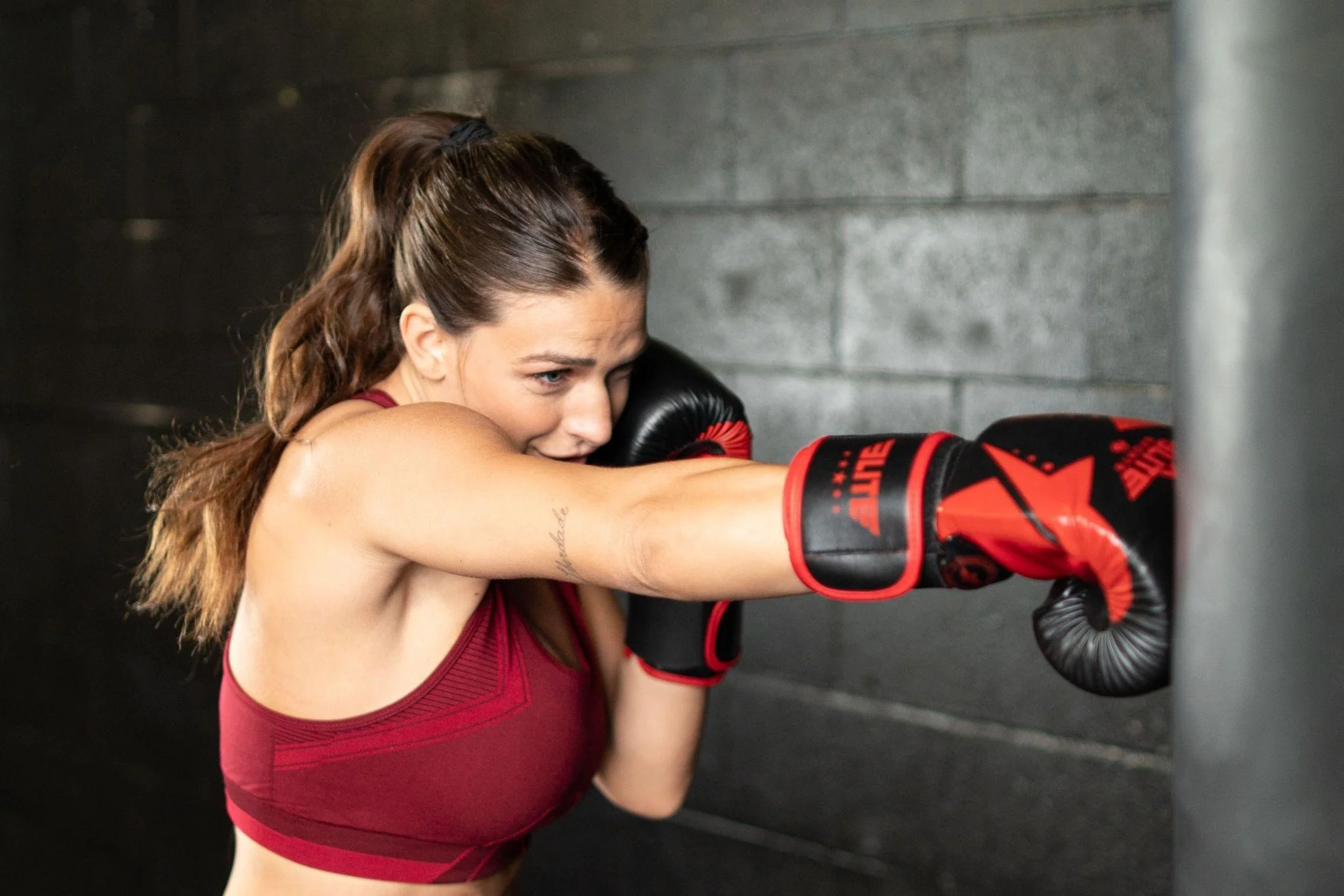
Wear comfortable athletic clothing and supportive footwear if you are training on a hard surface. Beginners may also use hand wraps and boxing gloves for equipment-based training, but they are not necessary for shadowboxing. If you are punching a heavy bag, appropriate gloves and correctly wrapped hands become much more important because repeated impact places greater stress on the hands and wrists.
A proper warm-up should come before the main workout. Start with several minutes of light movement, such as marching, jogging in place, arm circles, shoulder rolls, and gentle bodyweight squats. The goal is to gradually prepare your body rather than immediately performing high-intensity punches.
The Basic Boxing Stance
The boxing stance provides the foundation for almost every technique you will learn. If you are right-handed, you will commonly place your left foot forward and keep your right foot behind you. Left-handed boxers often use the opposite arrangement. Keep your feet comfortably separated so you can maintain balance while moving.
Your knees should remain slightly bent, your shoulders relaxed, and your hands near your face. Keep your chin slightly tucked without forcing your head downward. The rear heel can remain light so you can move efficiently, while your weight should stay balanced rather than leaning excessively toward either foot.
Beginners often make the mistake of standing too rigidly. Boxing requires constant adjustment, so your stance should feel stable but mobile. Practice moving forward, backward, and side to side while maintaining approximately the same distance between your feet.
Essential Punches Every Beginner Should Learn
The jab is usually the first punch beginners should practice. From your stance, extend the lead hand straight toward an imaginary target and then quickly return it to your guard. The movement should be controlled rather than forced. Your shoulder can help protect your chin while the opposite hand remains near your face.
The cross is a straight punch from the rear hand. It involves coordinated rotation through the hips and torso while the rear arm travels toward the target. Avoid swinging the punch from the side. The power should come from coordinated body movement rather than simply extending the arm as forcefully as possible.
The hook travels in a curved path and requires careful attention to elbow position and body rotation. Beginners should practice this punch slowly before adding speed. The lead hook is often easier to introduce after the jab and cross have become comfortable.
The uppercut is another fundamental punch that travels upward toward an imaginary target. It should be practiced with controlled knee and hip movement instead of exaggerated arm swinging. Shadowboxing at a moderate pace is an excellent way to understand the movement before using any equipment.
The Ultimate Beginner Boxing Workout at Home
After warming up and practicing individual punches, you can combine them into a structured home session. A beginner workout can last approximately 20 to 30 minutes, depending on your fitness level and how much rest you need. Focus on quality movement throughout the session rather than trying to maintain maximum speed.
Begin with three minutes of easy shadowboxing. Move around your training area while practicing the jab, cross, and basic footwork. Keep the intensity moderate and concentrate on maintaining your stance. This first round should feel like a technical practice session rather than an all-out effort.
Next, perform three rounds of controlled combinations. A simple combination is the jab followed by the cross. Once comfortable, add a lead hook after the cross. Keep your hands returning to your guard after each punch. Rest for approximately 45 to 60 seconds between rounds if needed.
After the combination rounds, spend several minutes practicing defensive movement. Add small slips, controlled backward steps, lateral movements, and changes in direction. Defensive movements should remain smooth and balanced. Avoid exaggerated bending or sudden movements that could place unnecessary stress on your joints.
Finish with a short conditioning section. Alternate between bodyweight squats, mountain climbers, marching or jogging in place, and short periods of shadowboxing. Beginners should use an intensity that feels challenging but remains manageable enough to maintain good technique.
Footwork and Movement for Beginners
Good boxing is not only about throwing punches. Footwork helps you maintain balance, create space, and position yourself effectively. At home, you can practice basic forward, backward, and lateral movement without needing a large training area.
When moving forward, take a small step with the foot closest to the direction you are traveling and then bring the other foot along without crossing your legs. Use the same general principle when moving backward or sideways. Small steps are usually easier to control than large movements.
Shadowboxing becomes much more effective when you combine punches with movement. For example, throw a jab while stepping forward, throw a jab-cross combination, then move backward and reset your stance. This simple pattern teaches you to coordinate your upper and lower body instead of standing in one place.
How to Improve Your Punching Technique
Technique should always come before speed. A beginner who throws slower punches with good alignment is developing better habits than someone who throws extremely fast punches with poor control. Keep your shoulders relaxed and avoid unnecessarily tensing your arms throughout every movement.
Your punches should return to your guard after they are thrown. This habit helps you maintain a protective position and prepares you for the next movement. It also prevents your arms from staying extended for too long, which can cause fatigue.
Do not lock your elbows forcefully at the end of punches. Practice reaching the target with controlled extension and immediately recovering the hand. If you are experiencing pain rather than normal exercise fatigue, stop the movement and reassess your technique.
Common Beginner Boxing Mistakes
One common mistake is trying to punch as hard as possible from the first workout. Power develops through proper mechanics, timing, balance, and conditioning. Beginners should first learn how each movement feels and then gradually increase intensity.
Another mistake is dropping the hands while becoming tired. This is especially common during longer shadowboxing rounds. Instead of continuing at the same speed, reduce your pace and concentrate on maintaining your guard and stance.
Beginners can also become too focused on their arms. Boxing is a full-body movement, so your hips, legs, shoulders, and core all contribute to efficient punching and movement. Practicing slowly can help you understand how these parts work together.
How Often Should Beginners Box at Home?
For someone new to boxing, two or three sessions per week can provide a practical starting point. Allow your body enough recovery time between demanding workouts, particularly if you are also performing strength training or other high-intensity activities.
Not every session needs to be difficult. One workout can emphasize technique and footwork, while another can focus more heavily on conditioning. Alternating training emphasis can help prevent boredom and give you opportunities to develop different aspects of boxing fitness.
Consistency is more valuable than completing occasional extremely difficult workouts. Ten to twenty minutes of focused practice performed regularly can help you build familiarity with basic movements. As your coordination and fitness improve, you can gradually increase round length, intensity, or complexity.
Recovery and Safety During Home Boxing
Recovery is an important part of any training routine. Give your muscles time to recover after challenging workouts, stay adequately hydrated, and prioritize regular sleep. Beginners should also pay attention to unusual pain rather than treating discomfort as something they must simply push through.
If you are using a heavy bag, make sure it is properly installed and that you have enough space around it. Beginners should learn correct punching alignment before increasing impact or power. Hand wraps can provide support, but they do not replace proper technique.
Shadowboxing is generally easier to control because there is no external target to strike. It allows you to practice combinations, movement, and rhythm while limiting impact on the hands. For beginners, it can be an excellent way to build a foundation before introducing more equipment.
How to Progress Your Home Boxing Routine
Once the basic movements become comfortable, progression can come from several areas. You might gradually increase the length of your rounds, reduce rest periods, add more combinations, or incorporate additional footwork. There is no need to change everything at once.
For example, you could begin with a simple jab-cross combination and eventually add a hook, defensive movement, and angle change. The goal is to make the workout more challenging while keeping your movements controlled.
You can also record yourself occasionally to evaluate your stance and technique. Watching your movement from the side or front may reveal habits that are difficult to notice while training. If possible, professional instruction can provide valuable feedback, especially when you begin learning more advanced techniques.
Conclusion
The Ultimate Beginner Boxing Workout at Home can be an enjoyable way to develop cardiovascular fitness, coordination, balance, movement skills, and confidence. You do not need a large gym or extensive equipment to begin. With a safe training area, basic boxing knowledge, and consistent practice, beginners can build a useful foundation from home.
Start slowly, prioritize technique, and allow your body time to adapt. Practice the basic stance, jab, cross, hook, footwork, and defensive movements before worrying about advanced combinations. With regular sessions and gradual progression, your home boxing routine can become a challenging and rewarding part of your overall fitness program.
FAQs
Can a beginner learn boxing at home?
Yes, beginners can practice basic boxing movements at home, especially stance, footwork, shadowboxing, and fundamental punches. Professional coaching is valuable for correcting technique as skills become more advanced.
How long should a beginner boxing workout last?
A beginner can start with approximately 20 to 30 minutes. The exact duration depends on fitness level, experience, workout intensity, and recovery needs.
Do I need a punching bag to box at home?
No. Shadowboxing can provide an effective way to practice punches, combinations, movement, and conditioning without a punching bag.
Can boxing help improve fitness?
Boxing-style workouts can challenge cardiovascular endurance, coordination, balance, muscular endurance, and overall movement. Results depend on workout intensity and consistency.
How many days a week should a beginner box?
Two or three sessions per week can be a reasonable starting point for many beginners. Additional training can be added gradually as fitness and recovery improve.
Should I use boxing gloves for shadowboxing?
Gloves are not generally necessary for basic shadowboxing because you are not striking an object. If you begin hitting a heavy bag, appropriate gloves and hand protection become more important.
Is boxing good for beginners who have never exercised?
Boxing movements can be adapted to different fitness levels, but beginners should start with low-to-moderate intensity and gradually increase workload. Anyone with significant health concerns should seek appropriate professional advice before beginning strenuous exercise.
How can I get better at boxing at home?
Practice consistently and focus on fundamentals. Spend time developing your stance, footwork, punch mechanics, combinations, defensive movement, and conditioning before attempting complicated techniques.
