

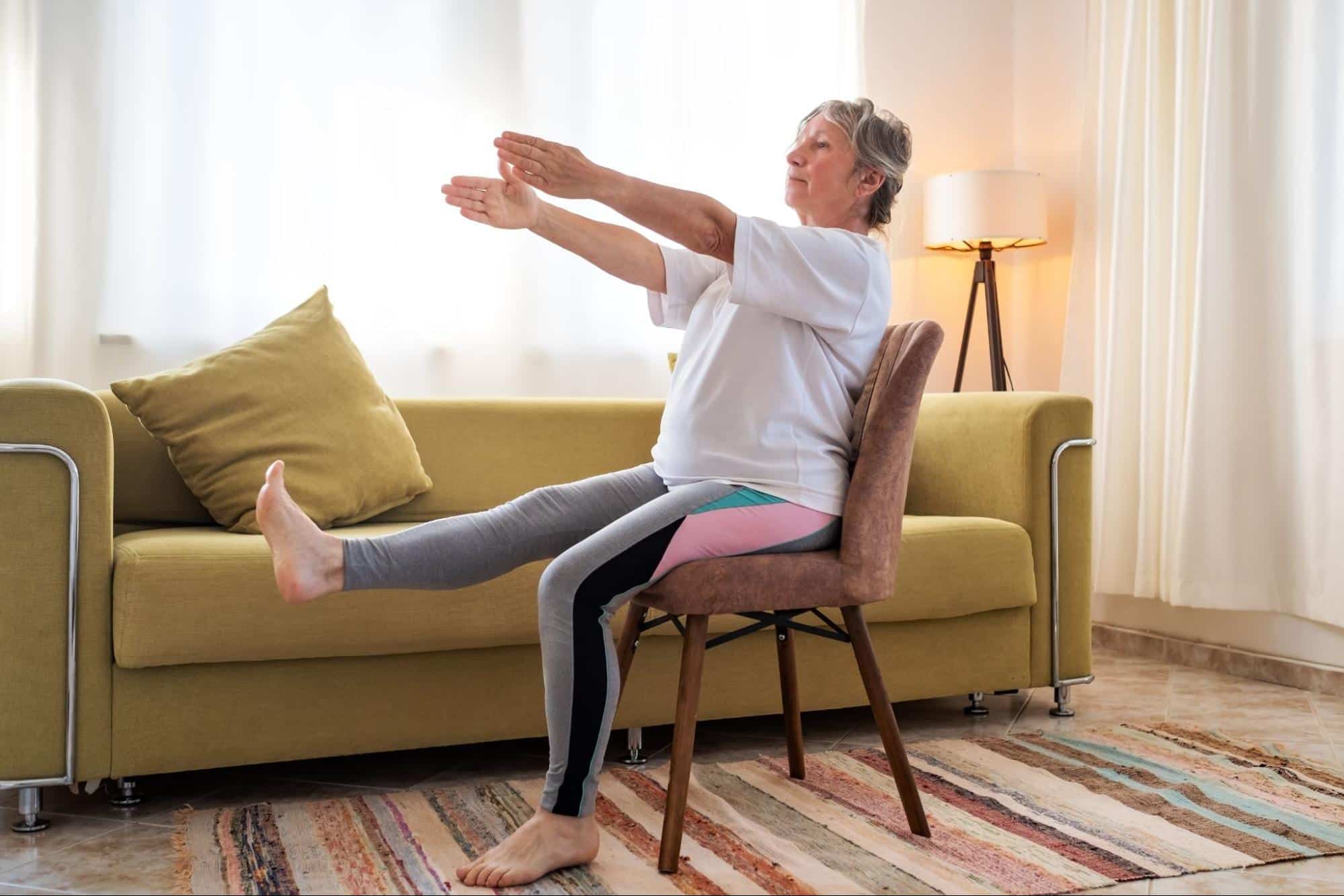
A gentle chair cardio workout can be an excellent way to stay active when standing exercises feel difficult, uncomfortable, or unsafe. Using a sturdy chair for support allows you to perform simple movements while remaining seated or using the chair for balance. This makes chair-based exercise a practical option for beginners, older adults, people returning to activity, or anyone looking for a low-impact routine.
Cardio exercise does not always require running, jumping, or intense gym sessions. Seated movements can raise your heart rate, encourage circulation, improve coordination, and help maintain everyday mobility. With consistent practice, a chair routine can become part of a balanced fitness plan designed to keep your body moving while reducing unnecessary stress on the joints.
What Is a Gentle Chair Cardio Workout?
A gentle chair cardio workout is a series of rhythmic movements performed while sitting in or using a sturdy chair. Exercises may include seated marching, arm reaches, heel taps, toe taps, punches, and controlled knee lifts. The movements are generally performed at a comfortable pace, allowing you to increase your heart rate without relying on high-impact activity.
The goal is not to move as quickly as possible. Instead, the focus is on continuous movement, controlled breathing, good posture, and comfortable range of motion. You can adjust the speed, duration, and movement size according to your current fitness level. Even a short session can provide a useful opportunity to break up long periods of sitting.
Why Chair Cardio Can Support Heart Health
Regular physical activity is an important part of maintaining cardiovascular fitness. Chair exercises can provide a way to introduce more movement into your day, especially when traditional walking or standing workouts are not appealing or practical. Repeated movements involving the arms and legs can gradually increase breathing and heart rate.
Consistency is more important than trying to make every workout difficult. A person who performs moderate chair exercise regularly may find it easier to maintain an active lifestyle than someone who attempts an intense routine occasionally. Combining chair cardio with other suitable forms of physical activity can create a more sustainable approach to fitness.
How Chair Exercises Can Improve Mobility
Mobility involves the ability to move your body and joints through useful ranges of motion. Everyday activities such as getting dressed, reaching for an object, standing up, or walking around the house all depend on mobility. Gentle movements can help you practice these patterns without requiring complicated equipment.
Seated knee lifts, ankle movements, heel taps, and controlled leg extensions encourage movement through the hips, knees, and ankles. Upper-body exercises can also involve the shoulders, elbows, wrists, and upper back. Performing these movements regularly may help you become more comfortable with everyday physical activity.
A 20-Minute Gentle Chair Cardio Workout
Begin by sitting toward the front or middle of a sturdy chair with your feet comfortably positioned on the floor. Keep your chest lifted and shoulders relaxed. Start slowly rather than immediately trying to reach a high intensity. If you experience unusual pain, dizziness, chest discomfort, or difficulty breathing, stop exercising and seek appropriate medical advice.
Seated Marching
Start with a comfortable seated position and lift one knee a few inches while keeping the other foot on the floor. Lower it gently and repeat on the opposite side. Continue alternating your legs in a steady rhythm.
As you become comfortable, increase the pace slightly or coordinate the movement with relaxed arm swings. Keep your torso controlled instead of leaning backward or bouncing in the chair.
Heel and Toe Taps
Place both feet on the floor and alternate tapping one heel forward while bringing the foot back. Then repeat with the other heel. After several repetitions, switch to gentle toe taps.
This simple movement encourages ankle and leg activity while providing a light cardiovascular challenge. Keep the movement smooth and avoid forcing the ankle into an uncomfortable position.
Seated Knee Lifts
Lift one knee toward your chest without pulling on your leg. Lower it slowly and repeat on the other side. Continue alternating for a comfortable period.
For additional movement, gently swing the opposite arm forward as the knee rises. This creates a coordinated full-body pattern while keeping the exercise seated.
Seated Punches
Sit tall and bring your hands near your chest. Extend one arm forward in a controlled punching motion, return it, and then alternate sides. Avoid locking your elbows.
You can perform the punches slowly at first and gradually increase the rhythm. Keep your shoulders relaxed and focus on controlled movement rather than force.
Arm Reaches
Reach one arm upward or diagonally while keeping the other hand comfortably positioned. Return to the starting position and switch sides. Keep the movement within a pain-free range.
This exercise combines upper-body movement with light cardio. If raising your arms overhead is uncomfortable, simply reach forward or at shoulder height instead.
Seated Side Steps
Move one foot slightly outward and return it to the starting position. Repeat on the opposite side. Continue alternating while maintaining an upright posture.
You can add gentle arm movements to increase overall activity. The goal is smooth coordination rather than large or fast movements.
How to Make Your Chair Cardio Routine More Effective
The easiest way to increase the challenge is to gradually extend your workout duration. You might begin with five or ten minutes and slowly work toward a longer session as your comfort and endurance improve. There is no requirement to complete a long workout immediately.
Another option is to change the rhythm of your movements. Spend a short period at a comfortable pace, then slightly increase your speed before returning to an easier pace. This creates natural changes in intensity without requiring jumping or complicated exercises.
Your breathing should remain controlled throughout the workout. You may breathe more heavily than normal during active portions, but you should still be able to manage your breathing. If the workout feels excessively difficult, slow down or take a break.
Safety Tips for Chair Cardio Exercises
Choose a strong chair that does not easily roll or slide. Avoid chairs with wheels because they can move unexpectedly during exercise. Place the chair on a stable, level surface and keep the surrounding area free of objects that could cause you to trip.
Maintain good posture throughout the session. Sit tall, keep your shoulders relaxed, and avoid excessive leaning. If you are using the chair while standing for any movement, make sure it is stable and positioned where you can safely hold it.
Your workout should feel challenging but manageable. Pain is not a requirement for progress. If you have a medical condition, recent injury, significant balance concerns, or have been advised to restrict physical activity, speak with a qualified healthcare professional about appropriate exercise options before beginning a new routine.
How Often Should You Do a Chair Cardio Workout?
A chair-based routine can be incorporated into a weekly activity schedule according to your fitness level and personal circumstances. Beginners may benefit from short sessions several times per week rather than attempting long workouts immediately.
You can also use short chair exercise breaks during the day. For example, a few minutes of seated marching, arm movements, and ankle exercises can provide a useful movement break after extended sitting. Over time, these small periods of activity can help create a more active daily routine.
Recovery matters as well. If your muscles feel tired after exercising, allow them enough time to recover. Gradually increasing activity gives your body an opportunity to adapt without making the routine unnecessarily demanding.
Chair Cardio for Beginners and Older Adults
One of the biggest advantages of chair exercise is its flexibility. Beginners can use smaller movements and slower speeds, while people with more experience can increase the rhythm or add longer intervals. This makes the same basic exercises adaptable to different fitness levels.
Older adults may particularly appreciate the convenience of seated movements because they can provide physical activity without requiring a complicated gym setup. However, individual abilities differ considerably. Exercises should always be adapted to the person’s mobility, balance, comfort, and medical needs.
Combining Cardio With Mobility Training
Cardio is only one part of overall physical fitness. A balanced routine can also include mobility exercises, strength work, flexibility training, and activities that support balance. Chair exercises can complement these areas when they are selected appropriately.
For example, a session could begin with gentle ankle circles and shoulder movements, continue with seated cardio, and finish with relaxed breathing and comfortable stretches. This creates a simple structure that addresses movement and cardiovascular activity without making the workout unnecessarily complicated.
Common Mistakes to Avoid
Moving too quickly is one of the most common mistakes beginners make. Fast movements can make it harder to maintain good posture and control. Start slowly and increase your pace only when the movement feels comfortable and stable.
Another mistake is holding your breath. Try to maintain a natural breathing pattern throughout the routine. It is also important not to compare your pace or range of motion with someone else’s. The most effective chair workout is one that matches your current abilities and can be performed consistently.
How to Stay Consistent With Chair Workouts
Consistency becomes easier when exercise fits naturally into your daily schedule. Choose a regular time when you are unlikely to be interrupted. Some people prefer exercising in the morning, while others find short movement sessions helpful during afternoon or evening breaks.
Tracking your sessions can also provide motivation. Instead of focusing only on speed or intensity, notice improvements such as moving for longer, completing more repetitions comfortably, or feeling more confident with certain movements. Small improvements can add up over time.
Conclusion
A gentle chair cardio workout provides a convenient way to add more movement to your day without relying on high-impact exercises. Simple movements such as seated marching, heel taps, knee lifts, punches, and arm reaches can create an enjoyable low-impact routine.
The key is to exercise consistently while respecting your body’s current abilities. Start with manageable sessions, focus on controlled movements, and gradually increase activity as you become more comfortable. When combined with appropriate strength, mobility, flexibility, and balance exercises, chair cardio can become a useful part of an active lifestyle.
FAQs
Is chair cardio a real cardio workout?
Yes. Seated rhythmic movements can increase your breathing and heart rate, particularly when performed continuously and at an appropriate intensity.
Can beginners do chair cardio?
Yes. Chair cardio is highly adaptable and can be performed at a slow pace with smaller movements before gradually increasing duration or intensity.
Can chair exercises improve mobility?
Gentle seated movements can encourage regular movement through different joints and may help you practice useful movement patterns.
How long should a chair cardio workout last?
Beginners can start with short sessions and gradually increase the duration. The appropriate length depends on your fitness level, goals, and individual circumstances.
Can I do chair cardio every day?
Some people can safely perform gentle movement daily, particularly when sessions are light. However, your routine should account for recovery and individual health needs.
Do I need special equipment?
No. A sturdy, stable chair is generally enough for basic seated cardio exercises. Comfortable clothing and supportive footwear can also make movement easier.
Can chair cardio help with circulation?
Regular movement encourages muscle activity and blood flow. Seated exercises can be particularly useful as movement breaks during periods of prolonged sitting.
Is chair cardio suitable for older adults?
It can be, but suitability depends on individual mobility, health, balance, and exercise experience. Older adults with specific health concerns should consider discussing a new exercise program with a healthcare professional.
