

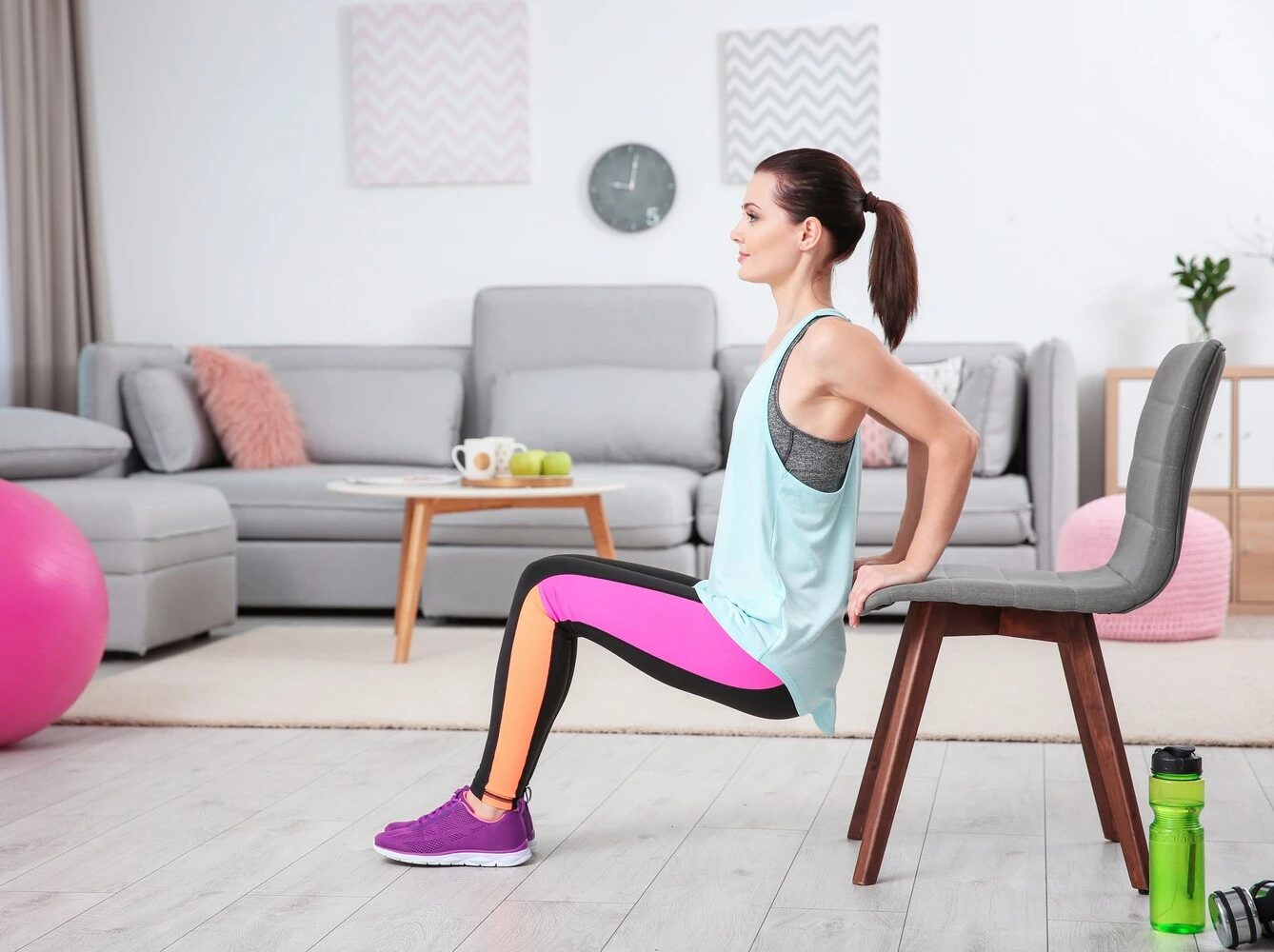
A chair workout is a practical way to stay active when you have limited space, minimal equipment, or simply prefer exercising at home. Using a sturdy chair for support can make many strength and cardio movements easier to perform while still challenging your muscles. With the right technique and a consistent routine, chair-based exercises can become an effective part of a healthy fitness plan.
You do not need an expensive home gym to improve your strength and fitness. A stable chair can provide support for exercises targeting the legs, arms, shoulders, chest, back, and core. Some movements can also raise your heart rate and increase energy expenditure. The key is choosing controlled exercises, maintaining good posture, and progressing gradually rather than rushing through repetitions.
What Is a Chair Workout?
A chair workout is a collection of exercises performed with or around a sturdy chair. The chair can provide balance, support, elevation, or resistance depending on the movement. It can be especially useful for beginners who are still developing confidence with traditional bodyweight exercises.
Although chair-based training may look simple, it can provide a meaningful challenge when exercises are performed slowly and with proper form. Squats, seated knee raises, triceps dips, incline push-ups, leg extensions, and supported lunges can all be modified to match different fitness levels.
The versatility of a chair makes it useful for home workouts, office movement breaks, and low-equipment training sessions. However, the chair should always be placed on a stable, non-slip surface, and exercises involving body weight should never be performed on a lightweight or rolling chair.
How Chair Exercises Help Build Muscle
Muscle growth depends on giving muscles enough resistance and progressively increasing the challenge over time. A chair can help create that resistance through movements such as sit-to-stand exercises, split squats, incline push-ups, and supported single-leg exercises.
Controlled movement is particularly important. Instead of completing repetitions as quickly as possible, focus on lowering your body slowly, maintaining tension, and using the target muscles. For example, during a chair squat, lowering for several seconds can make the movement considerably more demanding without adding external weights.
As your strength improves, you can increase repetitions, slow down the movement, add pauses, or progress to more challenging variations. This gradual approach helps keep workouts productive without making the exercises unnecessarily difficult.
How a Chair Workout Can Support Fat Loss
Fat loss occurs when the body consistently uses more energy than it receives from food, and exercise can contribute to that overall energy balance. A chair workout can combine resistance exercises with movements that increase your heart rate, helping you stay active even when you cannot visit a gym.
Exercises such as fast seated marches, alternating knee drives, chair-supported squats, and repeated sit-to-stand movements can create a more cardio-focused session. Combining these movements with strength exercises can make a short workout feel more comprehensive.
However, exercise alone does not guarantee fat loss. Nutrition, sleep, daily activity, stress management, and consistency also influence body composition. A sustainable approach is generally more useful than trying to burn as many calories as possible during a single workout.
Chair Workout for Beginners
Beginners can start with a short routine that focuses on movement quality rather than speed. Begin with seated marches to gently raise your heart rate, followed by controlled sit-to-stand repetitions. Keep your feet stable and use the chair only as much as necessary for support.
You can then perform seated knee extensions, supported calf raises, wall or chair incline push-ups, and seated knee raises. Rest whenever necessary and keep your breathing steady throughout the session. The goal during the first few workouts should be learning the movements and developing consistency.
As the exercises become easier, gradually increase the number of repetitions or add another round. There is no need to start with a long workout. Even a short, consistent session can help establish a regular exercise habit.
A Simple Full-Body Chair Workout
A balanced routine should involve multiple muscle groups rather than focusing exclusively on one area. Start with several minutes of gentle movement, such as seated marching, shoulder rolls, and ankle movements. This prepares your body for the exercises that follow.
Move into chair squats, using the seat as a reference point without completely relaxing into it if you can safely control the movement. Follow with incline push-ups against the chair, seated knee extensions, supported reverse lunges, and seated knee raises. Finish with calf raises and a gentle cool-down.
Perform each exercise at a controlled pace and take short breaks between movements. Beginners can complete one or two rounds, while more experienced exercisers may gradually work toward additional rounds.
| Exercise | Main Focus | Beginner Approach |
|---|---|---|
| Chair Squat | Legs and glutes | Controlled repetitions |
| Seated Knee Extension | Quadriceps | Alternate legs |
| Incline Push-Up | Chest and arms | Use a stable elevated surface |
| Supported Lunge | Legs and glutes | Hold chair lightly |
| Seated Knee Raise | Core and hip flexors | Lift one knee at a time |
| Calf Raise | Calves | Use chair for balance |
| Seated March | Cardio and core | Maintain steady rhythm |
Chair Squats for Stronger Legs
Chair squats are one of the most accessible lower-body exercises for beginners. Stand in front of a sturdy chair with your feet approximately hip-width apart. Push your hips backward and bend your knees while keeping your chest comfortably lifted.
Lower toward the chair with control, then drive through your feet to return to standing. The chair provides a useful depth reference and can offer reassurance to people who are still learning proper squat mechanics.
To increase the challenge, slow down the lowering phase or pause briefly near the bottom. Eventually, stronger individuals may progress to single-leg or staggered variations, provided they can perform them safely.
Upper-Body Exercises With a Chair
A chair can also help train the upper body. Incline push-ups are one useful option because placing the hands on a stable elevated surface reduces the amount of body weight that must be moved compared with a traditional floor push-up.
Keep your body aligned and lower your chest toward the chair while maintaining control. Push through your hands to return to the starting position. The higher the surface, generally the easier the movement will be, while a lower stable surface increases the challenge.
Some people also use chair dips to target the triceps. This movement can place substantial stress on the shoulders, so it should only be performed when the chair is extremely stable and the exercise feels comfortable. Anyone experiencing shoulder discomfort should choose a different triceps exercise.
Core Exercises Using a Chair
Your abdominal muscles and other core muscles can be trained through controlled seated movements. Seated knee raises are a simple option that involves lifting one or both knees while keeping the torso controlled.
Sit tall near the edge of a stable chair, hold the sides lightly if needed, and lift one knee toward your torso. Lower it slowly before switching sides. Avoid swinging the legs or leaning excessively backward.
You can make the movement more challenging by slowing each repetition or briefly holding the knee near the top. The objective is controlled muscular work rather than simply moving the legs quickly.
How to Make Your Chair Workout More Effective
Progression is important if you want to continue improving. Once a particular movement becomes easy, you can gradually increase repetitions, add another round, slow the tempo, or use a more demanding variation.
You should not increase every variable at the same time. Changing one aspect of the workout allows you to understand how your body responds and reduces the temptation to progress too quickly.
Consistency also matters more than having a perfect routine. Performing manageable workouts regularly can be more productive than completing an extremely difficult workout occasionally and then taking long periods away from exercise.
Safety Tips for Chair-Based Exercise
Safety should come before intensity. Always inspect the chair before exercising and make sure it is strong, stable, and positioned on a surface where it will not slide. Avoid chairs with wheels, unstable legs, or loose components.
Maintain control throughout each movement. If an exercise causes sharp pain, unusual dizziness, chest discomfort, or significant shortness of breath, stop exercising and seek appropriate medical guidance when necessary.
People with existing injuries, balance difficulties, or medical conditions may need modifications or professional guidance before beginning a new exercise program. The safest routine is one that matches your current abilities and progresses gradually.
How Often Should You Do a Chair Workout?
How often you exercise depends on your current fitness level, the intensity of your sessions, and how well your body recovers. Beginners can start with short sessions several times per week and gradually build their activity level.
Allowing muscles to recover is particularly important when your routine includes challenging strength exercises. Recovery gives the body time to adapt and can help you return to your next session feeling prepared rather than excessively fatigued.
On days between workouts, light walking, mobility exercises, or gentle stretching can help you remain active without repeating the same demanding movements.
Chair Workout and Nutrition
Exercise and nutrition work together when the goal is improving body composition. Protein-rich foods can help support muscle maintenance and repair, while carbohydrates provide energy for physical activity. Fruits, vegetables, whole grains, and other nutrient-dense foods can contribute to an overall balanced eating pattern.
If fat loss is your goal, extreme calorie restriction is generally unnecessary. A moderate and sustainable approach can make it easier to maintain your routine while still supporting gradual changes in body composition.
Hydration is also important, particularly when exercising in warm environments. Drink fluids regularly and pay attention to your body’s thirst signals during and after exercise.
Common Mistakes to Avoid
One common mistake is moving too quickly. Fast repetitions can reduce control and make it harder to maintain proper alignment. Slowing down often makes simple bodyweight exercises considerably more challenging.
Another mistake is treating every workout as a maximum-effort session. Your body needs recovery, and increasing intensity too quickly can make exercise unnecessarily difficult to maintain. Focus on gradual progress, consistent technique, and a routine that fits your lifestyle.
Using an unstable chair is another serious mistake. Never assume a chair is safe simply because it looks sturdy. Test its stability before putting your body weight on it.
Conclusion
A chair workout can be an effective and convenient way to develop strength, improve movement, and increase daily physical activity. With exercises for the legs, upper body, and core, a simple chair can support a surprisingly complete home routine.
The most important factors are consistency, proper technique, gradual progression, and safety. You do not need complicated equipment to begin improving your fitness. Start with movements you can perform comfortably, increase the challenge over time, and combine exercise with balanced nutrition and adequate recovery for sustainable results.
FAQs
Can a chair workout really build muscle?
Yes. Bodyweight exercises can challenge muscles, particularly when performed with controlled repetitions and progressive variations. The amount of muscle-building stimulus depends on exercise difficulty and progression.
Is a chair workout good for beginners?
Yes. Many chair exercises can be modified for beginners and provide support during movements such as squats and standing exercises. Start with simple variations and focus on technique.
Can chair exercises help burn fat?
They can contribute to overall energy expenditure and support a fat-loss program when combined with an appropriate eating pattern and regular physical activity.
How long should a chair workout last?
A beginner session can be relatively short. Around 15 to 30 minutes may be enough for a useful workout, depending on exercise selection, intensity, and rest periods.
Can I do chair exercises every day?
Light chair movements may be suitable for frequent use, but challenging strength workouts should allow adequate recovery. Your schedule should depend on intensity and individual recovery.
What type of chair should I use?
Use a strong, stable chair without wheels that sits securely on the floor. Avoid folding, rolling, or unstable chairs for exercises that require significant body weight.
Are chair workouts suitable for older adults?
Some chair-based exercises can be useful for older adults because they can provide support and allow movements to be modified. However, people with balance concerns or health conditions should choose exercises appropriate for their abilities.
Can I combine chair workouts with walking?
Yes. Combining resistance exercises with regular walking can create a well-rounded activity routine. Walking adds additional movement while chair exercises can focus on muscular strength and control.
