
An Easy Home Boxing Workout for Beginners is a practical way to learn basic boxing movements, improve fitness, and build confidence without needing a gym membership. You do not need expensive equipment or previous boxing experience to get started. With enough space, comfortable clothing, and a little consistency, you can create an effective boxing routine at home.
Boxing workouts combine footwork, punches, body movement, coordination, and cardiovascular exercise. Even simple combinations can make your heart rate rise while challenging your shoulders, arms, legs, and core. The key for beginners is not to punch as hard or as fast as possible. Instead, focus on learning proper movement and gradually becoming more comfortable with each exercise.
This step-by-step tutorial explains how to begin safely, warm up properly, practice your basic stance and punches, build simple combinations, and finish with a cool-down. Whether your goal is general fitness, better coordination, stress relief, or learning boxing fundamentals, this routine provides a simple starting point.
Why Try an Easy Home Boxing Workout for Beginners?
Boxing is more than throwing punches. A basic session can involve your entire body because you constantly move your feet, rotate your torso, stabilize your core, and control your upper body. This makes boxing-inspired exercise a useful option for people who want a dynamic workout that does not feel repetitive.
Another advantage is flexibility. You can perform many beginner boxing drills without a heavy bag or specialized equipment. Shadowboxing, for example, allows you to practice punches and combinations while imagining an opponent in front of you. It also gives you an opportunity to concentrate on technique before adding more challenging exercises.
A home session can also be adjusted to your current fitness level. Beginners can start with short rounds and longer rest periods, while more experienced exercisers can gradually increase the duration or intensity. Starting slowly is important because good technique matters more than speed.
What You Need Before Starting
You do not need a complete boxing gym at home to begin. A clear area where you can move your arms and take a few steps in different directions is usually enough. Remove objects that could cause you to trip, particularly if you are practicing footwork.
Wear comfortable workout clothing and supportive athletic shoes if you are exercising on a hard surface. A timer can help you organize rounds, although you can also count repetitions or simply work for a comfortable amount of time.
If you eventually decide to train with a heavy bag, hand wraps and appropriate boxing gloves become important. However, beginners can first learn many fundamentals through controlled shadowboxing. Avoid hitting walls, furniture, doors, or other hard surfaces.
Step 1: Start With a Proper Warm-Up
A warm-up prepares your body for movement and helps you transition gradually from rest into exercise. Begin with a few minutes of easy movement rather than immediately throwing fast punches.
Start by walking or lightly jogging in place. Move your shoulders gently, rotate your arms through a comfortable range, and perform controlled torso movements. You can also add light knee lifts or easy jumping movements if they feel comfortable.
After your general warm-up, spend some time practicing your boxing stance. Keep your movements relaxed and avoid locking your knees or shoulders. The purpose of this stage is to prepare your body while becoming familiar with the position you will use throughout the workout.
Step 2: Learn Your Boxing Stance
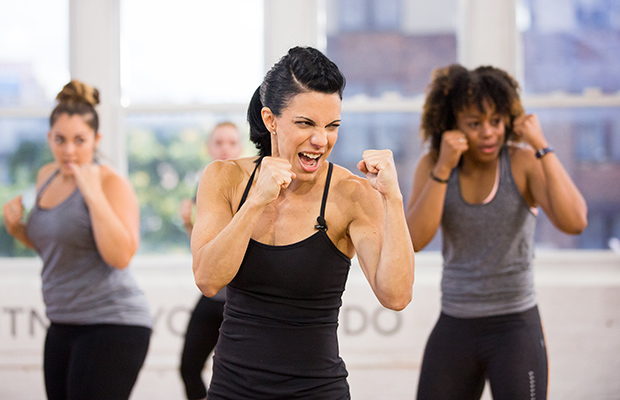
Your stance provides the foundation for almost every boxing movement. For a basic orthodox stance, place your left foot forward and your right foot slightly behind it. Keep your feet comfortable rather than placing them directly in one line. Your knees should remain slightly bent, allowing you to move easily.
Keep your hands near your face, with your elbows reasonably close to your body. Your chin should be slightly protected, and your shoulders should remain relaxed. If you naturally use a southpaw stance, you can reverse the basic positioning.
Do not become overly concerned with creating a perfect stance immediately. Beginners should concentrate on balance and mobility. You should be able to move forward, backward, and sideways without crossing your feet or becoming unstable.
Step 3: Practice the Basic Punches
Once your stance feels comfortable, begin learning the fundamental punches. The jab is usually the easiest place to start. From an orthodox stance, extend your lead hand straight forward and then bring it back to your guard. Keep the movement controlled instead of trying to generate maximum force.
Next comes the cross, which is the straight punch from your rear hand. As you extend the punch, allow your rear side to rotate naturally while your back foot and hips contribute to the movement. Return your hand to its starting position after every repetition.
You can then practice the hook. Bend your arm and rotate your body while bringing the lead arm across in a controlled horizontal motion. Finally, beginners can practice the rear uppercut with a small upward movement. These punches should initially be slow because the goal is coordination and technique rather than power.
Step 4: Practice Basic Footwork
Good boxing involves movement as much as punching. After learning the basic punches, practice moving while maintaining your stance. Take small steps rather than large jumps.
Move forward with your lead foot first and then bring the rear foot along. When moving backward, reverse the process. For side-to-side movement, step in the direction you want to travel before bringing the other foot across.
Keep your feet underneath you and avoid crossing them. Spend a few minutes moving around your workout area while keeping your hands in position. Once you become comfortable, add a jab while moving forward and backward.
Step 5: Begin Shadowboxing
Shadowboxing is one of the easiest ways to practice boxing at home. Stand in your stance and imagine that an opponent is positioned in front of you. Throw controlled punches while maintaining your guard and moving around the space.
Start with simple combinations such as a jab followed by a cross. Once that feels natural, add a hook or another straight punch. After each combination, return your hands to your guard and move your feet.
For your first session, keep shadowboxing slow and controlled. Focus on staying balanced after every punch. Your movements should look deliberate rather than rushed. As your coordination improves, you can gradually increase your speed while maintaining good form.
Step 6: Try This Beginner Boxing Routine
A simple home session can be organized into short rounds. Begin with approximately five minutes of warm-up, followed by several rounds of controlled boxing movements. Rest between rounds and drink water as needed.
For the first round, practice your stance and basic footwork. Move forward, backward, and sideways while keeping your hands up. During the second round, practice the jab and cross individually before combining them.
In the third round, introduce simple combinations such as jab-cross and jab-cross-hook. The fourth round can focus on movement and defense-inspired actions such as stepping away after a combination. Finish with a final light shadowboxing round in which you combine the skills you have practiced.
The intensity should remain manageable. Beginners do not need to throw every punch at maximum speed. A controlled workout that you can perform consistently is more useful than an exhausting session that leaves you unable to train again for several days.
Step 7: Add Simple Boxing Combinations
Once the individual punches feel comfortable, combinations make the workout more engaging. Start with two-punch combinations before moving toward longer sequences.
The jab-cross is an excellent beginner combination because it teaches you to use both sides of your body. After practicing it repeatedly, try jab-cross-hook. Another option is jab-cross followed by a small step backward. This introduces movement into your punching routine.
You can also practice combinations without actually making contact with anything. Keep your punches controlled and return to your guard after every movement. If your technique begins to break down as you get tired, slow down rather than continuing at the same speed.
Step 8: Include Defensive Movement
Boxing is not only about attacking. Defensive movement can make your workout more realistic and improve coordination. Beginners can start with simple actions such as stepping backward, stepping sideways, or slightly moving the head after a combination.
For example, practice a jab-cross followed by a small step backward. Return to your stance and repeat. You can later practice a jab-cross followed by a controlled side step.
Avoid exaggerated head movements or deep bends that place unnecessary stress on your body. Keep defensive movements small and controlled. At home, the priority should be learning balance and coordination rather than trying to imitate advanced boxing techniques.
Common Mistakes Beginners Should Avoid
One common mistake is trying to punch too hard. Without a target, there is little reason to throw punches at maximum force. Excessive effort can make your movements tense and may interfere with technique.
Another mistake is dropping the hands after every combination. Try to return your hands to a protective position after each punch. Beginners also sometimes cross their feet during movement, which can reduce balance.
Training too intensely from the first session is another problem. Boxing can be demanding because it involves continuous movement. Start with manageable rounds and increase your workload gradually. If you experience sharp pain, unusual dizziness, or difficulty breathing beyond normal exercise exertion, stop the workout and seek appropriate medical advice.
How to Improve Your Boxing Technique
Technique improves through repetition, but repetition should be controlled. Practice one movement at a time until it becomes familiar. You can use a mirror to check whether your stance, guard, and movements remain consistent.
Recording yourself can also help you notice habits that are difficult to recognize while exercising. Look for excessive arm movement, poor balance, dropping hands, or footwork that becomes unstable.
As your skills develop, gradually introduce faster combinations and more movement. The goal is to become smoother without sacrificing control. Speed should be a result of better coordination rather than simply trying to move as quickly as possible.
How Often Should Beginners Do Boxing Workouts?
Beginners can start with a few sessions per week rather than boxing intensely every day. This allows your body to adapt to the movement while giving you time to recover.
A short session performed consistently can be more beneficial for skill development than an occasional long workout. As your fitness improves, you can gradually increase round duration, reduce unnecessary rest, or add additional movement.
Recovery should remain part of your training routine. Adequate sleep, hydration, balanced nutrition, and rest days can help you maintain consistency. If your muscles remain unusually sore or fatigued, consider reducing the intensity of your next session.
Benefits of Home Boxing Training
Regular boxing-inspired exercise can support cardiovascular fitness, coordination, balance, agility, and muscular endurance. Because the workout combines upper- and lower-body movement, it can feel like a full-body training session even when no equipment is used.
Shadowboxing also provides a useful mental challenge. Remembering combinations and coordinating punches with footwork requires concentration. For many people, the rhythmic movement can make exercise feel engaging rather than monotonous.
However, home boxing workouts should be viewed as fitness training unless you are receiving proper instruction for contact boxing. Learning to exercise with punches does not automatically prepare someone for sparring or competition.
Cool Down After Your Workout
Do not finish your session by suddenly stopping after a demanding round. Spend a few minutes gradually reducing your movement. Walk around slowly and allow your breathing to settle.
You can then perform gentle mobility movements for areas that worked during the session, including the shoulders, arms, hips, and legs. Avoid forcing stretches or bouncing through them.
A cool-down is also a good time to reflect on your technique. Think about which movements felt natural and which combinations need more practice. This can help you plan the next workout without simply increasing intensity.
Conclusion
An Easy Home Boxing Workout for Beginners can be a simple and enjoyable way to introduce boxing movements into your fitness routine. You can begin with a small amount of space and no specialized equipment by focusing on stance, footwork, basic punches, and controlled shadowboxing. The most important goal is to learn proper movement before worrying about speed or power.
With regular practice, simple combinations can become smoother and more natural. Keep your sessions manageable, allow enough recovery, and increase difficulty gradually. Boxing fitness is a skill as well as a workout, so patience and consistency can make a significant difference as you continue learning.
FAQs
Is boxing at home good for beginners?
Yes. Beginners can learn basic stance, footwork, punches, and shadowboxing at home. Start slowly and prioritize technique over speed or power.
Can I do a boxing workout without equipment?
Yes. Shadowboxing requires very little equipment and can provide an effective workout. A clear, safe training area is usually enough to begin.
How long should a beginner boxing workout be?
A beginner can start with a short session of around 20 to 30 minutes, including warm-up and cool-down. The duration can increase gradually as fitness improves.
What should I learn first in boxing?
Start with your stance and balance, followed by basic footwork and straight punches. Once these movements feel comfortable, introduce hooks, uppercuts, and combinations.
Can boxing help improve fitness?
Boxing-style workouts can challenge your cardiovascular fitness, coordination, agility, and muscular endurance. Results depend on workout intensity, frequency, nutrition, and overall activity.
Should beginners punch as hard as possible?
No. Beginners should concentrate on control and technique. Throwing punches harder than you can control can interfere with form and may increase unnecessary strain.
How many days a week should I box at home?
Starting with a few sessions per week is a reasonable approach for many beginners. Allow enough recovery between demanding sessions and adjust your schedule according to how your body responds.
Can I learn boxing completely at home?
You can learn basic boxing fitness movements and shadowboxing at home, but technical boxing, sparring, and competition skills are best developed with qualified coaching and appropriate supervision.
