
Losing weight does not always require a gym membership, expensive machines, or complicated workout equipment. A well-designed full-body home workout without equipment for rapid weight loss can help you increase calorie expenditure, build functional strength, improve cardiovascular fitness, and create a consistent exercise habit from the comfort of your home. Bodyweight movements can challenge multiple muscle groups while keeping your routine simple and accessible.
The key to successful weight loss is not one magical exercise. It comes from combining regular physical activity with sensible nutrition, adequate recovery, and a sustainable calorie deficit. A home routine can become an effective part of that process when it includes movements that raise your heart rate while strengthening the major muscle groups. With consistency and progressive challenges, even a small workout space can become an effective training environment.
Why a Full-Body Home Workout Can Support Weight Loss
A full-body routine works several major muscle groups during one session instead of focusing on only one area. Exercises such as squats, push-ups, lunges, mountain climbers, and plank variations can involve the legs, chest, shoulders, arms, back, and core. Because several muscles are working together, these movements can make a short workout feel challenging without requiring specialized equipment.
Weight loss primarily depends on maintaining an appropriate energy balance over time. Exercise increases the amount of energy your body uses, while your food intake supplies energy. Combining regular workouts with nutritious meals can therefore support your overall weight-management goals. However, the speed of weight loss varies from person to person, so aiming for steady progress is generally more practical than expecting dramatic changes within a few days.
How to Prepare for Your Home Workout
Before beginning a demanding workout, spend several minutes preparing your body. A simple warm-up can include marching in place, arm circles, gentle bodyweight squats, hip rotations, and controlled knee raises. Start slowly and gradually increase your movement intensity. This can help you transition from rest to exercise and prepare your joints and muscles for the movements ahead.
Choose a clear area where you can move safely without hitting furniture or slipping. Comfortable clothing and supportive footwear can also make exercising easier. If you experience sharp pain, unusual dizziness, chest discomfort, or difficulty breathing, stop exercising and seek appropriate medical advice rather than trying to push through the symptoms.
The Best Full-Body Home Workout Without Equipment for Rapid Weight Loss
A practical routine can combine strength-based bodyweight exercises with movements that elevate your heart rate. The following workout can be adjusted according to your fitness level. Beginners can perform fewer repetitions and take longer recovery periods, while more experienced exercisers can gradually increase repetitions, rounds, or exercise intensity.
Begin with bodyweight squats to train the lower body. Stand with your feet around shoulder-width apart, brace your core, push your hips backward, and bend your knees while keeping your chest reasonably upright. Return to standing through your feet. Perform around 10 to 15 controlled repetitions, focusing on good technique rather than rushing.
Next, move into push-ups, one of the most useful equipment-free upper-body exercises. Keep your hands positioned comfortably under or slightly wider than your shoulders and maintain a controlled body line. Lower your chest toward the floor and press yourself upward. If standard push-ups are too difficult, perform them from your knees or against a sturdy elevated surface.
Follow push-ups with alternating reverse lunges. Step one foot backward, lower your body under control, and return to your starting position before changing sides. Lunges challenge the legs and glutes while requiring balance and coordination. Aim for 8 to 12 repetitions on each side.
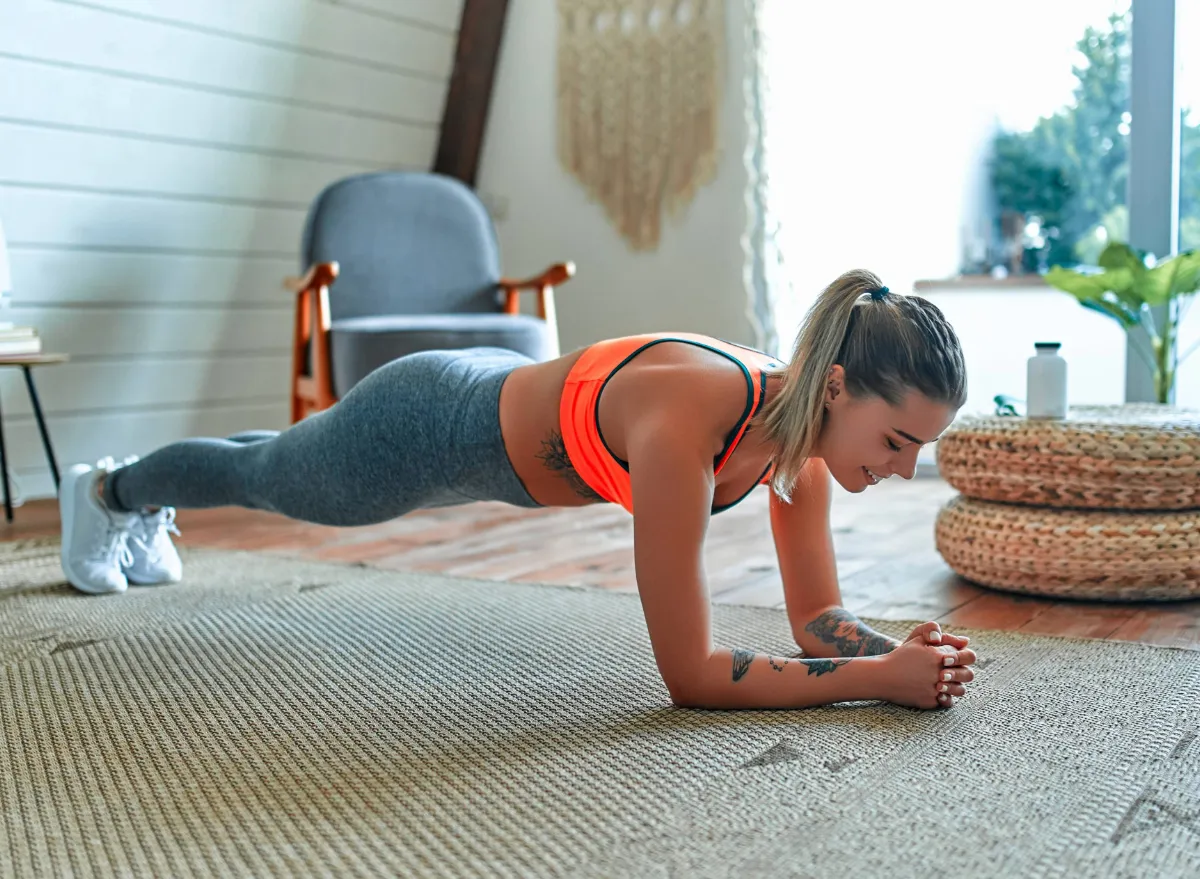
After the strength movements, add mountain climbers to increase the cardiovascular demand. Start in a high-plank position and alternate bringing your knees toward your chest. Keep your core engaged and choose a pace that allows you to maintain control. Beginners can slow the movement down rather than trying to match a fast pace.
Continue with glute bridges to target the hips and glutes. Lie on your back with your knees bent and feet planted on the floor. Press through your feet and lift your hips while squeezing your glutes, then lower slowly. Complete approximately 12 to 15 repetitions.
Finish the circuit with high knees or marching knee drives. Beginners can march briskly while raising their knees, while fitter individuals can increase the pace into controlled high knees. Continue for approximately 20 to 40 seconds, depending on your conditioning.
How to Structure the Workout
The exercises become more useful when they are organized into a consistent training format. After warming up, perform the exercises consecutively with short recovery periods when appropriate. Once you complete the circuit, rest for roughly one to two minutes before beginning another round. Beginners may start with two rounds, while more experienced exercisers may work toward three or four rounds.
The goal should not be to exercise as fast as possible. Good technique should remain the priority throughout the session. If your form deteriorates because you are tired, slow down or take a short break. A controlled workout that you can repeat consistently is usually more valuable than an extremely intense session that leaves you unable to train comfortably afterward.
Make Your Workouts More Challenging Over Time
Your body adapts when you repeatedly perform the same workout. Once a routine becomes noticeably easier, gradually introduce a new challenge. You could increase repetitions, add another round, reduce unnecessary rest, slow down the lowering phase of strength exercises, or choose a more demanding variation.
For example, standard squats could eventually become squat-to-knee-drive movements, while regular lunges could progress to reverse-lunge variations with a controlled knee drive. Push-ups can progress from an elevated version to knee push-ups and eventually standard push-ups. These gradual changes provide a simple form of progression without requiring weights.
The Role of Cardio in Weight Loss
Bodyweight strength exercises are useful, but adding regular cardiovascular activity can increase your overall physical activity. Walking, brisk marching, dancing, stair climbing, jogging, or cycling can complement your home routine. You do not necessarily need to perform intense cardio every day to make progress.
Daily movement outside your formal workout can matter as well. Taking walking breaks, choosing stairs when appropriate, doing household activities, and spending less time sitting can increase overall activity. Creating a lifestyle that includes frequent movement can make your weight-management efforts more sustainable than relying exclusively on short, exhausting workouts.
Nutrition Matters as Much as Exercise
Exercise alone does not guarantee rapid weight loss. Your diet has a major influence on whether you maintain, gain, or lose body weight. Instead of relying on extreme restriction, build meals around nutrient-dense foods such as vegetables, fruits, lean protein sources, whole grains, beans, and other minimally processed foods.
Protein can be particularly useful because it supports muscle maintenance and contributes to feelings of fullness. Carbohydrates can provide energy for training, while healthy fats can contribute important nutrients and satiety. Portion sizes still matter, because nutritious foods can contribute substantial calories when consumed in large quantities.
Hydration is also important during daily life and exercise. Drink fluids regularly and pay attention to thirst, especially when exercising in warm environments. Your exact fluid requirements depend on factors such as activity, climate, body size, and individual needs.
Common Mistakes to Avoid
One common mistake is assuming that exercising harder always produces faster weight loss. Excessive training can make recovery difficult and may increase fatigue, soreness, or the likelihood of abandoning the routine. A balanced approach is more sustainable. Your workout should challenge you without making normal daily activity unnecessarily difficult.
Another mistake is concentrating exclusively on abdominal exercises because you want to lose belly fat. Exercises such as planks and mountain climbers can strengthen the core, but they cannot selectively remove fat from one specific body area. Overall fat loss occurs as part of changes in total body energy balance, while genetics influence where the body tends to store and lose fat.
Skipping recovery is another problem. Rest allows your body to adapt to training. Quality sleep, adequate nutrition, hydration, and appropriate rest days can all contribute to better long-term performance. If you are constantly exhausted, reducing workout intensity or frequency may be more productive than adding more exercise.
Create a Sustainable Weekly Routine
A successful home program should fit your lifestyle. Rather than trying to perform an extremely demanding workout every day, combine full-body sessions with lighter activities and recovery. For example, you might perform a challenging bodyweight circuit several times per week while using walking or gentle mobility work on other days.
Consistency is more important than perfection. Missing one workout does not erase your progress. The most effective routine is one you can continue for weeks and months. Tracking workouts, repetitions, walking activity, or other measurable habits can help you recognize gradual improvements that may not immediately appear on the scale.
How to Track Weight-Loss Progress
The scale is only one way to monitor progress. Body measurements, clothing fit, exercise performance, endurance, energy levels, and strength can also provide useful information. Weight naturally fluctuates because of hydration, food intake, digestion, and other factors, so a single weigh-in does not always represent a meaningful change in body fat.
Consider looking at longer-term trends instead of reacting to daily changes. If your goal is weight loss, combine your measurements with your exercise and nutrition habits. This broader perspective can help you determine whether your overall approach is working and whether adjustments are needed.
Final Thoughts on Equipment-Free Weight Loss Workouts
A full-body home workout without equipment for rapid weight loss can be an excellent starting point for people who want a convenient and affordable way to become more active. Squats, push-ups, lunges, glute bridges, mountain climbers, and high-knee movements can provide a challenging workout using only your body.
The most important factor is consistency. Combine regular exercise with nutritious food choices, adequate sleep, hydration, and realistic expectations. Instead of chasing an overnight transformation, focus on building habits that gradually improve your fitness and support sustainable weight management.
Conclusion
A full-body workout at home can provide an effective training option without requiring expensive equipment or a gym membership. By combining strength movements with exercises that elevate your heart rate, you can train several major muscle groups while increasing your overall activity.
Rapid results should not mean extreme methods. Sustainable weight loss generally comes from consistent exercise, appropriate nutrition, sufficient recovery, and patience. Start at a level that matches your current ability, improve gradually, and give your body enough time to adapt.
FAQs
Can I lose weight with home workouts without equipment?
Yes, equipment-free workouts can contribute to weight loss by increasing physical activity and energy expenditure. Nutrition and overall daily activity also play important roles.
How often should I perform a full-body home workout?
Many people can begin with two or three full-body sessions per week, allowing recovery between challenging sessions. Your ideal schedule depends on your fitness level and overall activity.
What is the best exercise for rapid weight loss at home?
There is no single exercise that guarantees rapid weight loss. A combination of full-body strength movements and cardiovascular activity can provide a more balanced approach.
Can bodyweight workouts build muscle?
Yes. Bodyweight exercises can improve muscular strength and development, particularly when you progressively increase the difficulty and perform exercises with good technique.
Can I lose belly fat with home exercises?
You cannot specifically target belly fat through individual exercises. Overall fat loss occurs through broader changes in energy balance, while core exercises can strengthen the abdominal muscles.
Should beginners do high-intensity workouts?
Beginners should start at an appropriate intensity and focus on technique. As fitness improves, intensity can gradually increase rather than starting with an extremely demanding routine.
Is walking useful for weight loss?
Walking can increase daily energy expenditure and is generally accessible to many people. Brisk walking can also complement strength-focused home workouts.
How quickly will I see results?
Results vary considerably between individuals. Factors including nutrition, activity, starting body composition, sleep, and consistency can affect progress. Focus on sustainable improvements rather than a specific deadline.
