
The 10 Best Lower Back Stretches to Relieve Pain Instantly can be a useful part of a gentle mobility routine when your back feels tight or stiff. Long periods of sitting, poor posture, strenuous activity, or limited mobility can contribute to discomfort in the lower back. Gentle stretching may help relax tense muscles, improve movement, and make everyday activities more comfortable.
It is important to remember that stretching is not a guaranteed instant cure for back pain. If pain is severe, persistent, follows an injury, or comes with symptoms such as weakness, numbness, or loss of bladder or bowel control, seek medical attention rather than relying on stretches alone. For ordinary muscular tightness, slow and controlled movements can be a helpful addition to an active lifestyle.
Why Lower Back Stretching Can Help
The lower back works together with the hips, glutes, hamstrings, and abdominal muscles to support movement and posture. Tightness in one area can affect how the rest of the body moves. Gentle stretching can improve flexibility around these connected muscles and help you move more comfortably.
Regular mobility work may also be useful for people who spend much of the day sitting. Instead of remaining in one position for hours, taking short movement breaks and performing gentle stretches can encourage better mobility and reduce feelings of stiffness.
1. Child’s Pose Stretch
Child’s pose is a gentle movement commonly used to stretch the lower back, hips, and thighs. Begin on your hands and knees, then slowly move your hips toward your heels while reaching your arms forward. Keep the movement comfortable and avoid forcing your hips downward.
Stay in the position while breathing slowly and naturally. Allow your back to relax rather than trying to create a strong stretch. If your knees or hips feel uncomfortable, place a cushion underneath them or reduce the depth of the movement.
2. Knee-to-Chest Stretch
The knee-to-chest stretch is a simple movement that can gently lengthen the muscles around your lower back and hips. Lie on your back with your knees bent and feet resting comfortably on the floor. Slowly bring one knee toward your chest and hold it with your hands without pulling aggressively.
After several comfortable breaths, return the leg to the floor and repeat on the opposite side. You can also bring both knees toward the chest if that feels comfortable. Keep your movements slow and stop if the stretch produces sharp or increasing pain.
3. Cat-Cow Stretch
Cat-cow provides gentle movement through the spine and can be especially useful when your back feels stiff after sitting. Start on your hands and knees with your hands beneath your shoulders and knees beneath your hips. Slowly arch your back while lifting your chest, then gently round your spine.
Move between the two positions at a controlled pace while breathing naturally. The goal is mobility rather than forcing your spine through its maximum range. Perform several repetitions and keep your movements smooth throughout.
4. Pelvic Tilts
Pelvic tilts are gentle exercises that help you become more aware of your lower back and abdominal muscles. Lie on your back with your knees bent and feet flat on the floor. Gently tighten your abdominal muscles and tilt your pelvis so your lower back moves closer toward the floor.
Hold the position briefly before relaxing and returning to a neutral posture. Repeat the movement slowly rather than pushing forcefully into the floor. This exercise can be particularly useful as part of a gentle mobility or core routine.
5. Seated Forward Stretch
A gentle seated forward stretch can target the lower back and the muscles along the back of the legs. Sit comfortably with your legs extended or slightly bent. Keep your spine relaxed and slowly lean forward from your hips without forcing yourself to touch your toes.
Stop when you feel a comfortable stretch rather than pain. People with significant back discomfort may find a smaller range of motion more comfortable. Breathe steadily throughout the movement and avoid bouncing.
6. Supine Spinal Twist
The supine spinal twist gently moves the lower back and hips through rotation. Lie on your back with your knees bent and feet on the floor. Slowly allow both knees to move toward one side while keeping your shoulders comfortably supported by the floor.
Return to the starting position and repeat on the opposite side. Keep the rotation gentle and controlled. If twisting increases your pain, reduce the range or choose a different mobility exercise.
7. Figure-Four Stretch
The figure-four stretch focuses primarily on the glutes and outer hips, which can become tight from prolonged sitting. Lie on your back with both knees bent. Place one ankle across the opposite thigh, creating a figure-four shape, then gently draw the supporting leg toward you.
You should feel a stretch around the hip and buttock rather than sharp discomfort in your lower back. Hold the position comfortably before switching sides. Keeping your shoulders relaxed can make the movement easier and more effective.
8. Hip Flexor Stretch
Tight hip flexors can develop when you spend extended periods sitting. Begin in a comfortable half-kneeling position with one foot forward and the opposite knee supported on the floor. Keep your torso upright and gently move your hips forward while maintaining control.
Avoid arching your lower back as you move. Instead, lightly engage your abdominal muscles and focus on creating a comfortable stretch at the front of the hip. Repeat on both sides to promote balanced mobility.
9. Hamstring Stretch
Tight hamstrings may affect how your pelvis and lower back move. To perform a gentle hamstring stretch, lie on your back and raise one leg while keeping the other leg comfortable. Hold behind your thigh and slowly straighten the raised leg as far as feels comfortable.
You do not need to fully straighten your knee to benefit from the movement. Keep the stretch mild and avoid pulling aggressively on the leg. Perform the exercise on both sides and maintain relaxed breathing throughout.
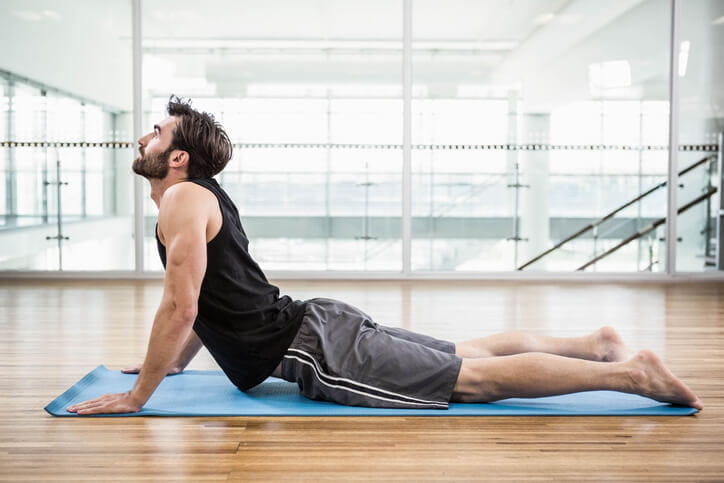
10. Supported Back Extension
A gentle supported back extension can provide controlled movement in the opposite direction from prolonged sitting. Lie on your stomach and place your hands near your shoulders. Slowly raise your upper chest using your arms while keeping your hips and legs relaxed.
Only lift as high as feels comfortable and avoid forcing your lower back into a deep bend. If the movement increases your symptoms, stop and choose a gentler exercise. Individual responses to back extension can vary, so comfort should guide your range of motion.
How to Perform These Stretches Safely
Stretching should feel gentle and controlled rather than painful. Move slowly into each position, breathe normally, and avoid bouncing. Starting with a small range of motion allows your body to adapt before you gradually increase the movement.
Consistency is more useful than forcing a long session occasionally. A few minutes of gentle mobility performed regularly can be easier to maintain than an intense stretching routine. You can also take short movement breaks throughout the day if sitting contributes to stiffness.
When to Avoid Lower Back Stretching
Not every type of back pain should be treated with stretching. If your discomfort began after a significant accident, is becoming progressively worse, or is accompanied by weakness, numbness, fever, or other concerning symptoms, professional medical evaluation is important.
You should also stop a stretch if it causes sharp pain, significant discomfort, or symptoms that travel down the leg. A healthcare professional or qualified physical therapist can help identify the cause of your symptoms and recommend movements appropriate for your situation.
Building a Back-Friendly Daily Routine
A healthy back routine should involve more than stretching alone. Regular walking, appropriate strengthening exercises, good sleep, and changing positions throughout the day can support general physical health. Maintaining an active lifestyle may be more beneficial than remaining sedentary and stretching only when discomfort appears.
When working at a desk, adjust your sitting position and take regular movement breaks. Strengthening the abdominal, hip, and glute muscles can also help support everyday movement. Progress gradually and choose exercises that feel comfortable and sustainable.
Conclusion
The 10 Best Lower Back Stretches to Relieve Pain Instantly provide gentle options for improving mobility and easing feelings of muscular tightness. Movements such as child’s pose, knee-to-chest stretches, cat-cow, pelvic tilts, and gentle hip stretches can help you move more comfortably when performed with controlled technique.
However, stretching should not be viewed as an instant cure for every type of back pain. Pay attention to your symptoms, avoid painful movements, and seek professional advice when discomfort is severe, persistent, or associated with concerning symptoms. With consistent movement and appropriate exercise, gentle flexibility work can become a useful part of a healthy back-care routine.
FAQs
Can stretching relieve lower back pain quickly?
Gentle stretching may reduce feelings of stiffness or muscular tension for some people, but results vary. It should not be considered a guaranteed instant treatment.
How often should I stretch my lower back?
Gentle mobility exercises can be performed regularly if they feel comfortable. Consistency and controlled movement are generally more useful than aggressive stretching.
Should I stretch when my back hurts?
For mild muscular tightness, gentle movement may help. However, stop if stretching increases your pain, and seek professional advice for severe or unexplained symptoms.
Is child’s pose good for the lower back?
Child’s pose can gently stretch the lower back, hips, and thighs. Use a comfortable range and avoid forcing the position.
Can sitting cause lower back stiffness?
Long periods in one position can contribute to stiffness and discomfort. Regular movement breaks can help you avoid remaining sedentary for extended periods.
Should I stretch before or after exercise?
Gentle dynamic mobility can be useful before exercise, while relaxed stretches can be incorporated afterward. Your routine should match the activity and your comfort level.
Can tight hamstrings affect the lower back?
Tight hamstrings can influence pelvic movement and may contribute to altered movement patterns. Gentle hamstring mobility can help improve flexibility.
When should I see a doctor about lower back pain?
Seek medical care when pain is severe, persistent, follows a significant injury, or occurs with symptoms such as weakness, numbness, or bladder or bowel changes.
