
Knee Strengthening Exercises: 8 Physical Therapist-Approved Moves can help support stronger muscles around the knee, improve movement, and make everyday activities more comfortable. Strong quadriceps, hamstrings, glutes, and calf muscles help support the knee during walking, climbing stairs, squatting, and other movements. A well-designed routine can also improve balance and lower-body control.
The key is to focus on controlled movements rather than rushing through repetitions. The exercises below are commonly used in rehabilitation and strength programs, but individual needs can vary. If you have significant knee pain, swelling, a recent injury, or have had knee surgery, speak with a qualified healthcare professional or physical therapist before beginning a new exercise routine.
Why Knee Strengthening Exercises Matter
The knee depends on surrounding muscles and connective tissues for stability and efficient movement. When the quadriceps, hamstrings, glutes, and calves are strong, they can help control movement and reduce unnecessary stress during everyday activities. Strength training also helps maintain lower-body function as you become more active.
Improving strength is only one part of healthy knee function. Mobility, balance, coordination, body weight, activity levels, and exercise technique can all influence how your knees feel. A gradual training program that combines strengthening with appropriate mobility work can help create a more balanced approach to lower-body fitness.
Exercise 1: Straight-Leg Raises
Straight-leg raises are a simple way to strengthen the quadriceps without requiring deep knee bending. Lie on your back with one knee bent and the other leg extended. Tighten the thigh of the straight leg, keep the knee extended, and slowly raise the leg until it reaches roughly the height of the opposite thigh.
Lower the leg with control rather than allowing it to drop. Start with a comfortable number of repetitions and focus on keeping the movement smooth. If the exercise causes pain rather than normal muscular effort, stop and seek professional guidance before continuing.
Exercise 2: Glute Bridges
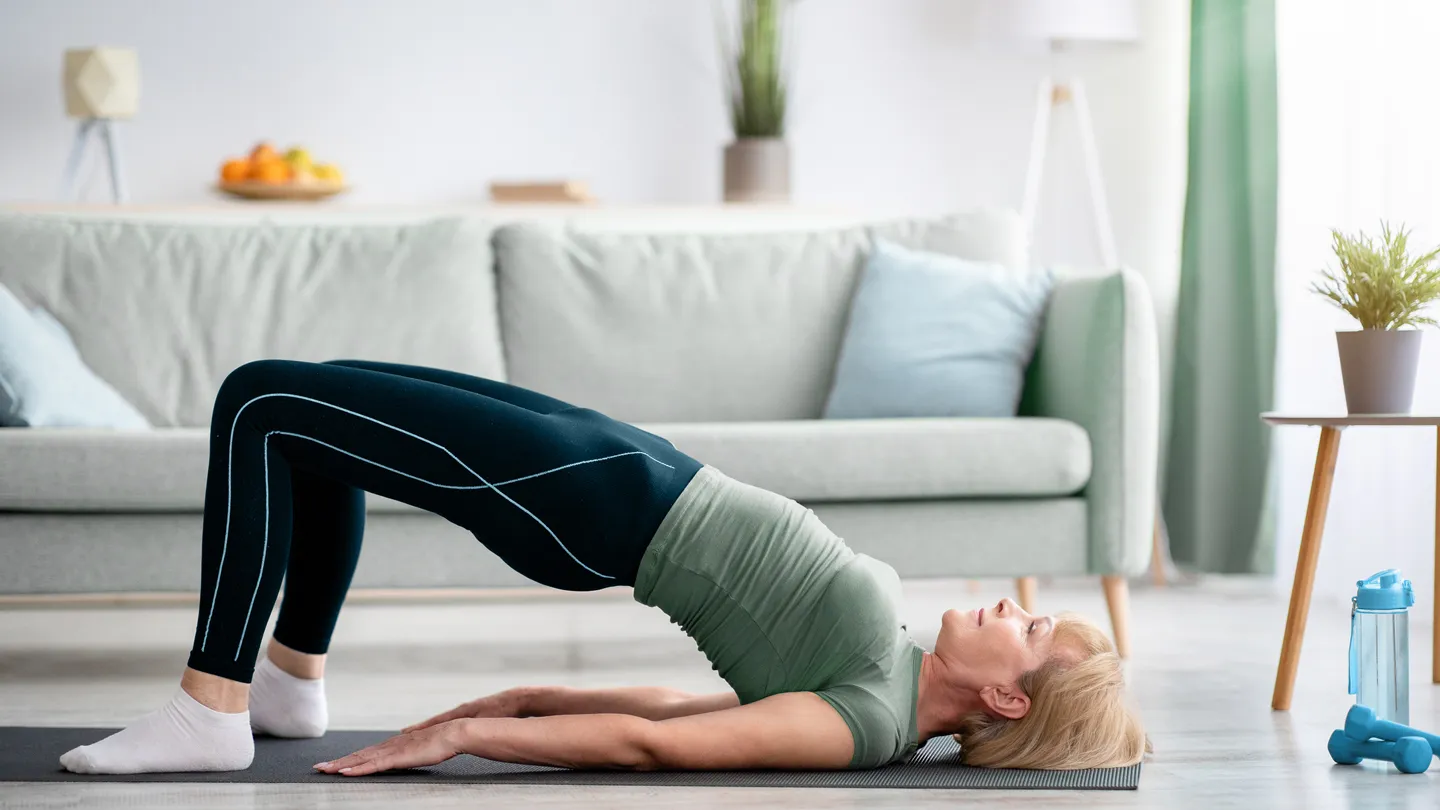
Glute bridges target the glutes and hamstrings, which play an important role in controlling the hips and legs. Lie on your back with your knees bent and feet flat on the floor. Tighten your abdominal muscles and lift your hips until your body forms a comfortable line from your shoulders toward your knees.
Pause briefly at the top while squeezing your glutes, then lower your hips slowly. Avoid arching your lower back excessively during the movement. As your strength improves, you can gradually increase repetitions or hold the top position for longer.
Exercise 3: Wall Squats
Wall squats provide a controlled way to strengthen the quadriceps, glutes, and hamstrings. Stand with your back against a wall and your feet positioned comfortably in front of you. Slowly bend your knees while keeping your back supported against the wall, then return to the starting position.
You do not need to lower into a deep squat to benefit from this movement. Begin with a shallow range that feels comfortable and gradually increase the challenge as your strength develops. Keeping your knees aligned with your feet can help promote controlled movement throughout the exercise.
Exercise 4: Step-Ups
Step-ups strengthen the muscles used when climbing stairs while also challenging balance and coordination. Stand in front of a stable, low step. Place one foot firmly on the surface and press through that foot to bring your body upward. Step down slowly and repeat on the opposite side.
Use a low step when starting because the goal is controlled movement rather than maximum height. Keep your torso stable and avoid pushing excessively from the trailing leg. As your ability improves, you can increase the number of repetitions while maintaining good technique.
Exercise 5: Hamstring Curls
Hamstring curls target the muscles located along the back of your thighs. Stand behind a sturdy chair or another stable support and hold it lightly for balance. Bend one knee to bring your heel toward your buttocks, then slowly lower the foot back toward the floor.
Keep your thighs relatively still instead of swinging your entire leg. Controlled repetitions help maintain muscular tension and improve movement quality. This exercise can be performed with body weight initially, with resistance added later if appropriate for your fitness level.
Exercise 6: Calf Raises
Calf raises strengthen the lower-leg muscles that contribute to walking, running, jumping, and overall lower-body stability. Stand with your feet about hip-width apart while holding a stable surface for balance. Slowly rise onto the balls of your feet, pause at the top, and lower your heels with control.
Avoid bouncing through the movement because controlled motion provides a better training stimulus. As you become stronger, you can gradually increase repetitions or perform the exercise on one leg if you can maintain good balance and technique.
Exercise 7: Side-Lying Leg Raises
Side-lying leg raises focus on the muscles around the hip, particularly the gluteal muscles that help control the position of the leg. Lie on your side with your legs comfortably extended. Keep your upper leg straight and slowly raise it upward without rotating your hips.
Lower the leg gradually and repeat before changing sides. Keep your core gently engaged throughout the movement and avoid swinging the leg. Stronger hip muscles can contribute to better lower-body control during activities that involve walking, stepping, and changing direction.
Exercise 8: Sit-to-Stand
The sit-to-stand exercise closely resembles an everyday movement and works the quadriceps, glutes, and other lower-body muscles. Sit near the front of a sturdy chair with your feet positioned comfortably beneath you. Lean forward slightly and push through your feet to stand, then slowly lower yourself back into the chair.
Try not to collapse into the seat as you return to the starting position. Controlled lowering strengthens the muscles while improving movement awareness. Once regular sit-to-stands become easier, you can increase repetitions or use a lower seat, provided you can maintain proper technique without pain.
How to Build a Safe Knee Strengthening Routine
Beginners should start with a manageable amount of exercise rather than attempting a demanding workout immediately. Perform several exercises during a session and allow adequate recovery between training days. Consistency is more important than doing a large number of repetitions in one workout.
A gentle warm-up can prepare the muscles for activity. Walking at an easy pace or performing controlled leg movements for several minutes can help you transition into your workout. Over time, increase repetitions, resistance, or exercise difficulty gradually instead of making large changes from one session to the next.
Common Mistakes to Avoid
One common mistake is trying to exercise through sharp or worsening pain. Muscle fatigue and mild effort are expected during strengthening, but significant pain, sudden swelling, instability, or a feeling that the knee is giving way deserves attention. Stop the exercise and consult an appropriate healthcare professional if these symptoms occur.
Another mistake is focusing entirely on the knee while ignoring the hips and ankles. The lower body works as a connected system, so strengthening the glutes, hamstrings, calves, and quadriceps can create better overall movement support. Good technique, gradual progression, and appropriate recovery should remain priorities throughout training.
Conclusion
Knee Strengthening Exercises: 8 Physical Therapist-Approved Moves can provide a practical foundation for improving lower-body strength and movement control. Exercises such as straight-leg raises, bridges, wall squats, step-ups, hamstring curls, calf raises, side-lying leg raises, and sit-to-stands target important muscle groups around the legs and hips.
The best results come from performing exercises consistently while progressing at a comfortable pace. Stronger muscles can support everyday movement, but exercise should be tailored to your individual needs, especially if you have an existing knee condition or recent injury. When in doubt, working with a qualified physical therapist can help you choose appropriate exercises and technique.
FAQs
Can knee exercises make my knees stronger?
Strength exercises can strengthen the muscles surrounding the knee and improve lower-body control. The right exercises depend on your individual condition and fitness level.
How often should I perform knee strengthening exercises?
Many people can perform strengthening sessions two or three times per week, allowing recovery between challenging sessions. Your schedule should be adjusted according to your ability and professional guidance.
Are these exercises suitable for beginners?
Most of these movements can be modified for beginners. Start with a comfortable range of motion and focus on controlled technique before increasing difficulty.
Should I exercise if my knee hurts?
It depends on the cause and severity of the pain. Significant, persistent, or worsening pain should be evaluated by a qualified healthcare professional before continuing exercise.
Can strong legs help protect the knees?
Stronger muscles can improve support and control around the knee during movement. However, strength alone cannot prevent every knee injury or condition.
Are squats safe for the knees?
Squats can be useful when performed with appropriate technique and a suitable range of motion. Beginners should start with a comfortable depth and progress gradually.
How long does it take to strengthen the muscles around the knee?
Progress varies between individuals. With consistent training, many people notice improvements in strength and movement over several weeks, although rehabilitation can take considerably longer depending on the underlying issue.
When should I see a physical therapist?
Consider professional evaluation if you have persistent pain, swelling, instability, difficulty bearing weight, or symptoms following an injury. A physical therapist can assess your movement and create an individualized program.
