
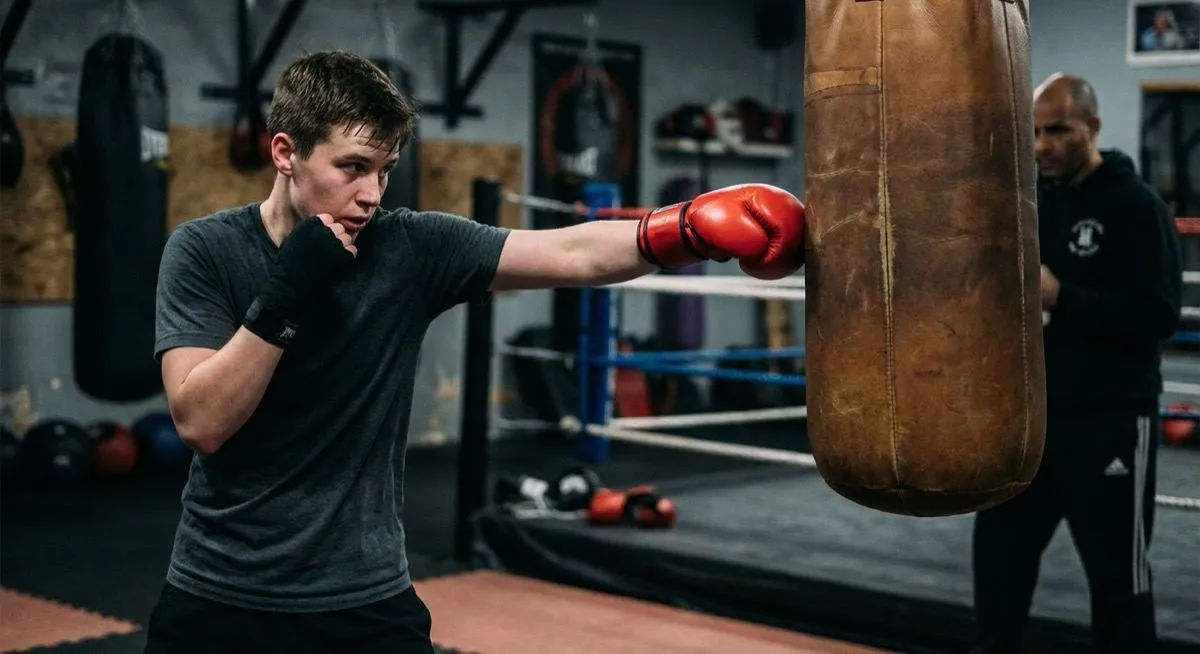
An at-home punching bag workout is an excellent way to combine cardio, strength, coordination, and boxing practice in one engaging training session. You do not need access to a professional boxing gym or a boxing ring to get a challenging workout. With the right punching bag, proper technique, and a little space, you can create an effective training routine at home.
Punching a heavy bag involves much more than simply throwing powerful punches. Your legs, hips, core, shoulders, arms, and cardiovascular system all contribute to every combination. Regular bag training can help improve movement, balance, timing, endurance, and overall conditioning while making exercise more enjoyable.
Whether you are a complete beginner or already have some boxing experience, a structured home bag workout can be adapted to your fitness level. The key is learning proper technique, controlling your intensity, and gradually increasing the difficulty as your conditioning improves.
What Is an At-Home Punching Bag Workout?
An at-home punching bag workout is a training session performed with a heavy bag or another suitable punching bag in your home. Instead of relying entirely on traditional gym exercises, you use combinations of punches, footwork, defensive movements, and timed rounds to create a full-body workout.
A typical session may include a warm-up, several rounds of punching combinations, movement drills, short recovery periods, and a cool-down. The exact structure depends on your experience and goals. Beginners may start with short rounds and moderate intensity, while experienced trainees can use longer rounds and more complex combinations.
The versatility of bag training makes it useful for several fitness goals. It can develop cardiovascular endurance, muscular endurance, coordination, and punching technique while also providing a convenient way to stay active at home.
Benefits of an At-Home Punching Bag Workout
One of the biggest advantages of an at-home punching bag workout is that it can provide an intense cardiovascular challenge. Throwing repeated combinations while moving around the bag keeps your heart rate elevated. Alternating periods of higher and lower intensity can also make the session feel similar to interval training.
Bag work can also strengthen muscles throughout the body. Punches require the coordinated movement of your legs, hips, torso, shoulders, and arms. When you move correctly, the power of a punch begins from the ground and travels through the body rather than coming exclusively from the arm.
Another advantage is improved coordination. Boxing requires your hands and feet to work together while you maintain balance and react quickly. Repeating combinations can gradually make movements smoother and more controlled.
Punching a bag can also make workouts more engaging. Instead of performing the same repetitive exercises every session, you can change combinations, footwork patterns, round lengths, and intensity. This variety can make it easier to stay consistent with your training.
How to Prepare for Your Home Bag Workout
Before beginning, make sure your punching bag is installed securely and that there is enough space around it for movement. You should be able to step forward, backward, and sideways without hitting furniture, walls, or other objects.
Your hands should also be properly protected. Boxing hand wraps can provide additional support for the hands and wrists, while suitable boxing gloves help distribute impact across the striking surface. Gloves and wraps should fit comfortably without restricting normal movement or circulation.
Wear comfortable athletic clothing and shoes that allow you to move naturally. A stable training surface is especially important because boxing involves frequent changes in direction, rotation, and shifting of body weight.
Finally, begin every workout with a proper warm-up. Starting immediately with hard punches can place unnecessary stress on your shoulders, elbows, wrists, and other joints.
A Beginner At-Home Punching Bag Workout
A simple beginner routine can be organized into several short rounds. Start with a five- to ten-minute warm-up that includes light movement, shoulder mobility, gentle torso rotations, and easy shadowboxing.
After warming up, begin your first bag round at a comfortable pace. Practice the jab while maintaining your stance and returning your hand to its starting position after every punch. Focus on accuracy and balance rather than power.
For the next round, combine the jab with the cross. Keep your movements controlled and allow your hips and shoulders to rotate naturally. Rather than trying to hit the bag as hard as possible, concentrate on producing clean, technically sound punches.
As you become comfortable, introduce a basic combination such as jab, cross, lead hook. Follow the combination with movement instead of standing directly in front of the bag. You can step to the side, reset your stance, and begin another combination.
A beginner session might contain three to five rounds of approximately two minutes each, with about one minute of recovery between rounds. The exact duration can be adjusted according to your fitness level.
Essential Punches to Practice
The jab is one of the most important punches to learn because it can be used for distance control, rhythm, setup, and combination work. It is generally thrown with the lead hand and should return quickly to the guard.
The cross is a straight punch from the rear hand. Proper execution involves coordinated rotation of the hips and shoulders rather than simply extending the arm. Your rear foot can pivot naturally as your body rotates.
The hook travels in a curved path and relies heavily on proper body positioning and rotation. Beginners should initially practice the movement slowly so they can learn the correct trajectory without over-rotating the shoulder.
The uppercut is another useful punch that travels upward toward the target. It should come from a controlled body position rather than a large swinging motion. Practicing these four fundamental punches gives you enough variety to build many combinations.
How to Build a Full-Body Bag Training Session
A well-designed session should not consist of nonstop punching. Movement and recovery are important parts of boxing conditioning. You can divide your workout into different rounds with a specific purpose for each one.
During one round, concentrate on straight punches. During another, work on combinations involving hooks. A later round can focus on footwork, defensive movement, or short bursts of increased intensity.
You can also alternate between technical and conditioning rounds. A technical round might involve slower, precise combinations, while a conditioning round can involve faster combinations performed for short intervals.
For example, you could spend one round practicing jab-cross combinations, another working on hooks and uppercuts, and another combining punches with lateral movement. The goal is to keep your technique consistent as the workout becomes more demanding.
Using Footwork During Bag Training
Footwork is one of the most important aspects of boxing and is often overlooked by beginners. Standing in one place and repeatedly punching the bag limits the training benefits and can encourage poor habits.
Practice moving around the bag while maintaining your stance. Take small, controlled steps instead of crossing your feet or making unnecessarily large movements. Your upper body should remain balanced as your feet reposition.
You can practice stepping backward after a combination, moving sideways after a jab-cross, or circling the bag while maintaining your guard. These movements develop coordination and make your training more dynamic.
Good footwork also helps you manage distance. The bag swings after being hit, so learning to adjust your position can make your workout more realistic and improve your control.
How to Increase Workout Intensity Safely
Once your technique becomes more consistent, you can gradually increase the difficulty of your sessions. One option is to add another round. Another is to extend the duration of existing rounds.
You can also introduce short periods of higher intensity. For example, during a round you might work at a moderate pace for most of the time and then perform a brief faster combination before returning to a controlled pace.
Increasing intensity does not mean throwing every punch with maximum force. Excessive power can lead to poor technique and unnecessary strain. Quality movement should remain the priority even when you are tired.
Progress gradually rather than changing everything at once. Give your body enough time to adapt to the demands of punching, movement, and repeated impact.
Common Mistakes to Avoid
One common mistake is focusing exclusively on punching power. Beginners sometimes believe that hitting harder automatically produces a better workout. In reality, technique, movement, consistency, and conditioning are equally important.
Another mistake is dropping the hands after throwing combinations. Developing the habit of returning the hands to a protective position helps maintain better control and encourages sound boxing mechanics.
Overextending punches is another issue. Your punches should remain controlled rather than forcing your joints into uncomfortable positions. If a movement causes pain, stop and reassess your technique rather than trying to push through it.
Skipping the warm-up and cool-down can also make sessions less comfortable. A few minutes of preparation before training and gentle movement afterward can help you transition into and out of the workout.
Sample Weekly At-Home Punching Bag Routine
You do not need to train on the punching bag every day to make progress. Recovery is an important part of any exercise routine. Beginners may benefit from spacing demanding bag sessions throughout the week.
A simple schedule could include two or three bag workouts with rest or lighter activity between them. One session can focus on basic technique, another on conditioning, and another on combinations and footwork.
On non-bag days, you can use activities such as walking, mobility work, bodyweight strength exercises, or light cardio. This approach allows you to develop general fitness without repeatedly placing the same demands on your body.
As your conditioning improves, you can gradually adjust the number of rounds, duration, and intensity. Keeping a simple record of your sessions can help you recognize progress over time.
Nutrition and Recovery for Better Results
Training is only one part of improving fitness. Your body also needs adequate nutrition, hydration, sleep, and recovery. A balanced diet containing protein, carbohydrates, healthy fats, fruits, vegetables, and sufficient fluids can support an active lifestyle.
After a demanding session, allow yourself enough time to recover before performing another intense workout. Persistent soreness, unusual fatigue, or declining performance may indicate that your training load needs adjustment.
Sleep is particularly important because recovery occurs while your body rests. Maintaining a consistent sleep schedule can support energy levels and make it easier to perform well during future workouts.
Remember that fitness progress comes from consistency over time rather than from a single extremely difficult workout. A manageable routine that you can follow regularly is generally more useful than occasional sessions that leave you excessively exhausted.
Making Your Home Boxing Workouts More Effective
Variety can keep your workouts challenging without requiring additional equipment. You can change the combinations, round structure, movement patterns, and intensity while keeping the same punching bag.
Shadowboxing can also be added before or between bag rounds. It gives you an opportunity to practice movement and combinations without impact. You can use it to visualize an opponent and work on your defensive positioning.
Another useful strategy is to establish a clear goal for every round. Instead of punching randomly, decide whether the round is focused on accuracy, footwork, combinations, speed, or conditioning.
Over time, you should aim to become more efficient rather than simply doing more work. Cleaner technique, better movement, improved endurance, and greater control are all signs of progress.
Conclusion
An at-home punching bag workout can transform a small training space into an effective fitness environment. With a suitable bag, proper protective equipment, and a structured routine, you can work on cardiovascular conditioning, muscular endurance, coordination, movement, and boxing fundamentals without needing a traditional boxing ring.
The most important part of successful training is consistency. Start at a manageable level, learn proper technique, and gradually increase the challenge as your fitness improves. Focus on controlled combinations, active footwork, and quality movement instead of trying to hit the bag as hard as possible.
With regular practice and sufficient recovery, home bag training can become an enjoyable part of a balanced fitness routine. Whether your goal is better conditioning, improved boxing skills, or simply a more exciting way to exercise, the punching bag offers plenty of opportunities to keep progressing.
FAQs About At-Home Punching Bag Workout
Is an at-home punching bag workout good for beginners?
Yes. Beginners can start with short rounds, basic punches, and moderate intensity. Learning technique before increasing speed or power is important.
Can punching a bag help improve cardio?
Yes. Repeated combinations and movement can create a demanding cardiovascular workout, especially when training is organized into timed rounds with short recovery periods.
How long should a beginner punch a bag?
A beginner can start with several short rounds of around two minutes, depending on fitness and experience. Rest between rounds and increase duration gradually.
Do I need boxing gloves for a punching bag?
Proper boxing gloves are strongly recommended for bag work, along with suitable hand protection. They help provide impact protection and support during training.
Can punching bag workouts build muscle?
Bag training can improve muscular endurance and involve muscles throughout the body. For significant muscle growth, it is useful to combine bag work with appropriate resistance training.
How many days a week should I use a punching bag?
Beginners can start with two or three sessions per week, allowing recovery between harder workouts. The ideal frequency depends on training intensity and individual fitness.
Can I lose weight with punching bag workouts?
Punching bag training can contribute to calorie expenditure and overall fitness. Weight management also depends on nutrition, daily activity, sleep, and maintaining an appropriate energy balance.
Is a punching bag workout enough for full-body fitness?
It can provide excellent cardio, coordination, and muscular endurance, but a well-rounded fitness program can also include strength training, mobility work, and other forms of physical activity.
