

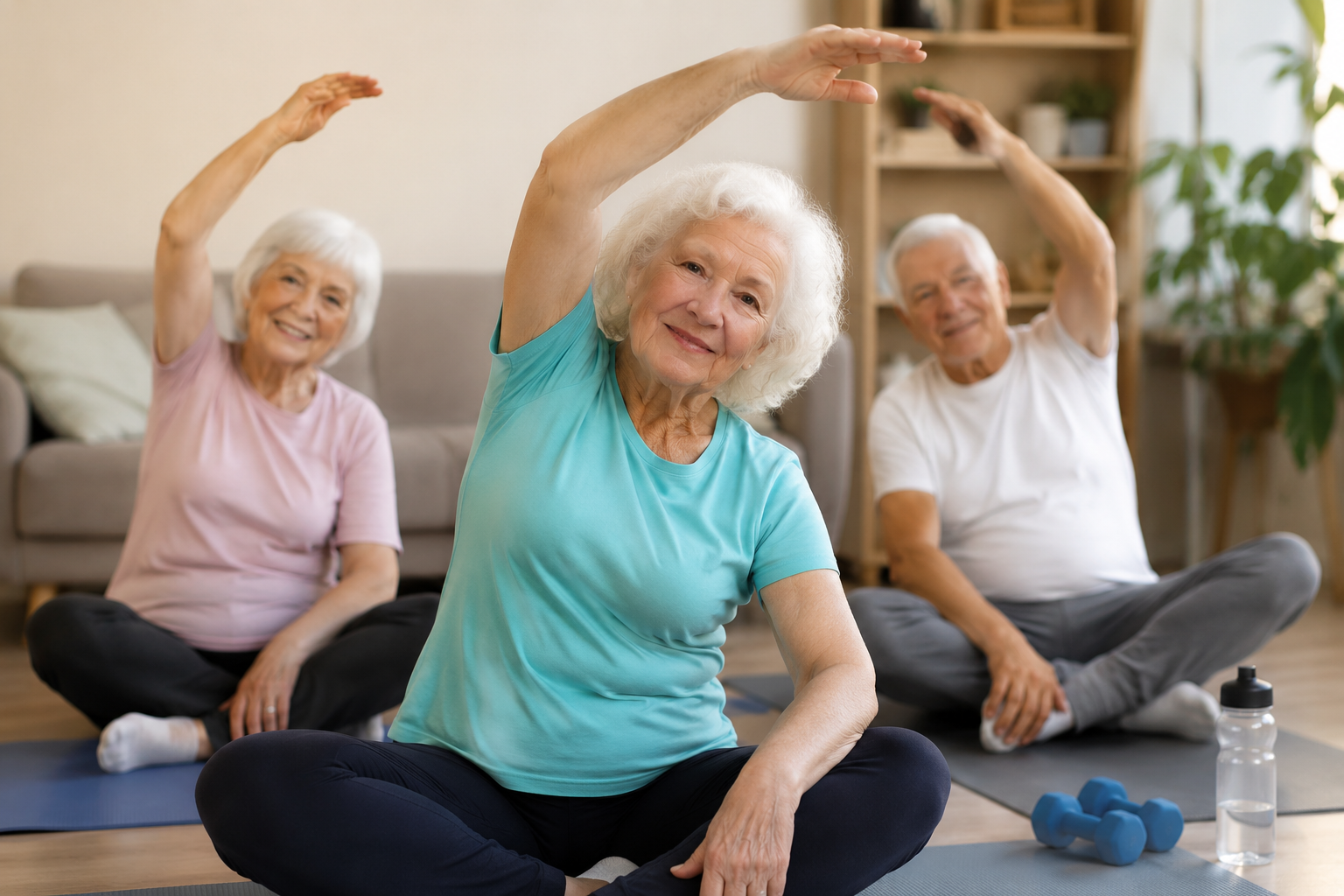
Senior fitness exercises: Gentle Senior Fitness From Your Living Room can make staying active easier, more comfortable, and more convenient. Regular movement can support strength, balance, flexibility, mobility, and independence as we age. The best routine does not need expensive equipment or a large workout space. A sturdy chair, comfortable clothing, and a few minutes of free time can be enough to get started.
Exercise should feel manageable rather than overwhelming. Gentle movements performed consistently can help older adults stay active while supporting everyday activities such as walking, standing, reaching, and getting up from a chair. This guide explains simple exercises that can be performed at home and adjusted to different fitness levels.
Why Senior Fitness Exercises Matter
Staying physically active can help older adults maintain muscle strength and mobility. Regular movement also supports cardiovascular fitness and can make everyday tasks feel easier. Simple exercises can target the legs, arms, back, and core without requiring complicated equipment or advanced training techniques.
Home exercise can also make fitness more accessible. Some seniors may prefer exercising in a familiar environment instead of traveling to a gym. A living-room routine allows you to work at your own pace and take breaks whenever needed, making it easier to develop a consistent habit.
Gentle Warm-Up for Older Adults
A gentle warm-up prepares the body for exercise by gradually increasing movement and helping the joints become more mobile. Start by sitting comfortably and moving your shoulders in slow circles. Follow with gentle ankle movements, wrist rotations, and easy marching while seated or standing near a sturdy support.
Continue for several minutes without rushing. The goal is to wake up the muscles and prepare your body rather than become tired. If any movement causes pain, stop and choose a more comfortable range of motion.
Chair Exercises for Strength and Mobility
Chair-based exercises are a useful starting point for seniors who prefer additional support. Seated knee extensions can strengthen the muscles at the front of the thighs, while seated marching encourages hip movement and gentle leg activation. These exercises can be performed slowly while maintaining an upright posture.
Chair stands are another practical movement because they closely resemble an everyday activity. Sit on a sturdy chair and slowly stand before carefully returning to the seated position. Use your hands for support if necessary, and perform the movement near a stable surface to improve safety.
Standing Exercises for Balance
Standing exercises can help develop lower-body strength and balance. Hold the back of a sturdy chair or another stable support while performing gentle heel raises. Slowly lift your heels from the floor, pause briefly, and lower them with control. This movement works the lower legs and encourages better ankle stability.
Side leg raises are another simple option. While holding a stable support, move one leg slowly out to the side without leaning your upper body. Return it to the starting position and repeat on the other side. Keep the movement controlled rather than trying to lift the leg as high as possible.
Upper-Body Senior Fitness Exercises
Upper-body movements can help maintain strength needed for everyday tasks such as carrying light objects, opening containers, and reaching overhead. Wall push-ups are a gentle alternative to floor push-ups. Stand facing a wall, place your hands against it, and slowly bend your elbows before pushing yourself back.
Arm raises can also improve shoulder movement and endurance. While seated or standing, slowly raise your arms forward or out to the sides within a comfortable range. Avoid forcing the movement if your shoulders feel uncomfortable, and focus on smooth, controlled repetitions.
Exercises for Flexibility and Mobility
Flexibility exercises can help maintain comfortable movement throughout the day. Gentle neck turns, shoulder stretches, ankle movements, and seated torso rotations can be incorporated into a home routine. These movements should be performed slowly without bouncing or forcing a joint beyond its comfortable range.
Regular mobility work can be particularly useful before or after other exercises. Moving the joints through comfortable ranges may help you feel less stiff and make everyday movements easier. Remember that flexibility varies between individuals, so there is no need to compare your range of motion with someone else’s.
Balance and Coordination Practice
Balance training is an important part of staying physically capable as you age. Simple exercises can be performed beside a sturdy counter or chair for support. Try shifting your weight gently from one foot to the other while maintaining an upright posture and keeping a stable surface nearby.
As confidence improves, you can practise standing with your feet slightly closer together while holding a support. Never sacrifice safety to make a balance exercise harder. Having a clear floor area and a stable object nearby provides additional security during practice.
Creating a Simple Living-Room Routine
A practical home routine can combine seated movements, strength exercises, mobility work, and gentle balance practice. Begin with a few minutes of warm-up movements, followed by chair stands, wall push-ups, heel raises, and comfortable leg exercises. Finish with gentle stretches and relaxed breathing.
Start with a manageable amount of exercise and increase gradually as your body becomes accustomed to regular movement. Taking short breaks is completely acceptable. Consistency matters more than completing a demanding workout, particularly when establishing a new fitness habit.
Staying Safe During Home Exercise
Safety should always come first. Keep floors clear of loose rugs, electrical cords, furniture, or other objects that could cause a trip. Wear supportive footwear when appropriate and exercise near a stable surface when performing standing movements or balance exercises.
Older adults with chronic health conditions, recent injuries, significant balance concerns, or other medical considerations should speak with a qualified healthcare professional before starting a new exercise programme. Stop exercising and seek appropriate medical advice if you experience unusual chest pain, severe shortness of breath, faintness, or other concerning symptoms.
Conclusion
Senior fitness exercises: Gentle Senior Fitness From Your Living Room provide a convenient way to stay active without complicated equipment or demanding gym sessions. Chair exercises, wall movements, gentle leg strengthening, mobility work, and balance practice can all contribute to a more active lifestyle. The key is choosing movements that feel comfortable and performing them with steady, controlled technique.
Regular activity can support strength, mobility, confidence, and independence while making everyday movements easier. Start slowly, listen to your body, and gradually build a routine that fits your abilities and lifestyle. With consistency and appropriate safety precautions, your living room can become a comfortable place to maintain an active lifestyle.
FAQs
What are the best exercises for seniors at home?
Chair stands, seated marching, wall push-ups, heel raises, gentle leg raises, and mobility exercises are useful options for many older adults.
Can seniors exercise from a chair?
Yes. Seated exercises can provide a convenient starting point for people who need additional stability or prefer lower-impact movements.
How often should older adults exercise?
Many older adults can benefit from regular physical activity throughout the week, combining aerobic activity with muscle-strengthening and balance exercises as appropriate for their abilities.
Can exercise improve balance in seniors?
Balance exercises can help develop coordination, lower-body strength, and confidence. They should be performed near a stable support when needed.
Do seniors need gym equipment?
No. Many effective movements can be performed using body weight, a sturdy chair, or a wall. Optional equipment can be added later if appropriate.
How long should a senior home workout last?
A workout can begin with a short session and gradually become longer as fitness improves. Even small amounts of regular movement can be useful.
Is walking a good exercise for older adults?
Walking is an excellent form of physical activity for many seniors because it supports cardiovascular fitness, mobility, and endurance. The appropriate pace and distance depend on individual ability.
What should seniors do if an exercise causes pain?
Stop the movement rather than pushing through sharp or unusual pain. If pain persists or you are concerned about an injury, consult a qualified healthcare professional.
