
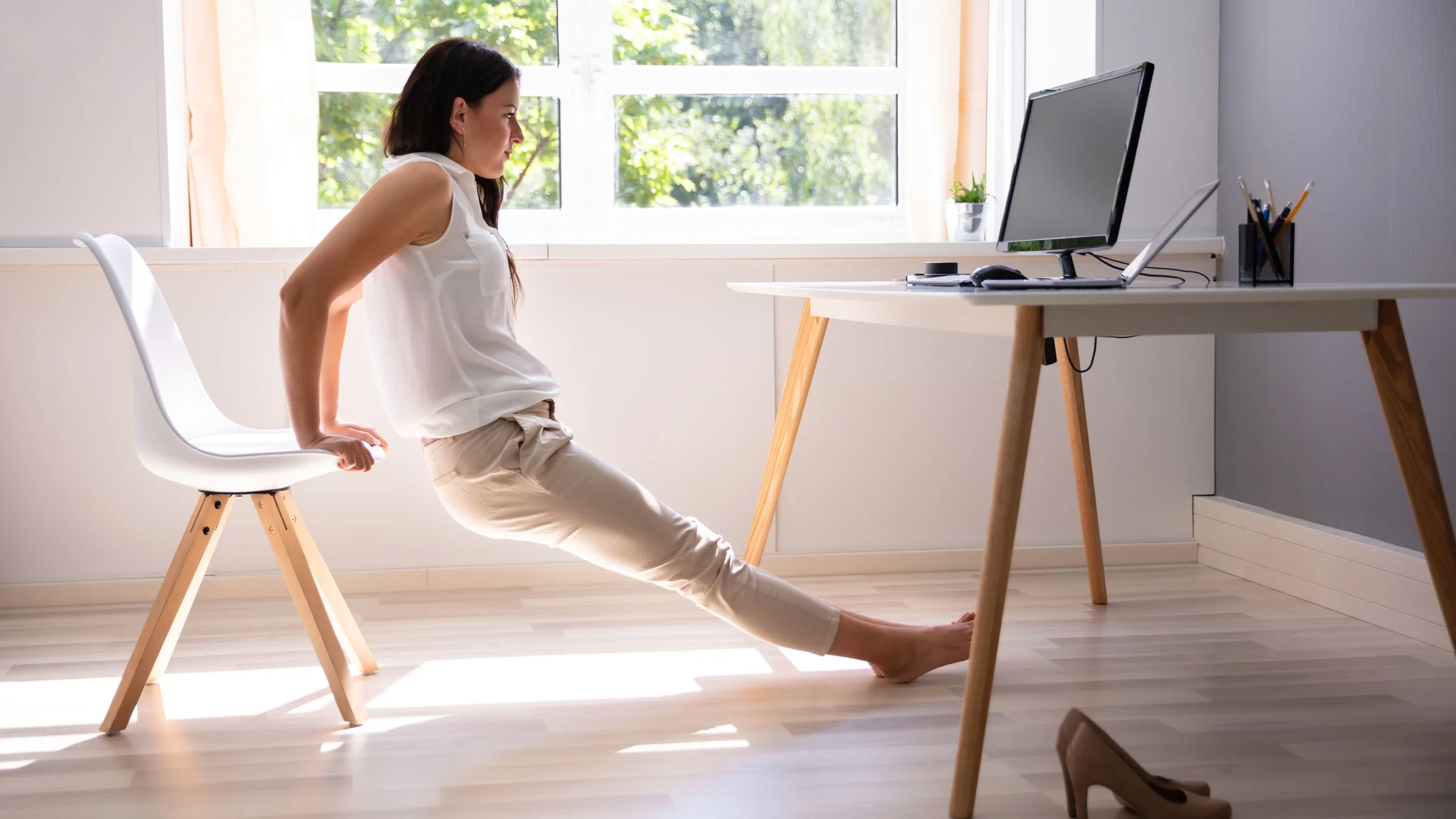
Spending long hours at a desk can leave your neck, shoulders, back, hips, and wrists feeling stiff and uncomfortable. The 10 Best Desk Exercises for Office Workers to Relieve Pain provide simple movements you can perform during the workday without needing a gym, special equipment, or a large space. Regular movement breaks can help counter the effects of prolonged sitting and encourage better posture.
Desk exercises are not a replacement for medical care when pain is severe or persistent, but they can be a practical part of a healthy work routine. Gentle stretches and mobility movements can help reduce stiffness, improve circulation, and make it easier to maintain comfortable movement throughout your day.
Why Desk Exercises Matter for Office Workers
Sitting for extended periods can encourage poor posture and reduce movement in areas such as the hips, upper back, and shoulders. When you remain in one position for too long, muscles may become tight while others become fatigued from maintaining the same posture. Short movement breaks give your body an opportunity to change position and move through different ranges of motion.
You do not need to wait until discomfort becomes noticeable before moving. Performing gentle exercises throughout the day can make movement a regular habit rather than something you only do when you feel stiff. Standing briefly, walking around, and changing your working position can complement these exercises.
Neck and Shoulder Rolls
Neck rolls and shoulder rolls are simple movements that can help release tension accumulated around the upper body. Sit upright with your feet comfortably positioned on the floor, relax your shoulders, and slowly move your head from one comfortable position to another without forcing the range of motion.
Follow this with slow shoulder rolls, moving the shoulders upward, backward, and downward. Keep the movement controlled and avoid pushing through pain. These exercises are particularly useful after periods of reading, typing, or looking at a computer screen.
Seated Upper-Back Stretch
A seated upper-back stretch can help counter the rounded position that sometimes develops during computer work. Sit toward the front of your chair, extend your arms forward, and gently reach through your hands while allowing your upper back to round slightly.
Hold the comfortable stretch while breathing slowly, then return to an upright position. The goal is gentle mobility rather than forcing your spine into a deep stretch. Performing this movement periodically can help your upper back feel less restricted during a long workday.
Seated Spinal Rotation
Seated spinal rotations encourage movement through the upper and middle portions of the spine. Sit upright with your feet planted on the floor and place your hands comfortably on your thighs or across your chest. Slowly rotate your upper body to one side while keeping your hips facing forward.
Return to the centre and repeat on the opposite side. Move slowly and stay within a comfortable range. Controlled rotations can be particularly useful when your back feels stiff after remaining in the same position for an extended period.
Chest-Opening Stretch
A chest-opening stretch can be helpful when spending many hours with your arms positioned in front of your body. Sit or stand tall and gently move your shoulders backward while bringing your hands behind you if that feels comfortable.
Keep your chest relaxed rather than forcing your shoulders backward. Take several slow breaths before returning to a neutral position. This movement encourages a more open posture and can provide a useful break from prolonged computer positioning.
Wrist and Forearm Stretch
Typing and using a mouse repeatedly can make the wrists and forearms feel tired or tight. Extend one arm in front of you with the palm facing upward and gently use the opposite hand to guide the fingers downward until you feel a mild stretch through the forearm.
Repeat with the palm facing downward to target another area of the forearm. Keep the pressure light and stop if you experience pain, tingling, or numbness. Regular breaks from repetitive hand movements are also important for maintaining comfortable wrists.
Seated Hip Stretch
The hips can become stiff after spending several hours in a chair. A seated hip stretch provides a simple way to introduce movement without leaving your workstation. Sit upright, place one ankle over the opposite thigh if comfortable, and gently hinge forward while maintaining a relaxed posture.
Hold the position without forcing the stretch, then switch sides. People with limited hip mobility can simply sit tall and move one leg through a comfortable range instead. The goal is to encourage gentle movement after prolonged sitting.
Seated Hamstring Stretch
The back of the thighs can feel tight after long periods of sitting. Sit near the edge of your chair and extend one leg forward with the heel resting on the floor. Keeping your back relatively straight, gently lean forward from the hips until you feel a comfortable stretch.
Avoid rounding aggressively or trying to reach your toes at all costs. A mild stretch is sufficient. Repeat on the other side and breathe naturally throughout the movement.
Standing Calf Raises
Calf raises are an easy way to activate the lower legs during a work break. Stand behind your chair or near a stable surface for support and slowly rise onto the balls of your feet. Pause briefly at the top before lowering your heels with control.
This movement activates the calf muscles while encouraging you to stand and change position. You can perform several comfortable repetitions throughout the day rather than completing them all at once.
Bodyweight Squats
Bodyweight squats provide a simple full-body movement that activates the legs, hips, and core. Stand with your feet approximately hip-width apart, bend your knees and hips, and lower yourself toward a comfortable depth before returning to standing.
Keep your movements controlled and maintain a comfortable range. If a full squat is difficult, use your office chair as a target and practise sitting down and standing up with control. This can provide a useful movement break after extended sitting.
Standing Walk and Movement Breaks
Walking may be one of the simplest ways to interrupt prolonged sitting. Stand up regularly, walk around your workspace, visit another room, or take a short walk outside when your schedule allows. Even brief periods of movement can help you avoid remaining stationary for hours.
Try combining walking with a few gentle stretches during longer breaks. Changing position frequently is often more practical than relying on one long exercise session at the end of the day. Creating reminders can help make regular movement part of your normal work routine.
How to Build a Desk Exercise Routine
You do not need to perform all ten exercises during every break. Instead, choose a few movements that address the areas that become stiff during your workday. For example, you might combine shoulder rolls, an upper-back stretch, wrist movements, and a short walk during one break, then focus on hip and leg movements later.
The most important factor is consistency. Avoid holding a stretch aggressively or exercising through pain simply to complete a routine. Gentle movement performed regularly is more appropriate for a workplace routine than intense exercise that leaves you fatigued while you are trying to work.
Improving Your Office Setup
Desk exercises work best when combined with an ergonomic workspace. Your monitor should be positioned so that you can view it comfortably without constantly bending your neck. Your keyboard and mouse should be positioned to allow your shoulders to remain relaxed and your wrists to stay in a comfortable position.
Your chair should provide appropriate support, and your feet should be comfortably supported rather than left dangling. If possible, alternate between sitting and standing and change your position regularly. A well-arranged workspace can reduce unnecessary strain while making healthy movement easier.
When to Seek Professional Advice
Gentle desk exercises are generally intended to improve mobility and comfort, not diagnose or treat a medical condition. If you have severe pain, pain following an injury, persistent numbness, weakness, swelling, or symptoms that continue despite changing your habits, consider speaking with a qualified healthcare professional.
Stop an exercise if it causes sharp or worsening pain. People with existing injuries or medical conditions should seek appropriate professional guidance before starting a new exercise routine. Your individual needs may require modifications that a healthcare or fitness professional can provide.
Conclusion
The 10 Best Desk Exercises for Office Workers to Relieve Pain offer a convenient way to introduce more movement into a sedentary workday. Gentle neck, shoulder, back, hip, wrist, and leg movements can help reduce stiffness and encourage better mobility when performed comfortably and consistently.
The best approach is to avoid staying in one position for too long and make movement a regular part of your working routine. Combine short exercise breaks with walking, good posture, and an ergonomic workspace to create healthier daily habits. If pain is persistent, severe, or accompanied by concerning symptoms, professional medical advice is more appropriate than relying solely on desk exercises.
FAQs
How often should office workers do desk exercises?
Short movement breaks can be incorporated throughout the workday. Try changing position and moving regularly instead of waiting until your body feels stiff.
Can desk exercises help with back discomfort?
Gentle movement may help with stiffness associated with prolonged sitting, but persistent or severe back pain should be evaluated by a healthcare professional.
How long should a desk exercise break last?
Even a few minutes can provide a useful opportunity to stand, walk, stretch, and change your position. Longer breaks can include several movements.
Can I perform these exercises at my desk?
Yes. Many of these movements can be performed while seated, while others require standing in a safe area near your workstation.
Are desk exercises suitable for beginners?
Yes. Most movements can be performed gently and modified according to your comfort and mobility level.
Can stretching eliminate office-related pain?
Stretching may help with stiffness and mobility, but pain can have many causes. Stretching should not be considered a guaranteed treatment for an underlying condition.
What else can help reduce discomfort from sitting?
Regular walking, changing positions, maintaining an ergonomic workstation, taking movement breaks, and staying physically active outside work can all complement desk exercises.
When should I stop a desk exercise?
Stop if a movement causes sharp, worsening, or unusual pain, or if you experience symptoms such as numbness or weakness. Seek professional advice when appropriate.
