
Losing weight does not always require an expensive gym membership, heavy equipment, or complicated training programs. A full-body beginner bodyweight workout for rapid weight loss can help you become more active, strengthen major muscle groups, and increase your daily calorie expenditure using nothing more than your own body. The key is to choose exercises that are simple enough for beginners while still challenging enough to raise your heart rate.
Bodyweight training is especially useful when you are starting your fitness journey because most movements can be modified according to your current ability. Squats, push-ups, lunges, mountain climbers, and other simple exercises can be combined into an effective routine that works the legs, upper body, core, and cardiovascular system. When paired with sensible nutrition and consistent activity, this approach can support sustainable weight loss.
Why a Full-Body Beginner Bodyweight Workout Helps With Weight Loss
A full-body workout involves several muscle groups during one training session. Instead of focusing exclusively on the arms, legs, or stomach, you perform movements that challenge your entire body. This makes bodyweight circuits an efficient option for beginners who want to improve fitness while supporting their weight-loss goals.
Another advantage is accessibility. You can perform most bodyweight exercises at home, in a park, or wherever you have enough space to move safely. Because there is no requirement for specialized equipment, it is easier to create a consistent exercise habit. Consistency matters because weight loss is influenced by your overall activity, nutrition, sleep, and lifestyle rather than a single workout.
How Bodyweight Exercise Supports Fat Loss
Weight loss generally occurs when your body uses more energy than it receives from food over time. Exercise can contribute to this energy balance by increasing the number of calories you use. Bodyweight movements can also help maintain and develop muscle as you lose body fat, particularly when combined with adequate protein and a balanced diet.
It is important to understand that exercise alone does not guarantee rapid results. The amount of energy used during a workout varies according to factors such as body size, exercise intensity, workout duration, and fitness level. Rather than trying to burn as many calories as possible in one session, beginners should focus on gradually improving their fitness and maintaining a routine they can follow for weeks and months.
Beginner Warm-Up Before Your Workout
A warm-up prepares your body for movement by gradually increasing your heart rate and getting your joints and muscles moving. Before starting the main routine, spend several minutes walking around, marching in place, moving your arms, and performing gentle bodyweight movements. The goal is to feel warmer and more prepared rather than exhausted.
Beginners should avoid turning the warm-up into a second workout. High-intensity movements performed before your body is prepared can make the main session unnecessarily difficult. A short, comfortable warm-up is enough to transition from everyday activity into exercise while giving you an opportunity to check how your body feels that day.
Full-Body Beginner Bodyweight Workout for Rapid Weight Loss
The following routine combines strength-focused movements with exercises that can elevate your heart rate. Perform each exercise with controlled technique rather than rushing through repetitions. If you are completely new to exercise, begin with fewer repetitions and longer rest periods before gradually increasing the workload.
Start with bodyweight squats to train the thighs, hips, and glutes. Stand with your feet around shoulder-width apart, keep your chest comfortably upright, and bend your knees and hips as you lower your body. Push through your feet to return to standing. Beginners can use a chair behind them as a target while learning the movement.
Next, perform incline push-ups if standard push-ups are difficult. Place your hands on a sturdy elevated surface and keep your body in a straight line as you lower your chest toward the surface. Push yourself away while maintaining control. As your strength improves, you can gradually use a lower surface or transition toward floor push-ups.
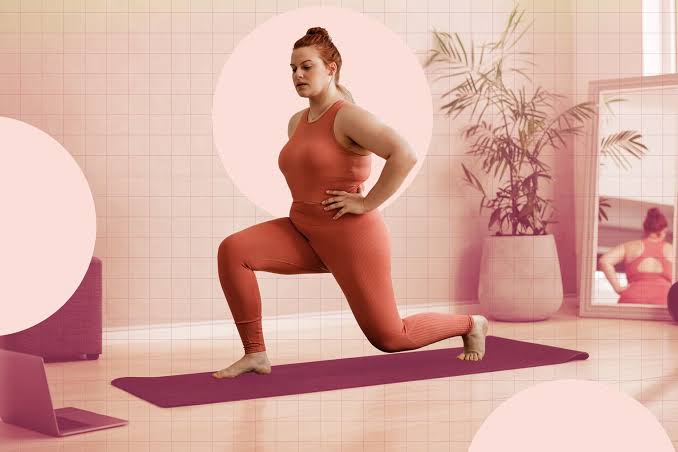
Continue with reverse lunges. Stand tall, step one foot backward, and lower your body until both knees bend comfortably. Push through the front foot to return to your starting position before switching sides. Reverse lunges can be easier to control than forward lunges for many beginners because the backward step can reduce the need to manage forward momentum.
Follow the lunges with glute bridges. Lie on your back with your knees bent and your feet planted. Tighten your core, press through your feet, and lift your hips until your body forms a comfortable line from your shoulders toward your knees. Lower slowly and repeat. This movement emphasizes the glutes and the muscles around the hips.
For the upper body and core, include a modified plank. Place your hands or forearms on a stable surface and maintain a straight, controlled body position. Keep your abdominal muscles engaged without holding your breath. A raised plank is a useful starting point for people who find a floor plank too demanding.
Finish the circuit with marching high knees or step jacks. These low-impact movements can raise your heart rate without requiring advanced coordination. Move at a pace that allows you to maintain good posture and breathing. If jumping is comfortable and appropriate for you, you can eventually progress to higher-impact variations.
How to Structure the Workout
For a beginner, one circuit can be enough during the first few sessions. Perform each exercise for a manageable number of repetitions or for a short period, then rest before moving to the next movement. After completing the exercises, take a longer recovery period and repeat the circuit if you still feel capable of maintaining proper form.
As your fitness improves, you can increase the number of rounds rather than immediately making every exercise faster. Another option is to gradually reduce unnecessary rest while still allowing enough recovery to perform the next movement safely. This creates progression without forcing your body to handle a dramatic increase in training volume.
Exercise Form Matters More Than Speed
Beginners sometimes assume that moving as quickly as possible produces better weight-loss results. However, speed can cause technique to deteriorate, especially when you are learning an unfamiliar movement. Poor form can reduce the effectiveness of an exercise and may increase the likelihood of discomfort or injury.
Controlled repetitions allow you to understand how your body moves and where you should feel the exercise. Keep your breathing steady, avoid unnecessary momentum, and stop or modify an exercise if you experience sharp or unusual pain. The goal is to build a foundation that allows you to train consistently rather than complete one extremely difficult workout.
How Often Should Beginners Perform Bodyweight Workouts?
A beginner does not need to exercise intensely every day. Starting with around three full-body sessions per week can provide a practical balance between training and recovery. On the days between workouts, light walking or other comfortable physical activity can help you remain active without placing the same demands on your muscles.
Recovery becomes increasingly important as you increase your workload. Your body needs time to repair and adapt after exercise. Getting adequate sleep, eating nutritious foods, staying hydrated, and allowing tired muscles to recover can all contribute to better training consistency.
Combine Workouts With Daily Movement
Your formal workout is only one part of your total daily activity. Walking more, taking stairs when appropriate, doing household tasks, and spending less time sitting can increase your overall movement. These small activities may seem insignificant individually, but regular movement throughout the day can contribute meaningfully to an active lifestyle.
Walking is particularly useful for beginners because it is simple and easy to adjust. You can begin with short walks and gradually increase the duration as your fitness improves. Combining regular walking with bodyweight training creates a balanced approach that does not depend entirely on intense exercise sessions.
Nutrition Tips for Better Weight-Loss Results
Exercise works best for weight management when your eating habits support your goals. Instead of relying on extreme diets, focus on meals that provide protein, vegetables, fruits, whole grains or other high-fiber carbohydrate sources, and appropriate amounts of healthy fats. These foods can help make meals more satisfying while supplying important nutrients.
Portion sizes also matter. Even nutritious foods can contribute to excessive calorie intake when eaten in very large quantities. Rather than eliminating entire food groups unnecessarily, focus on building balanced meals and developing eating habits that you can maintain. A moderate, sustainable approach is generally more practical than severe restriction.
Common Mistakes Beginners Should Avoid
One common mistake is trying to progress too quickly. Doing large numbers of repetitions before your body has adapted can leave you excessively sore and make it harder to continue exercising. Start at a level that feels challenging but manageable, then increase the workload gradually.
Another mistake is expecting one specific exercise to remove fat from a particular area. Bodyweight exercises can strengthen and develop muscles throughout the body, but they cannot determine exactly where your body loses fat first. Overall fat loss is influenced by your genetics, energy balance, activity level, and other individual factors.
Skipping recovery is another issue. More exercise is not automatically better. If you are constantly exhausted, experiencing persistent soreness, or struggling to maintain proper technique, your training may need adjustment. Sustainable progress comes from balancing exercise with recovery rather than constantly pushing beyond your limits.
How to Progress Your Bodyweight Routine
Progressive overload does not require heavier dumbbells. With bodyweight training, you can make an exercise more challenging by increasing repetitions, extending the exercise duration, adding another round, improving your range of motion, reducing excessive rest, or moving toward a more difficult variation.
For example, you might begin with chair-assisted squats and eventually perform standard squats with greater control. Incline push-ups can progress toward lower surfaces and eventually floor push-ups. A raised plank can gradually become a floor plank as your core strength develops. These small improvements provide measurable progress without making the routine unnecessarily complicated.
Staying Consistent With Your Weight-Loss Workout
Motivation can change from day to day, so building a routine around realistic habits is more effective than relying on motivation alone. Choose workout times that fit naturally into your schedule and keep the routine simple enough that you can repeat it regularly.
Tracking your workouts can also help. Record the exercises you perform, the number of repetitions, the number of rounds, and how difficult the session felt. Over time, you may notice that exercises become easier or that you can perform more repetitions with better technique. Those improvements are valuable signs of increased fitness even before major changes appear on the scale.
Final Thoughts on a Full-Body Beginner Bodyweight Workout for Rapid Weight Loss
A full-body beginner bodyweight workout for rapid weight loss can be an effective starting point for people who want to become more active without purchasing gym equipment. Simple movements can train the major muscle groups while adding useful cardiovascular activity to your routine.
For the best long-term results, focus on consistency rather than extreme workouts. Combine bodyweight training with regular walking, balanced nutrition, sufficient recovery, and gradual progression. Weight loss takes time, but a simple routine that you can perform consistently is far more valuable than a demanding plan you cannot maintain.
Conclusion
Bodyweight training gives beginners a convenient way to exercise almost anywhere. Squats, lunges, push-up variations, bridges, planks, and low-impact cardio movements can create a complete routine without complicated equipment. Start at an appropriate difficulty and prioritize technique throughout every session.
Rapid changes should never be the only measure of success. Building strength, improving endurance, becoming more active, and developing sustainable habits are important parts of a successful weight-management journey. With patience and consistency, a beginner-friendly bodyweight routine can become a strong foundation for a healthier and more active lifestyle.
FAQs
Can beginners lose weight with bodyweight workouts?
Yes, bodyweight workouts can contribute to weight loss by increasing physical activity and energy expenditure. Nutrition and overall daily activity also play important roles in determining long-term results.
How many days a week should I do bodyweight workouts?
Many beginners can start with about three full-body sessions per week. The exact schedule should allow enough recovery and can be adjusted according to your fitness level and other physical activities.
Can I do this workout at home?
Yes. Most of the exercises require only enough open space to move safely. A sturdy chair or elevated surface may be useful for certain beginner modifications, such as incline push-ups.
How long should a beginner workout last?
A beginner session does not need to be very long. A short warm-up followed by one or more manageable circuits can provide a useful workout. As fitness improves, you can gradually increase your training time.
Is bodyweight exercise enough for fat loss?
Bodyweight exercise can support fat loss, but your overall lifestyle matters too. Nutrition, daily movement, sleep, recovery, and consistent training all contribute to successful weight management.
Can I do bodyweight workouts every day?
You can remain active every day, but intense full-body training does not necessarily need to be performed daily. Alternating workout days with lighter activities such as walking can provide a better balance for beginners.
What should I eat after a bodyweight workout?
A balanced meal containing protein, carbohydrates, vegetables or fruit, and an appropriate amount of healthy fat can support recovery. Your overall daily diet is more important than finding one perfect post-workout food.
How quickly will I see weight-loss results?
Results vary considerably from person to person. Factors such as starting weight, nutrition, activity level, genetics, sleep, and consistency can influence progress. Focus on sustainable habits rather than expecting dramatic changes immediately.
