
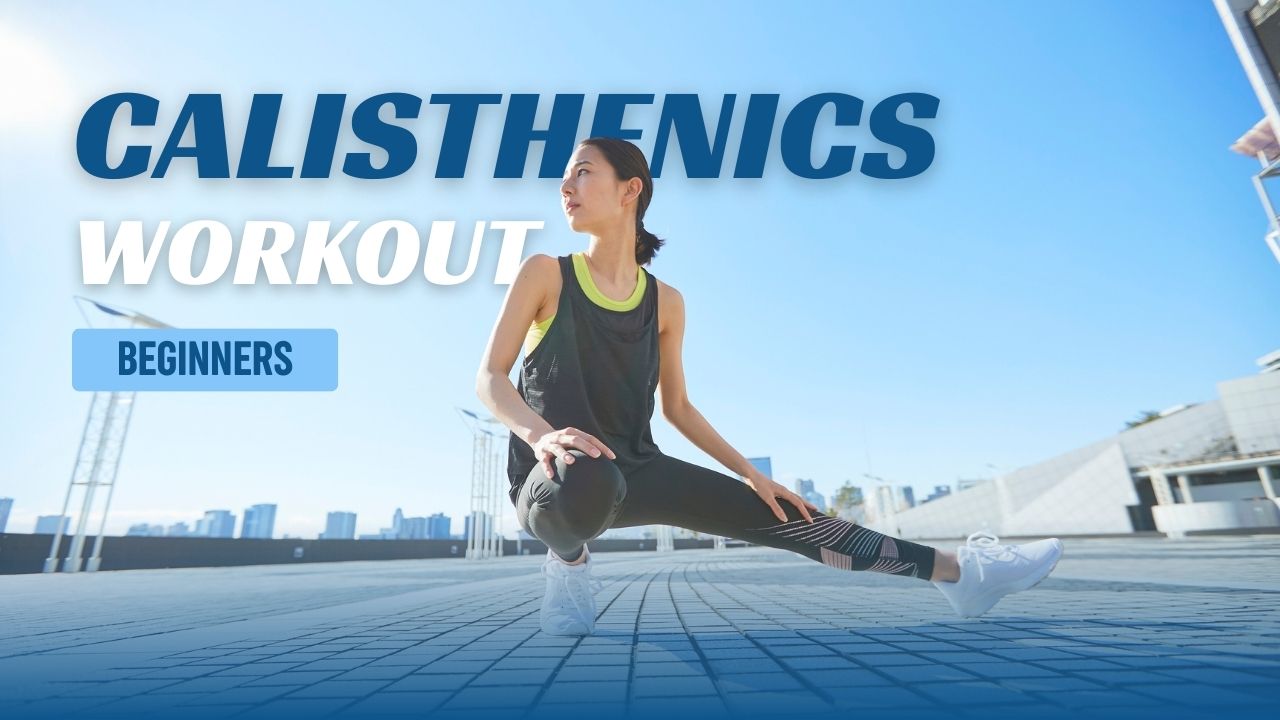
A beginner calisthenics workout is one of the simplest ways to start building strength, mobility, balance, and body control without depending on an expensive gym membership. Calisthenics uses your body weight as resistance, allowing you to train almost anywhere with little or no equipment. Whether your goal is to become stronger, improve fitness, build muscle, or develop better movement skills, bodyweight training can provide an excellent foundation.
Starting with calisthenics does not mean immediately attempting advanced movements such as handstand push-ups or muscle-ups. Beginners should first learn fundamental exercises and gradually improve their technique, strength, and endurance. A structured approach makes training easier to understand and helps you progress without rushing.
This guide explains how to start, which exercises to perform, how to structure your workouts, and how to progress from basic movements toward more challenging variations. With consistency and patience, your own body can become one of your most useful training tools.
What Is a Beginner Calisthenics Workout?
A beginner calisthenics workout is a training routine built around basic bodyweight movements. Instead of relying primarily on barbells or weight machines, you use exercises such as squats, push-ups, lunges, planks, and assisted pulling movements to challenge your muscles. These exercises can develop strength while also teaching you how to control your body.
One of the biggest advantages of starting with basic movements is accessibility. You can perform many exercises in a bedroom, living room, park, or outdoor workout area. Although equipment is optional, a pull-up bar, resistance band, or sturdy elevated surface can eventually expand the range of exercises available to you.
Why Should Beginners Start With Calisthenics?
Calisthenics can improve more than muscular strength. Because many bodyweight movements require coordination, stabilization, and controlled movement, regular training can help you develop better body awareness. Exercises such as push-ups and planks require several muscle groups to work together rather than isolating one muscle at a time.
Another benefit is flexibility in your training schedule. You do not necessarily need a large space or long workout sessions. A well-designed routine can often be completed in a relatively short period, making it easier to maintain consistency. For beginners, regular practice is generally more valuable than trying to complete extremely difficult workouts.
How to Prepare Before Your First Workout
Before starting a workout, spend several minutes preparing your body. A gentle warm-up can increase movement readiness and help you transition from everyday activity into exercise. Start with easy movements such as arm circles, shoulder rolls, bodyweight squats, marching, and controlled hip movements.
Your workout area should also be safe and free from objects that could cause you to trip. Use a stable surface and make sure any furniture used for an exercise is strong and secure. Beginners should avoid improvising with unstable chairs, tables, or other objects that can move unexpectedly.
The Best Beginner Calisthenics Exercises
Bodyweight Squats
Bodyweight squats are an excellent starting exercise for developing lower-body strength. Stand with your feet approximately shoulder-width apart, keep your chest comfortably upright, and bend your knees and hips while lowering your body under control. Push through your feet to return to the starting position.
Do not worry about going extremely deep if your mobility does not allow it comfortably. Focus on controlled movement and keeping your knees tracking in a natural direction. As your technique improves, you can gradually increase repetitions or use more challenging squat variations.
Push-Ups
Push-ups are one of the most recognizable calisthenics exercises because they train the chest, shoulders, arms, and core. Begin in a plank position with your hands positioned comfortably under or slightly outside your shoulders. Keep your body relatively straight as you lower your chest and then press yourself back upward.
If standard push-ups are too difficult, begin with wall push-ups or incline push-ups using a stable elevated surface. These variations reduce the resistance while allowing you to practice the same basic movement pattern. Progress toward floor push-ups as your upper-body strength improves.
Reverse Lunges
Reverse lunges are useful for developing leg strength, balance, and coordination. Start standing tall, step one foot backward, and lower your body while bending both knees. Return to the starting position and repeat on the opposite side.
Moving backward can feel more comfortable for many beginners than immediately performing forward lunges. Keep your movements controlled and avoid rushing between repetitions. Holding onto a stable support can provide additional balance when you are first learning the exercise.
Glute Bridges
Glute bridges target the muscles around the hips and buttocks while also teaching you to control pelvic movement. Lie on your back with your knees bent and feet placed comfortably on the floor. Press through your feet and raise your hips while keeping the movement controlled.
At the top of the movement, avoid aggressively arching your lower back. Instead, focus on squeezing the glutes and maintaining control. Once regular bridges become easy, you can progress to longer pauses or single-leg variations.
Planks
Planks are a simple way to introduce beginners to core stabilization. Support yourself on your forearms or hands while maintaining a controlled body position. Keep your abdominal muscles engaged and avoid allowing your hips to sag excessively.
The goal is not simply to hold a plank for as long as possible. Good positioning is more important than chasing an impressive time. Start with manageable intervals and gradually increase your duration as your ability to maintain proper form improves.
Assisted Pull-Ups
Pulling movements can be challenging for beginners because they require significant upper-body strength. If you have access to a suitable pull-up bar, resistance bands or another appropriate assistance method can help you practice the movement.
Focus on controlled repetitions rather than swinging your body. Over time, gradually reduce assistance as your pulling strength develops. Eventually, you may be able to perform unassisted pull-ups with proper technique.
Beginner Calisthenics Workout Routine
A simple full-body routine can help beginners learn the fundamental movement patterns without making training unnecessarily complicated. Start with a few minutes of warm-up before moving into the main exercises.
Perform bodyweight squats, incline or standard push-ups, reverse lunges, glute bridges, planks, and an assisted pulling exercise if equipment is available. Beginners can start with a manageable number of repetitions rather than immediately training to exhaustion.
A practical starting point is two or three training sessions per week. Leave recovery time between demanding sessions so your muscles have an opportunity to adapt. As your fitness improves, you can gradually increase repetitions, sets, or exercise difficulty.
How to Progress With Calisthenics
Progression is one of the most important principles in bodyweight training. If you perform exactly the same number of repetitions with the same exercise difficulty forever, your body eventually has less reason to adapt. Progress does not always mean performing more repetitions. You can also make an exercise more challenging by changing the movement variation or improving your control.
For example, you might begin with wall push-ups, progress to incline push-ups, and eventually perform standard push-ups. Squats can progress into split squats, pause squats, or other challenging variations. This gradual approach allows your strength and coordination to develop together.
How Many Days a Week Should Beginners Train?
Most beginners can start with two or three calisthenics sessions per week. This provides regular practice without requiring daily intense workouts. Beginners should remember that recovery is part of training rather than something separate from it.
On non-training days, light activities such as walking or gentle mobility work can keep you active without placing the same demands on your muscles. If you experience unusual or persistent pain, stop the movement and consider getting advice from an appropriate healthcare professional.
Common Beginner Calisthenics Mistakes
One common mistake is attempting advanced exercises too early. Seeing impressive calisthenics skills online can make beginners feel that they need to copy them immediately. However, advanced movements require a strong foundation, and skipping basic progression can make training unnecessarily difficult.
Another mistake is sacrificing technique for repetitions. Completing 30 poorly controlled repetitions is not necessarily better than performing 10 quality repetitions. Beginners should prioritize controlled movement, appropriate range of motion, and consistent practice.
Nutrition and Recovery for Calisthenics
Training provides the stimulus, but recovery allows your body to adapt. A balanced diet containing adequate protein, carbohydrates, healthy fats, fruits, vegetables, and fluids can support an active lifestyle. You do not need an extreme diet simply because you are starting bodyweight training.
Sleep is also an important part of recovery. Try to maintain a consistent sleep schedule and give your body enough time to recover between demanding sessions. If you are constantly exhausted, reducing training volume and improving recovery may be more useful than adding additional workouts.
How to Stay Consistent With Calisthenics
Consistency becomes easier when your routine fits your lifestyle. Instead of creating an extremely demanding plan that you cannot maintain, start with realistic sessions that you can repeat each week. Even a short workout can be useful when performed consistently over time.
Tracking your workouts can also make progress easier to recognize. Record exercises, repetitions, sets, and variations so you can compare your performance over several weeks. Small improvements, such as performing an extra repetition or using a more difficult variation, can demonstrate that your strength is developing.
Conclusion
A beginner calisthenics workout provides a practical foundation for developing strength, balance, coordination, and body control. You do not need complicated equipment or advanced skills to begin. Basic movements such as squats, push-ups, lunges, bridges, planks, and assisted pulling exercises can create a strong starting point.
The most important principles are proper technique, gradual progression, adequate recovery, and consistency. Avoid comparing your beginning to someone else’s advanced level. Start with movements you can control, make small improvements over time, and allow your body to adapt naturally. With patience, basic calisthenics can develop into a challenging and rewarding long-term fitness practice.
FAQs
Is Calisthenics Good for Complete Beginners?
Yes. Calisthenics can be adapted to different fitness levels by changing exercise variations and difficulty. Beginners can start with easier versions and gradually progress.
Can I Do Calisthenics Without Equipment?
Yes. Many foundational exercises require no equipment at all. Squats, lunges, push-ups, glute bridges, and planks can be performed using your body weight.
How Long Should a Beginner Calisthenics Workout Last?
A beginner session can be relatively short, particularly when you are learning proper technique. Around 20 to 40 minutes can be enough for a focused full-body session.
How Often Should I Do Calisthenics?
Two or three sessions per week can be a practical starting point. Your schedule can be adjusted as your fitness, recovery ability, and experience improve.
Can Calisthenics Build Muscle?
Yes. Bodyweight exercises can challenge muscles sufficiently to support strength and muscle development, especially when exercises become progressively more difficult.
How Long Does It Take to Get Better at Calisthenics?
Progress varies from person to person. Beginners may notice improvements in coordination and exercise performance relatively quickly, while more advanced skills can require considerably longer practice.
Should I Do Cardio With Calisthenics?
Cardio can complement calisthenics by improving general cardiovascular fitness and endurance. Walking, cycling, jogging, or other enjoyable activities can be included according to your goals.
What Is the Most Important Calisthenics Principle for Beginners?
Consistency is one of the most important principles. Regularly practicing manageable exercises with good technique provides a stronger foundation than frequently attempting movements that are beyond your current ability.
