
A Simple Workout Routine: Get Fit in Under 30 Minutes a Day can make staying active easier for people with busy schedules. You do not need to spend hours in a gym to improve your fitness. A focused workout that combines strength, cardio, and mobility can provide an effective way to move your body and build healthier habits.
The key is consistency. A short workout performed regularly can be more useful than an ambitious routine that becomes difficult to maintain. With basic exercises and a simple schedule, you can train major muscle groups, improve endurance, support healthy weight management, and feel more energetic throughout the day.
Why a Simple Workout Routine Works
A straightforward routine removes many of the barriers that stop people from exercising. You do not need complicated equipment, advanced movements, or a large amount of free time. Bodyweight exercises can be performed at home, outdoors, or while traveling, making them convenient for different lifestyles.
Short sessions can also help you stay consistent. When exercise takes less than 30 minutes, it may feel easier to fit into a morning, lunch break, or evening schedule. The goal is not to make every session exhausting but to create a sustainable habit that supports your fitness over time.
Benefits of Exercising for Under 30 Minutes
A short workout can improve cardiovascular fitness when it includes movements that raise your heart rate. Exercises such as jumping jacks, brisk marching, high knees, and mountain climbers can increase activity levels while requiring little or no equipment.
Strength exercises add another important benefit. Squats, lunges, push-ups, and planks work multiple muscle groups and can improve muscular endurance. Combining strength and cardio in one session allows you to make efficient use of your available time.
Warm Up Before Your Workout
Begin each session with about three to five minutes of gentle movement. March in place, walk around the room, perform shoulder circles, and gradually increase your pace. A warm-up raises body temperature and prepares your muscles and joints for more demanding movements.
Dynamic movements are particularly useful before exercise. Gentle leg swings, arm circles, hip rotations, and controlled bodyweight squats can prepare your body without making you tired before the main workout begins. If you experience pain rather than normal stiffness, stop and adjust the exercise.
The 25-Minute Full-Body Workout
Start with five minutes of easy cardio to get your body moving. You can march quickly, walk briskly, perform low-impact jumping jacks, or alternate between several movements. Keep the intensity moderate so that you are ready for the strength portion of the session.
Spend the next fifteen minutes completing squats, push-ups, alternating reverse lunges, glute bridges, and planks. Perform each movement at a controlled pace and rest briefly when necessary. Finish with five minutes of easy movement and gentle stretching to bring your heart rate down gradually.
Building Lower-Body Strength
Squats are an excellent foundation for lower-body training because they engage the quadriceps, hamstrings, and glutes. Keep your chest comfortably upright, move through a controlled range of motion, and avoid rushing through repetitions. Beginners can use a chair behind them as a target for practicing the movement.
Reverse lunges provide another effective option. Step one foot backward, lower your body with control, and return to the starting position before switching sides. If regular lunges feel difficult, reduce the depth or hold onto a stable surface for balance.
Strengthening Your Upper Body and Core
Push-ups train the chest, shoulders, triceps, and core. Beginners can start with wall push-ups or incline push-ups using a sturdy elevated surface. As strength improves, gradually progress toward floor push-ups while maintaining controlled technique.
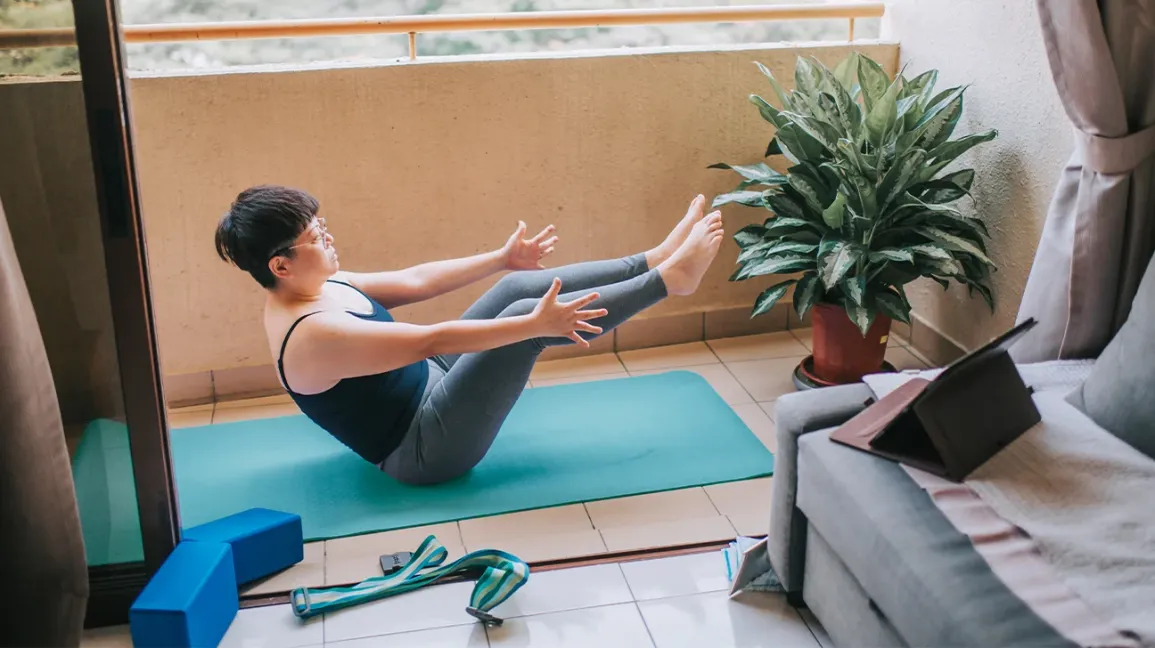
Core exercises help support stability during both exercise and everyday activities. Planks are a simple choice because they challenge the abdominal muscles and other stabilising muscles. Keep your body aligned and avoid holding your breath. Short, controlled holds are more useful than sacrificing form to stay in the position longer.
Adding Cardio to Your Routine
Cardiovascular exercise does not always require running or specialised machines. Fast marching, step-ups, dancing, shadowboxing, jumping jacks, and high knees can all increase your heart rate. Choose movements that match your current fitness level and available space.
You can adjust the intensity by changing your pace. If you are a beginner, use low-impact movements and take longer recovery periods. If you already have good conditioning, increase your pace or work for longer intervals while maintaining safe technique.
How to Make Your Routine More Challenging
Your body adapts when you repeatedly perform the same workout, so gradual progression is important. You can increase repetitions, extend working periods, reduce rest time, or choose a slightly more difficult exercise variation. Make one change at a time so you can monitor how your body responds.
For example, you might progress from wall push-ups to incline push-ups and eventually to standard push-ups. Squats can progress toward split squats or other challenging variations. These small changes can keep your workouts productive without requiring heavy equipment.
Recovery, Nutrition, and Consistency
Recovery is an important part of any fitness programme. Your muscles need time to repair after exercise, so avoid training intensely every day if your body is not ready. Gentle walking, mobility work, and rest can be useful between harder sessions. Quality sleep also supports physical recovery and daily energy.
Nutrition should complement your training. Eat a balanced diet containing protein, carbohydrates, healthy fats, fruits, and vegetables. Staying hydrated is also important, particularly when you sweat heavily during exercise. Most importantly, focus on habits you can maintain rather than extreme short-term approaches.
Creating a Weekly Schedule
A simple weekly schedule can make exercise easier to maintain. You might perform your full-body workout three days a week and use other days for walking, mobility exercises, or light cardio. This approach provides regular activity while giving your muscles time to recover.
Listen to your body and adjust the schedule when necessary. Work demands, travel, poor sleep, or temporary soreness may require a lighter session. Missing one workout does not ruin your progress. Returning to your routine at the next opportunity is more important than trying to compensate with an unnecessarily difficult session.
Conclusion
A Simple Workout Routine: Get Fit in Under 30 Minutes a Day can provide an efficient foundation for improving strength, cardiovascular fitness, mobility, and general health. By combining a short warm-up, full-body strength movements, cardio, and a cool-down, you can make each session productive without spending hours exercising.
The most valuable routine is one you can follow consistently. Start at a comfortable level, focus on proper technique, and gradually increase the challenge as your fitness improves. With regular movement, balanced nutrition, adequate recovery, and realistic goals, less than 30 minutes a day can become a practical part of a healthier lifestyle.
FAQs
Can I really get fit with a 30-minute workout?
Yes. A well-planned 30-minute session can improve strength, cardiovascular fitness, and muscular endurance when performed consistently.
Is this routine suitable for beginners?
Yes. Beginners can modify exercises, reduce intensity, and take additional rest periods. Progress gradually as strength and endurance improve.
Do I need gym equipment?
No. Many effective exercises can be performed using body weight alone. Optional equipment can add variety but is not essential.
How many days a week should I exercise?
A practical starting point is three full-body workouts each week, with lighter activities or recovery days between demanding sessions.
Can short workouts help with weight management?
Regular physical activity can increase energy expenditure and support healthy weight management. Nutrition and overall daily activity also play important roles.
What should I do on rest days?
Light walking, gentle mobility exercises, stretching, or other comfortable low-intensity activities can keep you moving without placing excessive stress on your muscles.
How can I make a short workout harder?
Increase repetitions, work for slightly longer periods, reduce rest gradually, or use more challenging exercise variations as your fitness improves.
Is a warm-up necessary for a short workout?
A brief warm-up is recommended because it prepares your body for exercise and allows you to transition gradually from rest to physical activity.
