
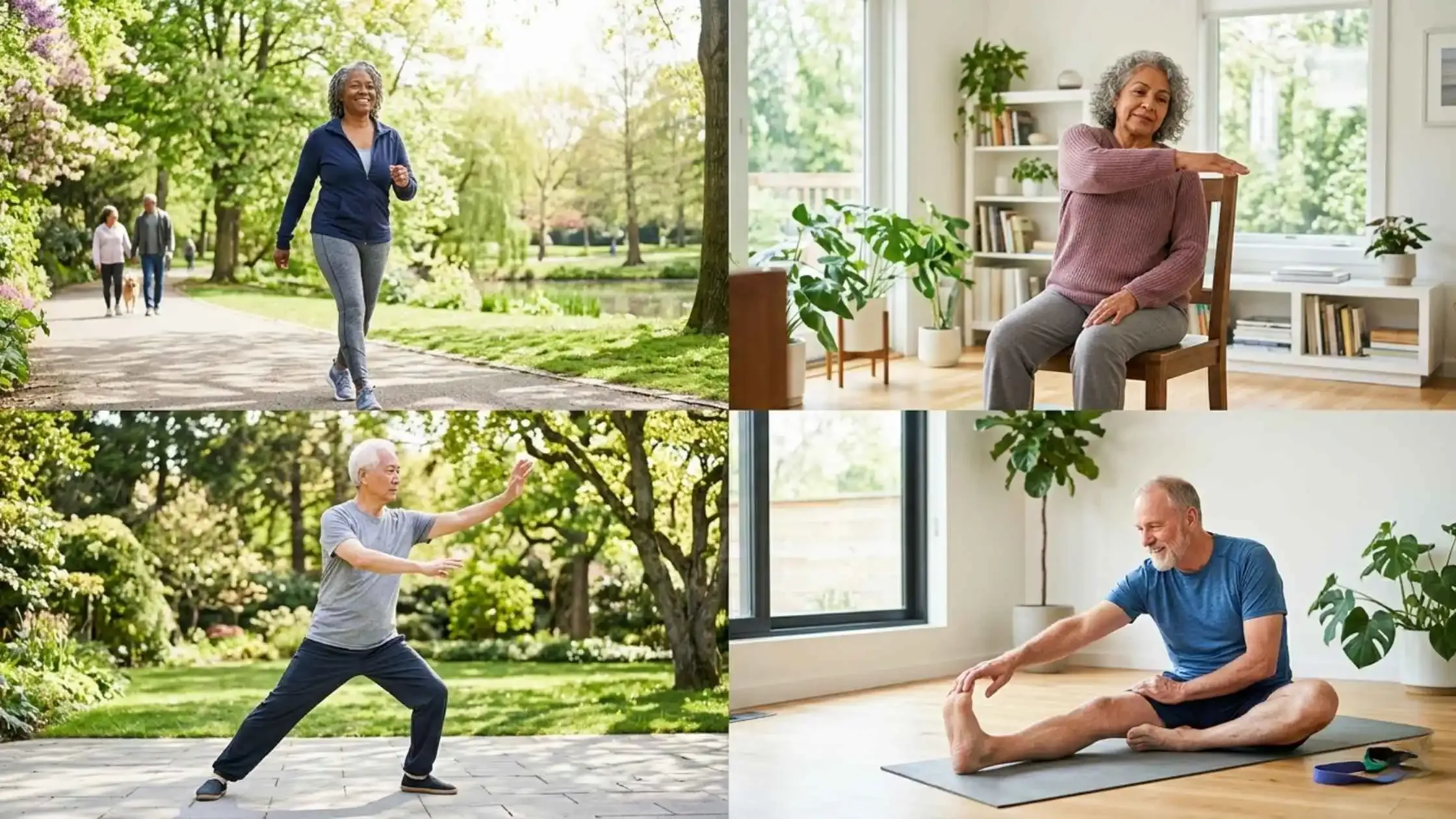
What is low impact exercises? Benefits, Types, and Routines is an important topic for anyone who wants to stay active while putting less stress on the joints. Low impact exercise involves movements where at least one foot generally remains in contact with the ground, or where the body is supported during activity. These exercises can improve fitness without the repeated jumping and hard landings associated with high impact workouts.
Low impact exercise is suitable for many different fitness levels. Beginners can use gentle movements to build a foundation, while experienced exercisers can use them for active recovery or endurance training. Walking, cycling, swimming, yoga, and controlled strength exercises are popular examples that can support a healthy and active lifestyle.
What Is Low Impact Exercise?
Low impact exercise refers to physical activity designed to reduce force and stress placed on the joints while still challenging the muscles and cardiovascular system. It does not mean that the workout is necessarily easy. A low impact session can become quite challenging when you increase duration, resistance, pace, or repetitions.
The main difference between low and high impact activities is how the body absorbs force. Running, jumping, and plyometric exercises create repeated landing forces, while walking, cycling, swimming, and many strength movements provide a gentler alternative. This makes low impact training a practical choice for people who prefer joint-friendly exercise.
Benefits of Low Impact Exercises
One of the biggest benefits is improved cardiovascular fitness. Activities such as brisk walking, cycling, swimming, and elliptical training can elevate your heart rate while allowing you to control the intensity. Regular cardiovascular exercise can support heart health, endurance, energy levels, and general physical fitness.
Low impact movement can also improve muscular strength, flexibility, coordination, and balance. Strength exercises using controlled movements can develop muscles without requiring jumping or rapid changes of direction. Combining different activities creates a balanced fitness program that works several areas of physical health.
Walking and Other Cardio Options
Walking is one of the simplest forms of low impact exercise and requires almost no equipment. You can begin with a comfortable pace and gradually increase your speed or walking time as your fitness improves. Walking outdoors can also provide a refreshing change of environment, while treadmill walking offers a convenient indoor option.
Cycling and swimming provide additional ways to improve cardiovascular endurance. Stationary cycling is particularly convenient for home workouts, while swimming allows the water to support much of your body weight. These activities can make cardio training more comfortable while still providing an effective workout.
Low Impact Strength Exercises
Strength training does not have to involve jumping or explosive movements. Bodyweight squats, glute bridges, wall push-ups, standing leg raises, and controlled lunges can strengthen major muscle groups while keeping movements steady. Resistance bands and light dumbbells can also increase the challenge as your strength develops.
Performing strength exercises slowly and with good technique can make them more demanding without increasing impact. Focus on controlled repetitions, stable posture, and a comfortable range of motion. Over time, you can gradually increase resistance or repetitions to continue improving.
Yoga, Pilates, and Mobility Work
Yoga is another excellent low impact activity because it combines controlled movement, balance, flexibility, and body awareness. Different styles range from gentle sessions to physically demanding practices. Beginners can start with simple poses and gradually develop greater mobility and stability.
Pilates focuses on core control, posture, balance, and precise movements. Mobility exercises can complement both yoga and Pilates by helping you move joints through comfortable ranges of motion. Together, these activities can make an excellent addition to a weekly fitness routine.
A Simple Low Impact Exercise Routine
A beginner-friendly routine can start with five minutes of gentle walking and mobility movements to warm up the body. Follow this with controlled squats, wall push-ups, glute bridges, standing knee raises, and alternating reverse lunges. Perform each movement at a comfortable pace while maintaining good form.
Finish with ten to fifteen minutes of brisk walking or another comfortable cardio activity. You can gradually extend the workout as your endurance improves. The goal is to create a routine that feels challenging without leaving you excessively exhausted or uncomfortable.
How to Make Low Impact Workouts More Challenging
Low impact does not mean you have to keep the workout at the same intensity forever. You can make exercises more challenging by increasing resistance, adding repetitions, extending workout time, or reducing rest periods. Increasing your walking pace or adding an incline can also raise the cardiovascular demand without introducing jumping.
Another approach is to combine strength and cardio movements in a circuit. For example, you can alternate squats, walking, wall push-ups, and resistance-band exercises. This keeps your heart rate elevated while training different muscle groups throughout the session.
Safety and Recovery Tips
Start gradually if you are new to exercise. Give yourself time to learn proper movement patterns before increasing workout intensity. Comfortable footwear can make walking and standing exercises more enjoyable, while appropriate equipment can improve stability during home workouts.
Pay attention to how your body responds. Muscle fatigue is normal during exercise, but persistent or sharp pain should not be ignored. Rest, hydration, nutritious food, and sufficient sleep all contribute to recovery and help you maintain a consistent exercise routine.
Conclusion
Understanding what is low impact exercises? Benefits, Types, and Routines can help you choose enjoyable activities that support fitness while reducing unnecessary impact. Walking, cycling, swimming, yoga, Pilates, and controlled strength exercises can improve endurance, strength, flexibility, balance, and overall physical activity levels.
The best routine is one you can perform consistently and comfortably. Start with manageable sessions, focus on proper technique, and gradually increase the challenge as your fitness improves. With regular practice, low impact exercise can become an effective part of a balanced and sustainable fitness lifestyle.
FAQs
Are low impact exercises good for beginners?
Yes. Low impact activities can be an excellent starting point because many movements are easy to modify. Beginners can control the pace and gradually increase exercise intensity.
Can low impact exercise help with weight loss?
Yes. Low impact workouts can increase calorie expenditure and support weight management when combined with a balanced diet and consistent physical activity.
Is walking considered low impact exercise?
Yes. Walking is one of the most accessible low impact activities. Brisk walking can provide a meaningful cardiovascular workout without the repeated landing forces associated with running.
Can low impact exercise build strength?
Yes. Squats, lunges, push-ups, resistance-band exercises, and other controlled movements can strengthen muscles without requiring high-impact movements.
How often should I do low impact workouts?
Many people can aim for regular activity throughout the week, combining cardio, strength, flexibility, and recovery sessions according to their fitness level and goals.
Is swimming a low impact activity?
Yes. Water supports much of the body’s weight, making swimming and water-based exercise popular low impact options for cardiovascular conditioning.
Can I do low impact exercises at home?
Absolutely. Walking in place, squats, wall push-ups, glute bridges, Pilates movements, and resistance-band exercises can all be performed at home.
Are low impact workouts still effective?
Yes. A workout can be low impact while still being challenging. Increasing resistance, duration, pace, or repetitions can make a session more demanding without adding jumping or hard landings.
