

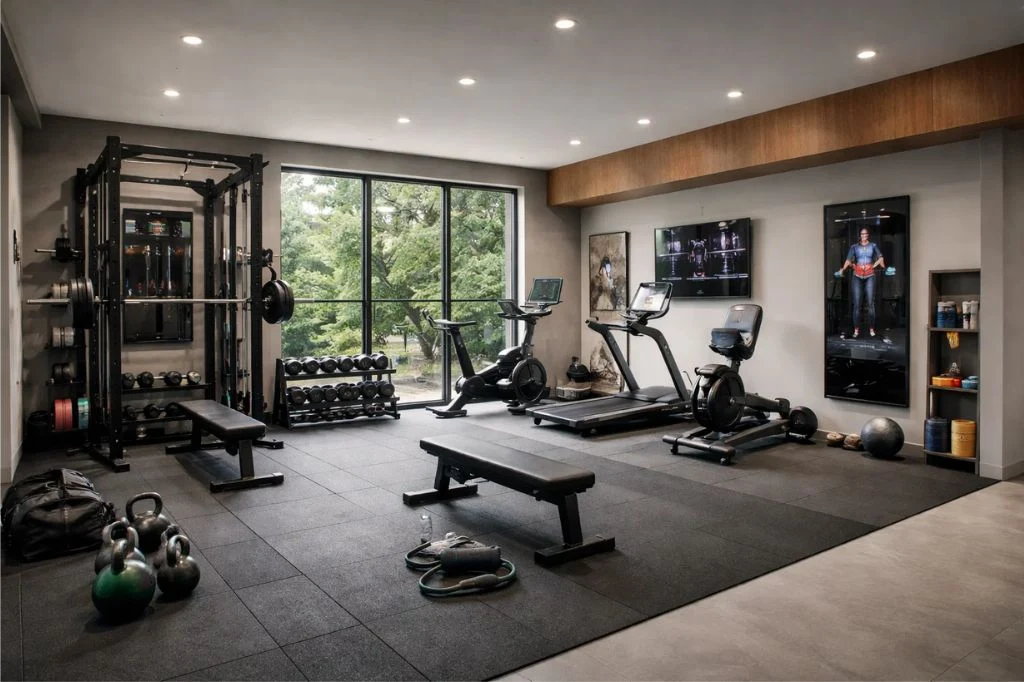
Creating a home gym setup in 2026 is less about filling a room with expensive machines and more about building a space that makes exercise convenient, comfortable, and enjoyable. Whether you have an entire garage, a spare bedroom, or a small corner of an apartment, the right design can turn limited space into an effective training area. Current fitness guides increasingly emphasize versatile equipment, smart storage, and space-conscious layouts rather than buying every machine available.
The best approach is to begin with your workout goals and available space. Strength training may require adjustable dumbbells, a bench, or a rack, while cardio-focused users may prefer a treadmill, bike, or rower. A combination of compact equipment can also create a highly flexible training area without making the room feel crowded.
1. Start With a Small and Simple Home Gym Setup
A small workout area can be surprisingly effective when every item has a purpose. Adjustable dumbbells, resistance bands, a workout mat, and an adjustable bench can provide enough variety for full-body training while taking up relatively little space. This minimalist approach is particularly useful for bedrooms, apartments, basements, and multipurpose rooms.
Before purchasing equipment, measure the floor area and consider how much room you need to move safely. A compact gym should leave enough open space for exercises such as squats, lunges, push-ups, stretching, and core movements. Planning the layout before shopping can prevent the common problem of buying equipment that looks useful but leaves little room to exercise.
2. Create a Garage Home Gym
A garage can be one of the best locations for a serious training area because it typically provides a durable floor, generous ceiling height, and more room for strength equipment. A rack, barbell, weight plates, adjustable bench, dumbbells, and storage system can create a powerful strength-training environment without requiring a commercial gym membership.
Rubber flooring is especially valuable in a garage because it can provide cushioning, improve traction, and help protect the underlying surface from equipment. Make sure the rack and other large equipment are positioned so doors, vehicles, storage cabinets, and walking paths remain accessible. Garage layouts should also account for ventilation and temperature because the space can become hot or cold depending on the season.
3. Design a Stylish Spare-Room Gym
A spare bedroom can become an attractive workout space without looking like a commercial fitness center. Neutral colors, natural light, mirrors, organized storage, and carefully selected equipment can make the room feel calm while still providing everything needed for training. Recent home wellness design advice also emphasizes layered lighting, natural textures, open space, and reduced visual clutter.
An adjustable bench paired with dumbbells and resistance bands is a practical foundation for this type of room. If you enjoy cardio, consider adding a folding treadmill, compact exercise bike, or walking pad. Keeping larger equipment against the walls and maintaining an open central floor area allows the room to serve multiple purposes.
4. Build a Strength-Focused Home Gym
If building muscle and increasing strength are your main goals, prioritize equipment that supports progressive resistance. A power rack, barbell, weight plates, adjustable bench, and some form of cable or resistance system can provide a wide range of exercises. For people with limited space, adjustable dumbbells and kettlebells can deliver impressive versatility without requiring a large rack.
The key is to buy equipment that expands your training options instead of purchasing multiple items that perform nearly identical functions. A quality bench and adjustable weights can support pressing, rowing, squatting, lunging, curling, and many other movements. This approach also makes it easier to expand your gym gradually as your training needs change.
5. Make a Smart Home Gym for 2026
Smart fitness technology is becoming increasingly useful for people who want more feedback from their workouts. Modern connected equipment can track metrics such as repetitions, speed, power, resistance, and workout performance. This technology can make training more interactive and help users monitor progress over time.
You do not need a room full of connected machines to create a smart training environment. A tablet or television can provide access to workout programs, while a fitness tracker can record activity and recovery information. A simple speaker, good lighting, and an organized workout-tracking system can also make sessions more engaging without dramatically increasing the cost.
6. Use Space-Saving Equipment
Space-saving equipment is one of the biggest advantages for people designing a gym in a small home. Adjustable dumbbells can replace multiple sets of fixed weights, while resistance bands can be stored in a drawer when they are not being used. A folding bench or treadmill can also free up valuable floor space after a workout.
Wall-mounted storage can make a major difference because it moves equipment away from the main training area. Pegboards, shelves, vertical racks, and hooks can keep bands, jump ropes, mats, and smaller accessories organized. The goal is to make every item easy to access without allowing the equipment to dominate the room.
7. Choose the Right Flooring and Lighting
Good flooring is an important part of a comfortable and safe workout environment. Rubber flooring is particularly useful for strength-training areas because it provides traction and can help protect floors from weights and repeated impact. A thick exercise mat can work well for yoga, mobility work, stretching, and bodyweight exercises.
Lighting can completely change how a gym feels. Natural light is excellent when available, while ceiling lights combined with focused lighting can create a brighter and more motivating environment. Mirrors can also make smaller rooms appear more spacious while helping you observe exercise technique. A clean, bright training space is generally more inviting than a cluttered room with poor visibility.
8. Create a Budget-Friendly Home Gym
You do not need to spend thousands of dollars to build an effective workout area. Start with equipment that supports your most common exercises and add new pieces only when they provide a meaningful improvement. A pair of adjustable dumbbells, resistance bands, a mat, and a bench can create a surprisingly capable foundation.
A budget-friendly approach also helps you discover what you actually use. Many people buy equipment based on ambitious plans rather than their real routines. Starting small allows you to build consistency first and invest in larger equipment later. Current 2026 home-gym recommendations similarly emphasize versatile, space-conscious equipment rather than purchasing everything at once.
How to Organize Your Home Gym
Organization should be considered part of the design rather than something added later. Keep frequently used equipment within easy reach and place heavier or less frequently used items in dedicated storage areas. Maintaining clear walking paths also makes the room safer and more pleasant to use.
A simple zoning system can make the space more functional. One area can be dedicated to strength exercises, another to cardio, and another to stretching or mobility. Even in a small room, separating these activities mentally and physically can make the space feel much larger.
How to Make Your Home Gym More Motivating
A beautiful gym is useful, but a motivating gym is even better. Add elements that encourage you to return consistently, such as a workout calendar, progress journal, music system, television, or motivational artwork. Experts interviewed by WIRED also highlighted personal motivation tools such as playlists, speakers, workout notes, and progress photos.
Comfort matters too. Good ventilation, appropriate temperature, pleasant lighting, and a clean floor can make workouts easier to start. The more convenient and inviting the environment feels, the fewer obstacles stand between you and your next session.
Conclusion
The best home gym setup of 2026 is not necessarily the largest or most expensive one. It is the space that matches your training goals, available room, budget, and lifestyle. A compact setup with versatile equipment can be just as useful as a large gym when everything is selected and arranged with purpose.
Start with the essentials, measure your space, prioritize quality, and expand gradually as your routine develops. Whether you are converting a garage, spare bedroom, basement, or small apartment corner, thoughtful organization and smart equipment choices can create a workout environment that makes staying active easier throughout the year.
FAQs
What is the best home gym setup for beginners?
A beginner can start with adjustable dumbbells, resistance bands, an exercise mat, and an adjustable bench. This combination supports many full-body movements without requiring a large room.
How much space do I need for a home gym?
The amount of space depends on your equipment and workouts. Even a small corner can work for bodyweight and dumbbell training, while racks and large cardio machines require substantially more room.
Is a garage a good place for a home gym?
Yes, a garage can be an excellent option because it usually provides plenty of floor space and durable surfaces. However, ventilation, temperature, lighting, and storage should be considered before installing equipment.
What equipment should I buy first?
Start with versatile equipment that supports the exercises you actually perform. Adjustable weights, resistance bands, a mat, and a bench are useful starting points for many training styles.
Is smart gym equipment worth buying in 2026?
Smart equipment can be worthwhile if you enjoy technology, guided workouts, or performance tracking. However, it is not essential for getting an effective workout at home.
How can I build a home gym on a budget?
Begin with a small collection of versatile equipment instead of purchasing multiple machines. Add new equipment gradually after you have established a consistent training routine.
What flooring is best for a home gym?
Rubber flooring is a popular choice for strength-training areas because it offers traction and helps protect the underlying floor. Exercise mats are useful for stretching, yoga, mobility, and bodyweight exercises.
How can I keep a small home gym organized?
Use vertical storage, wall hooks, shelves, and compact equipment. Keeping the center of the room open gives you more space to move and prevents the gym from becoming cluttered.
